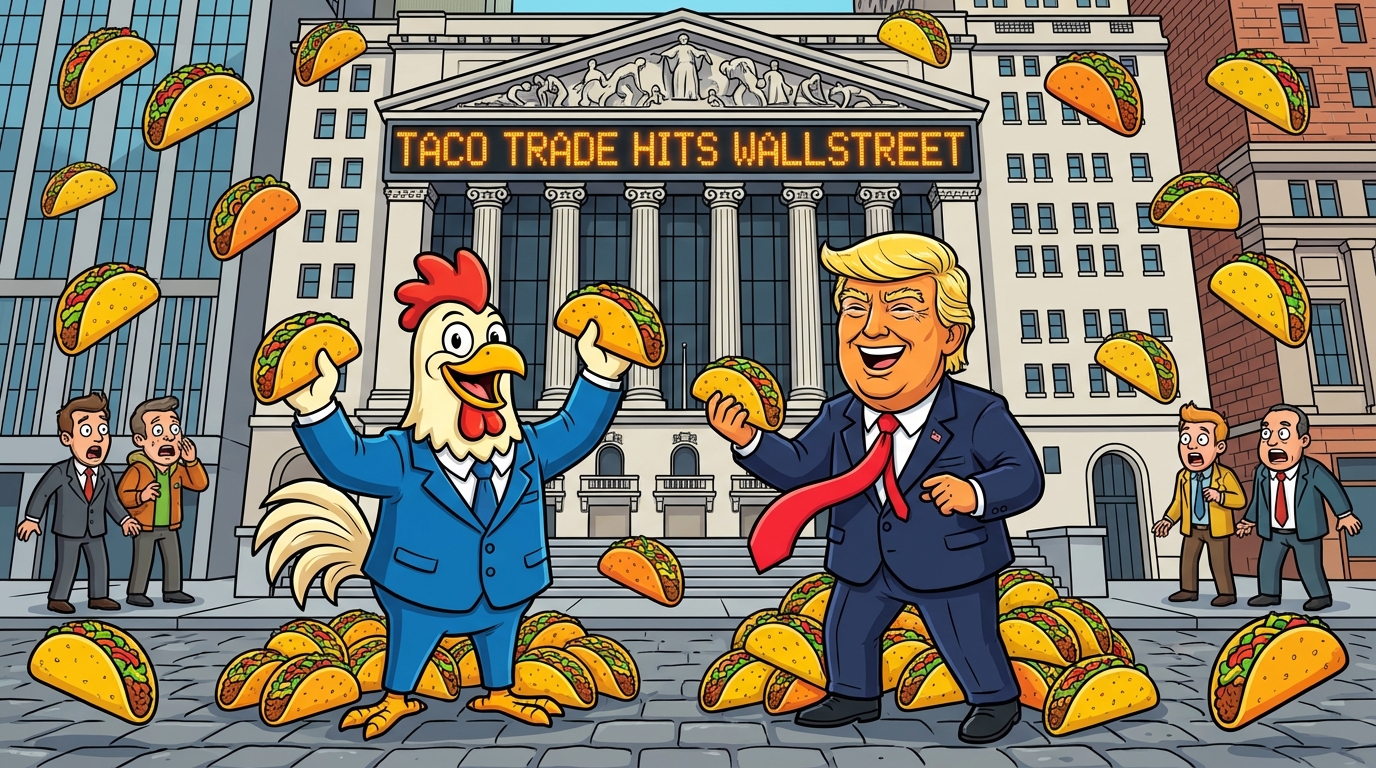
President Trump opened a new front in the trade war overnight, announcing that the United States will impose a 50% tariff on any country that supplies weapons to Iran. The move was framed as a national security measure, but in practical terms it is another escalation of a tariff regime that has already become the most aggressive U.S. trade policy since the 1930s. And it landed less than 48 hours after the administration brokered a two-week ceasefire with Tehran, a ceasefire that Iran’s parliamentary speaker said Wednesday had already been breached.
The timing is everything. A ceasefire says de-escalation. A 50% secondary tariff says pressure campaign. The White House is trying to run both plays at once, which is a negotiating posture you either admire or find incoherent, depending on whether you are writing the policy or pricing the supply chain.
WHAT THE TARIFF ACTUALLY DOES
The new measure is structured as a secondary tariff, meaning it targets third-party countries rather than Iran directly. Any nation that supplies arms to Iran faces a 50% U.S. tariff on all imports into the American market, regardless of the product category. The list of potential targets is not long. Russia and North Korea are already heavily sanctioned. China is the wildcard. If Washington determines that Chinese entities have transferred weapons or dual-use components to Iran, the 50% tariff would stack on top of existing Section 301 and 232 duties, pushing effective rates on some Chinese goods past 100%.
The administration did not say which countries it has in mind. That ambiguity is the point. Secondary sanctions and secondary tariffs work because the threat of being named is enough to get banks, shippers, and insurers to self-police. Compliance teams at every major European and Asian exporter will spend the next week rewriting risk memos and pulling back from any Iran-adjacent business they were not sure about.
THE APRIL 2 RESTRUCTURING, IN CONTEXT
This overnight move does not exist in a vacuum. On April 2, the administration announced two sets of Section 232 tariffs that reshaped U.S. trade policy in a single press release. The first restructured how steel, aluminum, and copper tariffs are enforced, anchoring them to U.S. market prices rather than importer declarations while keeping the 50% rate in place. The second imposed tariffs of up to 100% on patented pharmaceutical imports, a direct shot at European drugmakers and Indian generics suppliers.
Taken together, the Tax Foundation estimates the 2026 tariff regime represents the largest U.S. tax increase as a percent of GDP since 1993. The average household tax burden attributable to tariffs sits at roughly $1,050 this year, down from $1,500 before the April 2 restructuring, but still among the highest tariff-equivalent costs American consumers have absorbed in a generation. Add the Iran weapons tariff and that number starts drifting back up.
WHO GETS HIT
The industries most exposed to the broader 2026 tariff regime are already known. Automotive, consumer packaged goods, retail, and pharmaceuticals are reorganizing supply chains in real time. Ford, GM, and Stellantis have all flagged tariff-related margin compression in recent earnings calls. Walmart and Target are telling vendors to absorb more of the duty cost or lose shelf space. Pharma is the most acute. The Section 232 patented drug tariff alone could push branded drug prices up by double-digit percentages if manufacturers pass through the cost. Many will try. Insurers will push back. Patients will end up in the middle.
The Iran weapons tariff adds a new layer of uncertainty for any company with meaningful exposure to Gulf or Central Asian markets. European defense contractors are suddenly in an awkward spot. So are firms with complicated joint ventures in countries like the UAE or Turkey that maintain working relationships with Tehran. The legal gray zone around what qualifies as a weapon transfer is going to keep trade lawyers very busy.
MARKETS ARE NOT BUYING THE PEACE STORY
If Wall Street thought this was all bluster, the oil tape would not look the way it does. WTI crude jumped 3.8% overnight to $97.96. Brent added 2.9% to $97.48. Dow futures slipped 146 points. The market is reading the combination of a ceasefire accusation and a fresh tariff escalation as a net negative, and it is hedging accordingly.
The dollar is holding firm against most G-10 currencies, which usually happens when tariff news hits because tariffs function as an import tax that reduces the trade deficit on paper. But dollar strength is a double-edged sword. It makes U.S. exports less competitive, hurts multinational earnings when they translate foreign revenue, and tightens financial conditions in emerging markets. JPMorgan’s global research desk flagged in a recent note that the cumulative 2026 tariff regime is already acting as a de facto rate hike of 50 to 75 basis points on U.S. monetary conditions. That is on top of whatever the Fed actually does.
THE WASHINGTON POLITICS
The politics are unusual. Iran hawks in the Senate, including many Republicans who have been skeptical of the Trump tariff program in general, loudly supported the 50% measure. Free-trade conservatives who were quietly hoping the April 2 restructuring marked the beginning of a tariff walk-back had to publicly eat their words. Democrats are split. Some are endorsing the pressure on Iran. Others are warning that weaponizing trade policy sets a precedent that will outlive this administration.
On the international side, the reaction has been sharp. The European Commission said it is “studying” the U.S. announcement, diplomatic code for preparing retaliation options. Beijing called the move “unilateral bullying.” Ankara said it reserves the right to respond. None of that matters much until a specific country gets named and a specific product gets hit. Once that happens, the retaliation cycle starts for real.
WHAT TO WATCH NEXT
Three things will determine whether this tariff becomes a real policy or a negotiating bluff. First, the text of the executive order. The White House has said the order is coming, but the implementing language will reveal whether the tariff is automatic on any weapons transfer or discretionary based on administration determination. Discretionary means leverage. Automatic means shock. Second, the U.S. Treasury guidance on how secondary sanctions and the new tariff interact. Those rules will shape compliance behavior for years. Third, any public response from Beijing. China is the one counterparty with enough economic weight to force Washington to either back down or double down.
For now, the 2026 trade war has a new chapter. The ceasefire has a new crack. And the global supply chain has one more variable it did not need.
The U.S. Trade Representative’s 2026 agenda is available at the USTR official site. For ongoing tariff tracking, the Tax Foundation tariff tracker is updated regularly.