Nvidia added 3.8% on Wednesday to close near $208.34, and the catalyst was not a product, a partnership, or anything Nvidia said. It was a spreadsheet. A closely watched industry research shop raised its 2026 AI server shipment growth forecast to roughly 31% and put combined 2026 capital expenditure across nine leading cloud providers at more than $886 billion, an increase of about 90% year over year. Nvidia was the top trending search in the United States within hours.
That is the whole trade in one line. Nvidia’s revenue is now a derivative of nine other companies’ budget decisions, and this week those budgets went up.
Who Is Actually Writing The Checks
The nine names doing the spending are the ones you would guess: Google, Amazon, Meta, Microsoft and Oracle among them. Between them they have converted AI infrastructure from a line item into the dominant use of corporate cash in American technology. A near doubling of capex in a single year is not a normal growth curve for physical assets. It is what happens when a small group of firms decide simultaneously that being late is more expensive than being wrong.
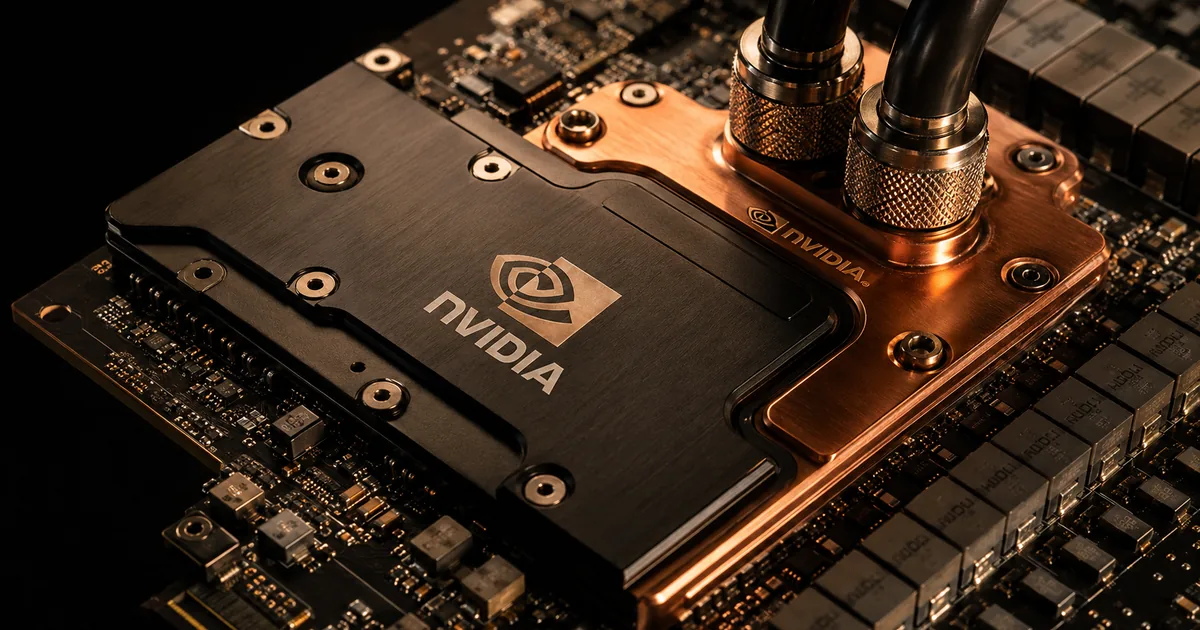
The demand signal investors extracted from the number was specific rather than general. It read as an order book for liquid-cooled Blackwell systems, the rack-scale generation that hyperscalers are now designing whole buildings around. Liquid cooling is the tell. It means the buyer has committed to power and thermal density that cannot be retrofitted into a conventional hall, which means the spend is locked years before the chips arrive.
The Number Nobody Underwrites
Here is what the rally does not price. $886 billion of capex has to be financed, powered, and eventually depreciated against revenue that does not exist yet.
The financing question is already visible in the deal structures. Nvidia’s $250 billion backstop arrangement tied to OpenAI’s Piketon, Ohio data center project put the chip vendor on the hook for its own customer’s demand, a circularity that would draw scrutiny in any other industry. Microsoft and Meta’s FY27 capex guidance told the same story from the buyer’s side: enormous forward commitments, defended with strategic language rather than a return calculation.
The power question is harder and less negotiable. Grid operators have already started rationing. Chips can be air-freighted; substations cannot.
The Spend Does Not Stop At The GPU
A capex figure this large also reprices everything sitting next to the accelerator, which is where the less crowded trades live. Memory is the clearest case. Rack-scale AI systems consume high-bandwidth memory at ratios that were not contemplated when this cycle started, and the industry spent this week at Flash Memory Summit publishing the first technical specification for High Bandwidth Flash, a new NAND-based tier designed to sit between HBM and conventional SSDs. That specification exists because the memory hierarchy is currently the bottleneck, not the compute.
Power equipment, transformers, cooling vendors and interconnect suppliers all sit in the same position: capacity-constrained businesses with long lead times and pricing power they did not have three years ago. The 31% server shipment growth forecast is the number that gets the headline, but it is also a forecast about how many substations, chillers and memory stacks somebody has to deliver on schedule.
Why The Rally Happened Before Earnings, Not After
Timing matters here. Nvidia reports later this month, and the stock moved on a third-party forecast rather than company guidance. That is a market pricing the ecosystem instead of the issuer, and it usually signals that positioning has become consensus enough that any confirming datapoint gets bought.
The setup cuts both ways. If Nvidia’s own guidance lands anywhere below the trajectory this capex number implies, the gap gets closed downward fast, because the stock has already banked the good news. Chip investors got a reminder of that mechanic last week, when a sharp rout caught retail traders holding leveraged ETFs.
What To Watch Instead Of The Ticker
The useful indicators over the next quarter are not Nvidia’s. Watch whether any of the nine hyperscalers revises capex guidance downward on its next call, watch utility interconnection queues in the data center corridors, and watch whether the financing keeps flowing through vendor balance sheets rather than ordinary debt markets.
Capex cycles of this size rarely end because demand disappears. They end because the money gets expensive or the power does not arrive. Right now neither has happened, and $886 billion is heading toward one company’s order book.