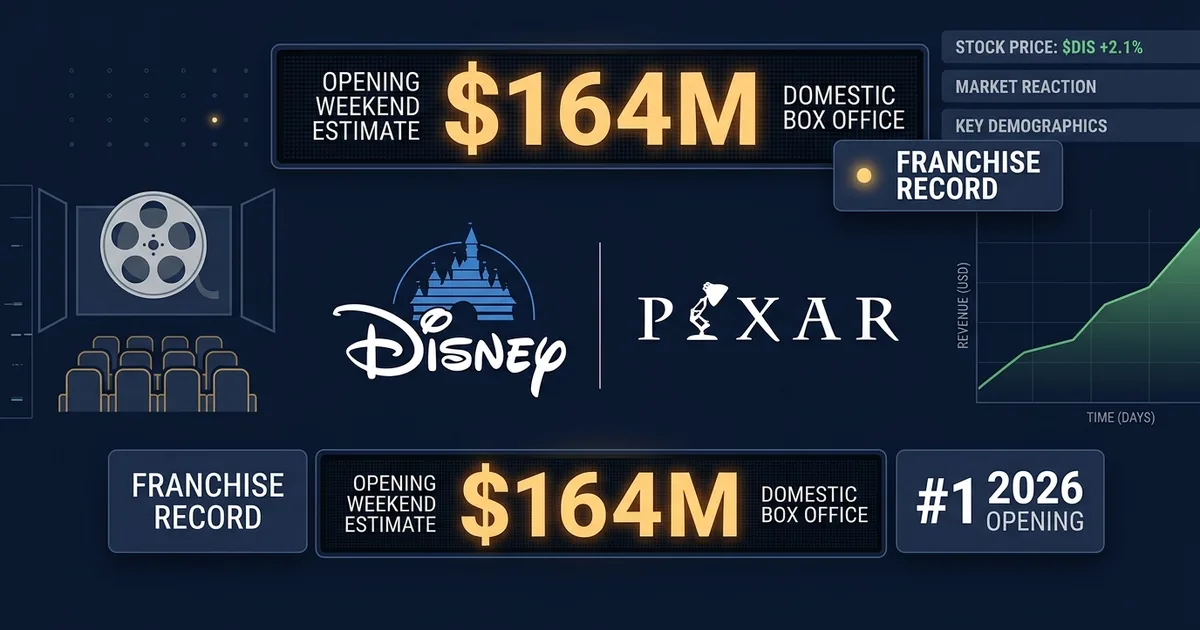
Disney and Pixar needed a blockbuster to close out an uneven first half, and the toys delivered. Toy Story 5 is on pace for a $164 million domestic opening weekend from 4,425 theaters, making it the biggest debut of 2026 and the second-largest animated opening in box office history.
The numbers tell a franchise revival story that Disney’s leadership has been chasing for years. Variety reported that Friday alone brought in $71 million, the second-best opening day ever for an animated feature behind only The Incredibles 2’s $72.2 million in 2018. Preview screenings on Thursday pulled $17.5 million, the strongest preview number of any film this year. The film earned an A CinemaScore and 93 percent on Rotten Tomatoes from both critics and audiences, a combination that historically signals strong holds through the summer corridor.
The Business Case Disney Needed
This is not just a box office win. It is a strategic validation for Bob Iger’s final stretch as CEO and for Pixar’s creative recovery under studio head Pete Docter. Disney’s theatrical strategy has been uneven in 2026: the Mandalorian and Grogu film tracked to a solid but unspectacular $80 million opening in May, and earlier releases underperformed expectations. Toy Story 5 more than doubles that figure, proving the studio can still mobilize mass audiences when the IP is right and the creative execution lands.
TheWrap projected the $164 million weekend would comfortably beat Toy Story 4’s franchise record of $120 million set in 2019. Globally, the film is tracking toward $275 million for its opening frame, with strong early results in South Korea and key international territories. If those projections hold, Toy Story 5 will have recovered a significant portion of its production budget before the second weekend even begins.
What the Numbers Mean for Disney’s Balance Sheet
Disney’s theatrical division has been a volatile performer in a media landscape that continues to shift under everyone’s feet. The company reported solid Q2 2026 earnings in May, with streaming profitability and a $3 billion buyback anchoring investor confidence as Josh D’Amaro prepares to take the CEO chair from Iger. A franchise-record Toy Story opening adds fuel to that narrative, particularly as Disney positions Pixar content as the bridge between theatrical windows and Disney+ subscriber retention.
The margin dynamics are favorable. Animated features carry higher margins than live-action blockbusters because production costs, while significant, do not scale with A-list talent deals and practical effects budgets. Pixar films typically cost between $175 million and $250 million to produce, which means a $275 million global opening weekend puts Toy Story 5 on a clear path to profitability within its theatrical run alone, before home video, merchandise licensing, and theme park tie-ins enter the equation.
Merchandise is where the real compounding happens. The Toy Story franchise has generated more than $30 billion in lifetime merchandise revenue for Disney, and a successful fifth installment resets the merchandising clock with new characters and refreshed product lines. That recurring revenue stream is the financial engine that justifies the creative risk of extending a beloved franchise.
The Tech Angle
Toy Story 5’s plot centers on screen-time addiction and children’s relationship with technology, a thematic choice that has resonated with parents and critics alike. CNN noted the film “can help parents trying to manage their kids’ relationship with tech,” positioning the franchise as culturally relevant social commentary rather than pure nostalgia. For a media company navigating the tension between streaming growth and screen-time backlash, the meta-commentary is striking: Disney is selling tickets to a movie that questions whether screens deserve all the attention they command.
That thematic relevance likely contributed to the strong audience scores. Parents are not just buying entertainment, they are buying a conversation starter, and that emotional utility translates into word-of-mouth that money cannot buy.
What Comes Next
The real test is the second-weekend hold. Animated films with strong CinemaScores and broad audience appeal typically retain 50 to 60 percent of their opening, which would put Toy Story 5 on a trajectory toward $450 million or more domestically. Disney needs that kind of sustained performance to justify the premium-IP theatrical strategy that Iger has championed throughout his second tenure as CEO.
For now, the toys are back, the numbers are real, and Disney owns the biggest opening weekend of 2026. The question for investors is whether one franchise hit constitutes a durable theatrical recovery or simply a very good weekend for a very good brand.