Brent crude settled at $101.21 a barrel on Wednesday, up 3.4% on the day after touching $101.58, and every desk on Wall Street read it the same way: a crude supply shock out of the Persian Gulf. Stocks obliged. The S&P 500 fell 0.48%, the Dow dropped 0.77%, the Nasdaq lost 0.64%, and the Russell 2000 sank 1.30%.
Here is the number almost nobody put next to it. Five days earlier, on September 4, the national average price of diesel hit $5.85 a gallon, an all-time record that beat the $5.82 set at the height of the 2022 energy shock. And crude oil today is roughly $28 a barrel cheaper than it was when diesel last printed that number.
That single comparison tells you the market is watching the wrong contract. The damage in this conflict is not primarily in the barrel. It is in the machinery that turns the barrel into fuel, and that machinery is far harder to replace than a shipping route.
The Plant That Has Been Dark Since July
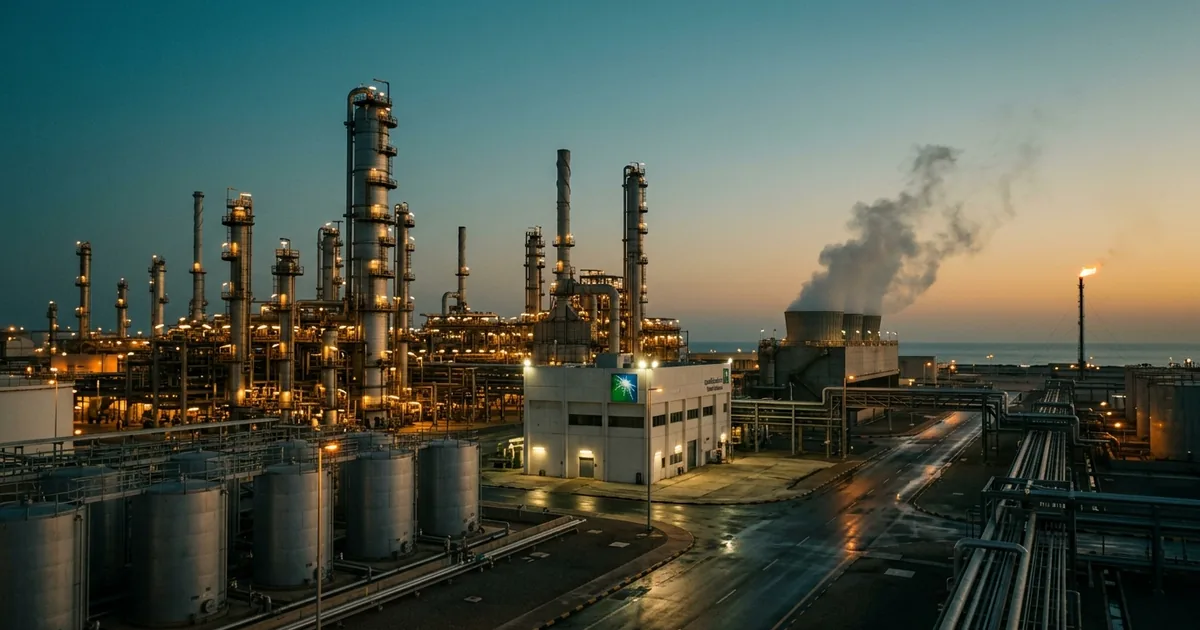
Saudi Aramco’s Jazan refinery processes 400,000 barrels a day when it runs. It has not properly run since July 27, when Houthi drones damaged its tank farm and power complex. Aramco pushed the restart from August 15 to August 30, and as of early September there was still no confirmed restart. Diesel shipments out of the site fell to zero in August.
Then it got hit again. The Houthis claimed a barrage of ballistic missiles and drones against the site on September 6. Two days later came the heaviest wave in years, with Saudi authorities reporting 73 people wounded across strikes on Abha International Airport, King Khalid Air Base and Aramco facilities at Abha and Jizan, forcing fresh shutdowns. Euronews reported Saudi Arabia striking back inside Yemen within hours.
Zoom out and Jazan is one line item. Somewhere between 7 million and 8 million barrels a day of global refining capacity is currently offline. Roughly 5 million of that is Russian, knocked out by Ukrainian drone strikes, and about 2 million sits idle across the Middle East for the same reason Jazan does. Diesel exports out of Russia, the Middle East and Asia are running 1.3 million barrels a day below last year, equivalent to about a fifth of the world’s seaborne trade in the fuel.
Crude Reroutes. A Refinery Does Not.
This is the asymmetry the coverage keeps missing. When shipping through the Strait of Hormuz gets dangerous, Saudi Arabia moves crude through the East-West Pipeline to the Red Sea instead. It costs more, it takes longer, and the war-risk premium on hulls is ugly, but the barrels move. US Central Command destroyed five Iranian tankers on Monday, with crews ordered off first, bringing the total to eight since September 5. Those were sanctioned cargoes inside a shadow fleet, largely bound for discounted Chinese buyers. Their loss is real, and it is also reroutable in a way that a damaged distillation tower is not.
Refining capacity has no workaround. You cannot pipe a hydrocracker somewhere safer. When 400,000 barrels a day of conversion capacity goes dark on the Red Sea coast, the diesel that plant was going to make simply does not exist, and the rest of the world’s refineries have to make it instead at whatever price clears.
The market has priced exactly that. The margin for turning crude into diesel on the US Gulf Coast climbed above $106 a barrel in early September. During the week diesel last set a record, in June 2022, that same margin ran roughly $64 to $73. It broke $100 for the first time in history in mid-August, which is to say the crack spread set its record three weeks before the pump did. The US Energy Information Administration has been flagging elevated crack spreads rather than crude as the driver of pump prices for months.
Brent Is a Bad Instrument for This War
So here is what we think, plainly. Brent has become a headline generator and a poor risk gauge for a conflict whose actual mechanism sits downstream. It is the benchmark for crude, and crude is the part of this system that has proved resilient. Treating a $3 move in Brent as the day’s energy story, while refining margins run at roughly 50% above their previous all-time high, is a reporting habit rather than an analytical choice.
The cost of that habit is not abstract. Diesel is the input price for freight, rail, agriculture, construction and marine shipping. It feeds into the cost of nearly every physical good in the economy with a lag of weeks, which means the September record is already baked into fourth-quarter goods inflation regardless of what Brent does next. Anyone modelling the inflation path off the crude curve is modelling the wrong variable, and that includes a Federal Reserve already arguing with its own two inflation gauges.
There is also a responsibility question worth naming. Aramco has let a 400,000 barrel-a-day refinery sit exposed through three separate strike waves in six weeks without publicly committing to a hardened restart timeline or a replacement supply plan for its product customers. That is a company decision, not an act of god, and the buyers absorbing $5.85 diesel are entitled to know whether Jazan is coming back this quarter.
What Would Actually Change the Picture
Two things, neither of them a ceasefire headline. The first is a confirmed, sustained Jazan restart, because it is the single largest identifiable piece of recoverable product capacity in the region. The second is any easing of Russia’s export restrictions, which have been rolled forward to September 30 rather than lifted while its refining runs sit near two-decade lows.
A Hormuz transit deal, which Iran has hinted at through Oman, would knock several dollars off Brent and change very little about diesel. That gap between what moves the benchmark and what moves the pump is the whole story of this energy crisis, and it has run long enough that calling it a crude shock is simply inaccurate. We spent late August noting that the IEA was cutting demand forecasts even as Washington struck Hormuz. The demand destruction arrived. It just arrived in products, where almost nobody was looking.