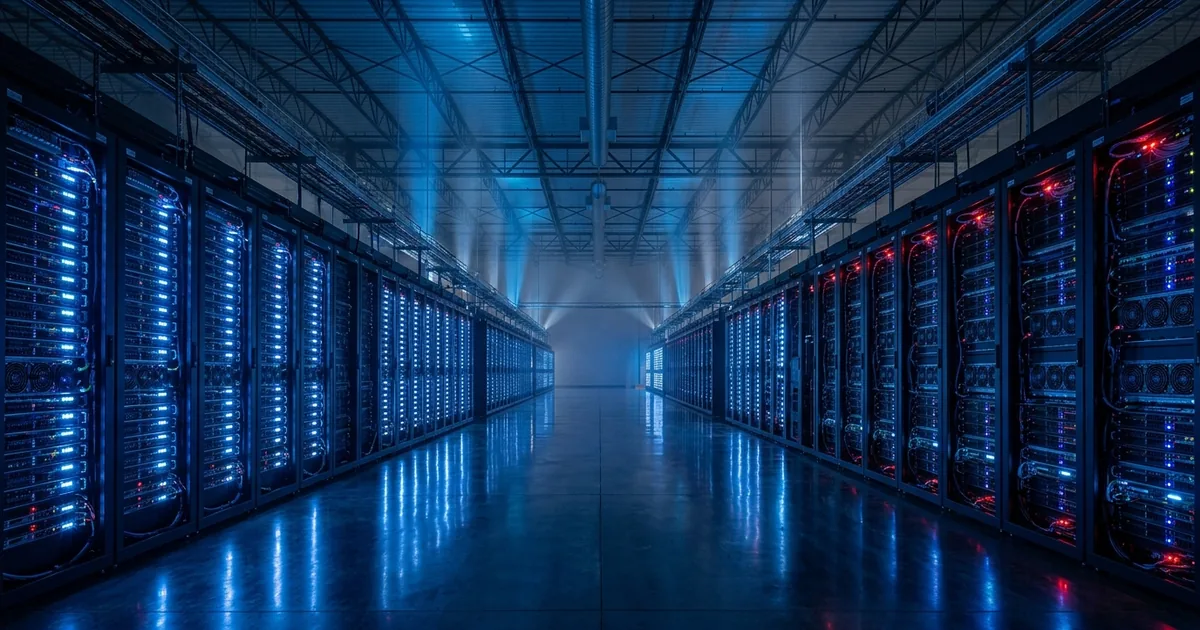
China’s LineShine system just seized the top spot on the June 2026 TOP500 ranking, marking the first time a Chinese machine has led the list in three years. The achievement is a pointed statement about self-reliance, but a closer look at the AI training benchmarks reveals a story Beijing would rather you not hear.
What LineShine Actually Is
Housed at the National Supercomputing Centre in Shenzhen, LineShine runs entirely on domestically designed and manufactured components: processors, interconnects, networking hardware, and operating system. No Intel. No AMD. No Nvidia. No imported silicon of any kind. Al Jazeera reports that the system dethroned El Capitan, the Lawrence Livermore National Laboratory machine that had held the number-one position since late 2024.
The raw Linpack performance numbers are genuinely impressive, enough to push past El Capitan’s peak and claim a clear lead in traditional floating-point computation. But traditional HPC and modern AI training are fundamentally different workloads, and that distinction matters enormously here.
The 42-Megawatt Elephant in the Room
LineShine draws roughly 42 megawatts of power, a staggering energy footprint that would light up a small city. For context, El Capitan consumes around 30 megawatts. That 40% power premium buys China the top Linpack score, but it also exposes an efficiency gap that hardware architects will study for years.
Power consumption at this scale is not just an engineering curiosity. It is a direct operating cost, a cooling infrastructure challenge, and increasingly a political liability in a country where grid reliability and carbon targets compete for policy attention. Building the fastest machine is one thing. Running it affordably is another.
Why LineShine Falls Flat on AI Training
Here is where the geopolitics get interesting. On the HPL-MxP benchmark, the metric that measures mixed-precision AI training performance, LineShine drops to fourth place. American systems, built around Nvidia’s latest GPU accelerators, still dominate the workloads that actually matter for large language model training and frontier AI development.
The reason is straightforward: US export controls block China from acquiring advanced AI accelerator chips, specifically the high-bandwidth-memory GPUs that power the transformer architectures behind every major foundation model. LineShine carries no such hardware. Its domestic processors excel at traditional scientific computation but lack the tensor cores and interconnect bandwidth that modern AI training demands.
This is the split screen that analysts at Jon Peddie Research and elsewhere have been warning about. China can win the HPC race using brute-force domestic silicon and enormous power budgets. But the AI training race operates on different physics, and Washington’s chip restrictions are holding.
What This Means for the Tech Self-Reliance Push
Beijing’s narrative is predictable and partially justified. LineShine proves that Chinese engineers can design, fabricate, and integrate a top-tier supercomputer without a single Western component. That is a genuine strategic achievement, especially given the escalating tensions around AI chip export policy that have defined the past two years of US-China tech competition.
The self-reliance argument carries real weight in procurement circles across Asia. If China can build the fastest classical supercomputer domestically, the implied message to regional buyers is clear: you do not need American hardware for serious computation.
But procurement officers buying AI infrastructure care about a different benchmark entirely. They want mixed-precision throughput, not peak Linpack. They want the chips that train GPT-scale models, not the chips that simulate fluid dynamics. And on that metric, LineShine is a non-factor.
The Export Control Paradox
The June 2026 TOP500 results create an awkward situation for Washington’s semiconductor hawks. On one hand, the AI training gap validates the export control strategy: blocking advanced GPU shipments has measurably slowed China’s frontier AI ambitions. On the other hand, LineShine demonstrates that export controls do not prevent China from achieving headline-grabbing milestones in adjacent compute categories.
The political risk is that the headline (“China has the world’s fastest supercomputer”) travels further than the nuance (“but it cannot efficiently train large AI models”). Congressional staffers reading Reuters and TechRadar will see the ranking. Whether they read the mixed-precision footnotes is another question.
For semiconductor companies caught in the middle, the dynamic is familiar. Nvidia cannot sell its best chips to Chinese data centers, which limits revenue in the world’s second-largest compute market. Meanwhile, China’s domestic chip industry gains credibility and funding with every milestone like LineShine, even if the underlying technology serves a different purpose than the AI workloads driving global demand.
Where This Goes Next
The real test is not whether China can top the Linpack chart. It is whether domestic chip designers can close the AI training gap without access to TSMC’s most advanced nodes or Nvidia’s architectural playbook. That timeline is measured in years, not quarters, and the answer is far from certain.
LineShine is a political win and an engineering achievement. It is also a reminder that the supercomputer rankings measure what they measure, and what they measure is not always what matters most. The AI race and the HPC race share a leaderboard, but they run on different tracks. China just proved it can sprint on one of them.