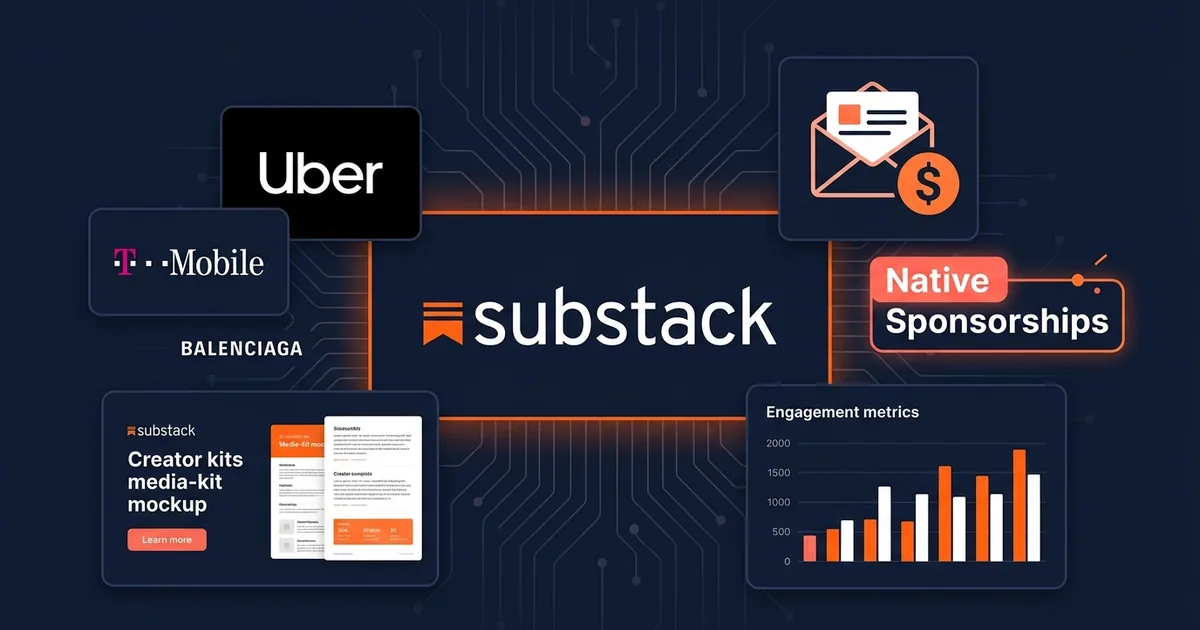
Substack opened a new monetization channel on Monday that could fundamentally change the economics of the newsletter business, and brands from Uber to Balenciaga are already on board.
The platform introduced “native sponsorships,” a program that pairs advertisers directly with newsletter creators for paid brand integrations. Variety reported that the launch includes initial partners Yahoo Scout, Whatnot, Granola, Balenciaga, T-Mobile, Polymarket, and Uber, a mix of tech companies, luxury brands, and consumer platforms that signals Substack is targeting premium advertiser demand.
How It Works
The sponsorship model is straightforward: brands pay Substack, Substack matches them with newsletter creators based on audience fit, and creators integrate the sponsored content into their regular editions. Creators choose which brands they work with, set the creative direction, and retain full editorial independence. The revenue split has not been publicly disclosed, but the structure mirrors how YouTube’s Partner Program works: the platform handles the sales infrastructure, the creator handles the content.
Alongside the sponsorship program, Substack launched Creator Kits, a tool that lets publishers build media kits from their audience data and pitch directly to advertisers. Think of it as LinkedIn for newsletter monetization, a standardized way for creators to package their reach, demographics, and engagement metrics for brand buyers.
Why This Changes the Math
Until now, Substack’s business model was simple: creators charge readers for subscriptions, and Substack takes a 10% cut. That alignment was part of the platform’s appeal. No ads meant no incentive to chase clicks, no algorithmic feed manipulation, no race to the bottom.
The sponsorship layer does not replace subscriptions. It adds a second revenue stream on top of them, which changes the economic ceiling for successful creators. A newsletter with 50,000 free subscribers and 5,000 paid subscribers might generate $250,000 to $500,000 annually from subscriptions alone. Brand sponsorships could add another $100,000 to $300,000 depending on the niche, the audience, and the frequency of sponsored posts.
For Substack, the move is about platform economics. The company has been growing rapidly in a creator economy that is increasingly competitive, with YouTube, TikTok, and even LinkedIn all courting the same talent with monetization tools. Adding sponsorships gives Substack a retention lever: creators who build brand relationships through the platform are less likely to leave for competitors.
The Brand Advertiser Angle
The advertiser roster is telling. Balenciaga, T-Mobile, and Uber are not experimental ad buyers. They are sophisticated brand marketers who understand the value of contextual placement in trusted editorial environments. Newsletter sponsorships offer what social media ads increasingly cannot: a reader’s undivided attention in a distraction-free format, delivered by a creator the reader has explicitly chosen to follow.
This is Variety’s Substack coverage reporting that the platform is positioning sponsorships not as traditional display ads but as “native” content integrations that align with the creator’s voice and format. The distinction matters for brands that have grown wary of programmatic ad placement next to low-quality content.
The Tension
The risk for Substack is cultural. The platform built its identity on the idea that writers should be paid by readers, not advertisers. Introducing brand money, even in a creator-controlled format, changes that dynamic. Some of Substack’s most prominent writers have publicly expressed skepticism about advertising on the platform, and the company will need to navigate that tension carefully.
The “newsletter” search term is trending on Google in the U.S. today, driven largely by this announcement, which suggests the market is paying attention. Whether that attention converts to advertiser demand and creator adoption will determine whether Substack’s sponsorship bet becomes a core revenue pillar or a footnote.