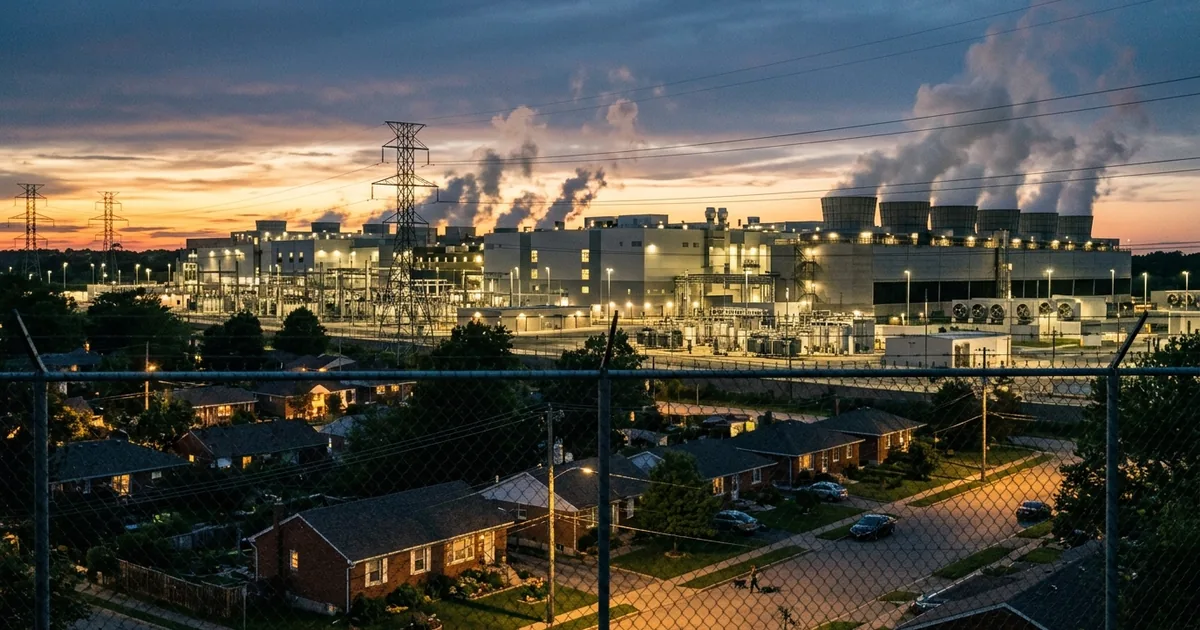
The political consensus that once greeted data center construction with open arms and generous tax breaks is fracturing. Illinois Governor JB Pritzker directed state agencies on June 5 to pause all new data center tax incentive agreements starting July 1, making Illinois the second major state to freeze incentives after Ohio Governor Mike DeWine suspended new exemptions in late May. The backlash is spreading, and the numbers explain why: Ohio alone has committed at least $2.3 billion in sales tax breaks for data centers, according to state data that revealed costs had ballooned 11 times beyond initial projections.
The Cost Explosion That Started It All
Ohio’s data center tax exemption program was supposed to be manageable. State officials projected it would cost $136 million in fiscal 2025 and $142 million in fiscal 2026. The actual numbers told a different story: $554 million in fiscal 2024 and nearly $1.6 billion in fiscal 2025. The 40-year window on some of these exemptions extends commitments to 2058, with Google, Meta, and Amazon affiliates each holding $600 million exemption packages.
DeWine froze the program after residents in several Ohio counties demanded a data center moratorium, citing rising utility bills, water contamination risks, and what they described as a culture of secrecy enforced through non-disclosure agreements between data centers and local governments.
The backlash caught the industry off guard. For years, the playbook was simple: offer tax incentives, promise jobs, break ground. But the AI boom has changed the equation. Modern AI data centers consume orders of magnitude more power and water than traditional facilities, and the costs are landing on residential ratepayers who never signed up for the deal.
Illinois Follows With a Broader Framework
Governor Pritzker’s pause goes further than Ohio’s. In addition to freezing new incentive agreements, Pritzker outlined a framework that would ban non-disclosure agreements between data centers and local governments, require facilities to report energy and water usage, mandate community benefits agreements, and raise electricity rates for data centers to reflect their disproportionate consumption.
Pritzker framed the decision as a response to legislative inaction. He had asked the Illinois General Assembly in February to address data center energy pricing, and the legislature failed to act. The July 1 pause is his workaround, with a push to codify the framework during the veto session in mid-November.
Existing incentive agreements will be honored, which means Meta’s $800 million DeKalb County facility and other projects already in the pipeline are not affected. The freeze targets only new agreements, but the signal it sends is significant: two of the Midwest’s largest states are now questioning whether the AI data center buildout is worth the public cost.
Microsoft Breaks Ranks
Perhaps the most telling development came from Microsoft, which publicly broke with the rest of Big Tech on Ohio’s data center policy. While Google, Meta, and Amazon have fought the incentive freeze behind the scenes, Microsoft issued a statement supporting the need for greater transparency and community engagement around data center siting.
The move is strategic. Microsoft has positioned itself as the “responsible AI” company across multiple policy fronts, and siding with frustrated communities over fellow hyperscalers reinforces that brand. It also does not hurt that Microsoft’s Azure buildout is further along than some competitors in Ohio, meaning a freeze on new incentives disproportionately affects companies still trying to break ground.
The Business Implications
For hyperscalers and colocation providers, the incentive freeze introduces a new variable into site selection. Tax breaks have been a decisive factor in data center location decisions for over a decade. If the Ohio and Illinois model spreads to other states, companies will face a choice: build in less favorable fiscal environments or pay full freight for the first time.
BTN has covered the scale of Big Tech’s AI infrastructure ambitions extensively, including Meta’s $200 billion Hyperion facility in Louisiana. Projects of that scale depend on favorable tax treatment and utility pricing. A national shift in the incentive landscape would not kill the AI buildout, but it would compress margins and potentially slow the pace of construction.
For utilities, the picture is mixed. Higher data center electricity rates would generate revenue, but the political pressure to shield residential ratepayers creates a pricing tension that regulators are not accustomed to navigating at this scale.
What Comes Next
The Ohio and Illinois freezes are the beginning of a pattern, not an endpoint. Utah’s governor has also paused data center projects, and state legislatures in Virginia, Georgia, and Texas are facing similar constituent pressure. The AI boom has turned data centers from invisible infrastructure into a live political issue, and elected officials are responding to the backlash faster than the industry expected.
The companies building this infrastructure have a limited window to get ahead of the problem. Voluntary transparency, community benefit agreements, and real investment in grid infrastructure would go further than lobbying to preserve a tax break regime that voters increasingly view as a giveaway. The companies that figure this out first will have an easier time building in the states that matter. The ones that do not will find themselves on the wrong side of a policy shift that is accelerating with every utility bill their neighbors receive.