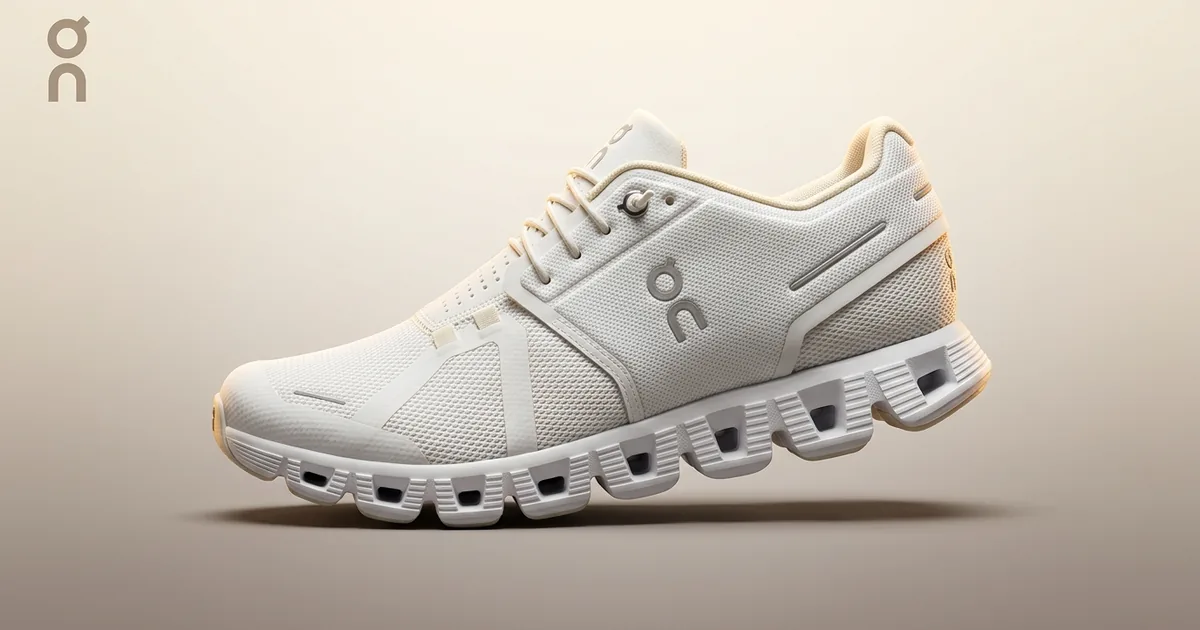
While the rest of the consumer-discretionary tape was selling off on Tuesday’s hot CPI print, the most interesting stock in athletic apparel was running the other direction. Swiss running brand On Holding posted Q1 revenue of 831.9 million Swiss francs, the first time the company has cleared CHF 800 million in a single quarter and a 14.5% jump from the same period a year ago. Net income nearly doubled to CHF 103.3 million from CHF 56.7 million. Gross margin expanded to 64.2%, a number that puts the company in a different industry from the one Nike and Lululemon think they are competing in. And as if to underline that this is a different kind of story, On’s board announced co-founders David Allemann and Caspar Coppetti are coming back as joint CEOs effective May 1, replacing Martin Hoffmann.
The Numbers That Make ONON A Different Story
Revenue beat consensus estimates of CHF 813 million by a comfortable margin and Net income of CHF 103.3 million translated to earnings per share of $0.31, well above the $0.25 the Street was modeling. Same-store sales in the direct-to-consumer channel grew 24.7% year over year, with wholesale up 9.1%. Those are not the splits of a brand fighting for shelf space at Foot Locker. Those are the splits of a brand whose customers are choosing it over the alternative on premium price points.
The number that should embarrass the bigger competitors is the gross margin. 64.2% in a quarter where freight, leather inputs, and Asia-sourced finished-goods costs were all running against the apparel industry is the kind of print that survives an audit. Nike’s most recent quarter put gross margin at 41.4%. Lululemon’s last reported quarter was 60.4%. On is now 270 basis points clear of Lululemon on profitability and roughly 23 percentage points clear of Nike, with revenue still less than a tenth of Nike’s. The implication is structural rather than cyclical. On is operating at a price-to-volume mix the larger brands cannot replicate without cannibalizing their existing distribution.
Inventory tells the same story from a different angle. Inventory days at On stand at roughly 165, well below the 190-plus the larger brands are carrying, and the working capital ratio is sitting at levels that suggest the company can absorb a 20% volume miss without distress. That is what a brand on the right side of the consumer-discretionary shakeout looks like.
The Founders’ Return Is Not A Crisis Move
The Hoffmann replacement is the headline that will get the most attention, and the company is positioning it as a planned hiatus rather than a forced exit, with Hoffmann described as pursuing “philanthropic interests.” On the call, Allemann and Coppetti emphasized continuity with the operating strategy Hoffmann executed. Wall Street tends to read a CEO transition as a tell that something is wrong, but the cleanest reading here is that the founders want their hands on the wheel for the next phase of the international expansion and want to own the brand decisions in a way that delegated execution does not allow.
The pattern is worth holding onto because it has come up before in successful consumer franchises. Apple’s Steve Jobs return in 1997 is the canonical case. Howard Schultz coming back to Starbucks in 2008 and again in 2022 was more mixed but produced clear brand discipline both times. Disney’s Bob Iger return delivered a deflated stock and a hard reset on streaming losses. The On version is closer to a strategic refresh than a turnaround, which is what makes it interesting rather than alarming. The stock initially traded down on the headline before reversing higher in the afternoon, suggesting institutional investors needed a few hours to decide which precedent applied.
The cohort matters. Allemann came out of design and marketing, Coppetti out of go-to-market strategy. Both were instrumental in shaping the original brand positioning around CloudTec running technology and the premium price-quality bundle. Their return signals the board’s read that the next leg of growth is brand-led rather than operations-led, which is consistent with the company’s increasing footprint in apparel, lifestyle, and tennis adjacent to the running core.
Why ONON Is Outrunning Nike And Lululemon
The competitive picture is the part that should worry the incumbents most. Nike is fighting a multi-front war right now. China demand has rolled over, the Nike stock crashed 15% in April on China slump, Iran war exposure, and a stalled turnaround, and the company’s wholesale channel reset has produced more execution risk than upside in the consolidated P&L. Lululemon is dealing with a deceleration in core women’s bottoms and a men’s category that has not produced the offsetting growth the strategy required. On is taking share from both at the same time, in different ways.
Against Nike, On is winning on premium running. The brand sits comfortably above the price point where Nike’s superstar marquee runners are positioned, which gives On the pricing power to absorb input cost inflation that is hurting Nike’s margins. The retail footprint is also designed for the post-mall consumer: roughly half of On’s North American volume now moves through DTC channels Nike took two decades to get right, and On built in five.
Against Lululemon, On is winning on the men’s side first. The lifestyle category On has built around the running shoe has produced a credible alternative for the male consumer who never quite bought the Lululemon brand promise. Tennis is the second front. On has used Roger Federer’s investment and brand endorsement to anchor a tennis line that is now visible at Indian Wells and Wimbledon-adjacent retail, and the early sell-through data is consistent with the running ramp.
The macro is also working for On in a way the larger brands cannot match. Consumer-discretionary spending is bifurcating. High-end customers are still spending. The middle is hollowing out. Brands that are pricing in the top quartile and consolidating share at the expense of mid-tier alternatives are the trade. On is the cleanest expression of that trade in athletic apparel.
What The Bull Case Misses, And What To Watch
The skeptical read on ONON has not gone away, and it is worth naming. The stock trades at roughly 50 times forward earnings, a multiple that builds in continued double-digit revenue growth and roughly stable margins through 2027. Any deceleration in either variable produces compression. The China exposure, currently around 8% of revenue, is small enough to be ignored but big enough to surprise on the downside if Brent stays at $107 and Chinese consumer spending tightens further.
The two signals that matter through Q2 are channel mix and the apparel attach rate. If the DTC growth keeps outpacing wholesale by double digits, the margin story holds. If apparel keeps growing as a percentage of revenue, the LTV story compounds. Both of those are possible. Neither is priced in at 50 times forward, which is what makes the setup interesting rather than expensive.
The Founder-CEO return at On is the kind of corporate story that gets lost in a week dominated by CPI and Fed-pricing volatility. It probably should not be. The brands that are running through this macro are the ones whose customers think of the price tag as a signal rather than an obstacle. On’s Q1 print is the cleanest evidence the trade is working. The next two quarters will tell us whether the founders’ return accelerates the curve or simply maintains it.