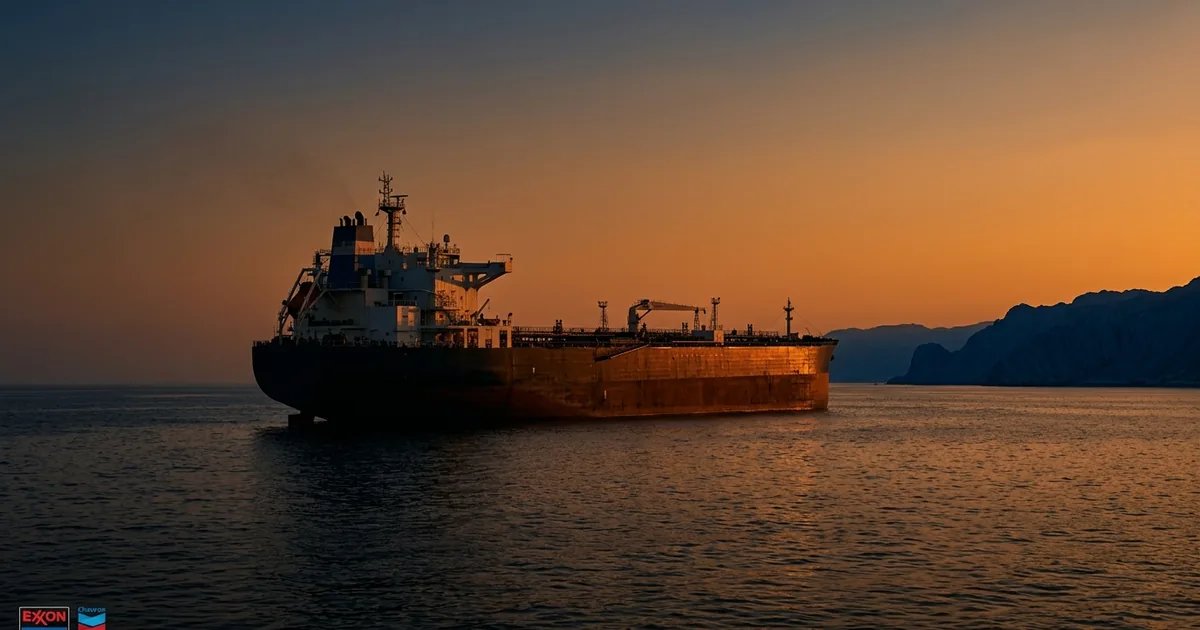
The clearest read on where oil goes from here came from the Oval Office on Monday, and it was not the read the energy bulls wanted. President Trump told reporters the US-Iran ceasefire framework was on “massive life support” after rejecting Tehran’s latest peace proposal as “garbage,” and the tape did the rest of the work. Brent crude futures for July gained 3.1% to $107.46 a barrel on Tuesday. West Texas Intermediate cleared $101.51. The Strait of Hormuz, which moved roughly a fifth of the world’s seaborne oil and LNG before the war, remained effectively closed to commercial traffic for the third straight week. The same energy spike that drove Tuesday’s hot 3.8% CPI print is the macro story right now, and the path back to disinflation runs through a tanker lane that is currently empty.
The Quote That Moved The Tape
Trump’s formulation was vivid and deliberately so. “The ceasefire is on massive life support where the doctor walks in and says, sir, your loved one has approximately a one percent chance of living,” he told reporters Monday, per CBS News’s transcript of the comments. The proximate trigger was a counter-proposal from Tehran that the White House rejected as “totally unacceptable.” Iranian officials told state media their delegation was “ready to fight on,” with no diplomatic re-engagement scheduled before the end of the month.
For commodity desks, the line about the one percent chance is a sell signal on near-month diplomacy. Brent had been drifting back toward $100 in late April on signs the two sides were narrowing differences on inspection and sanctions-relief language. That drift has now reversed. The futures curve flattened on Tuesday in a way that says the market is pricing in a longer plateau at $105 to $110 rather than the sharp resolution a ceasefire announcement would produce.
The energy-equity tape confirmed it. Exxon, Chevron, and the broader S&P energy sector held up while the rest of the market sold. The shipping-and-tanker names that benefit from Hormuz reroute trades, Frontline and Scorpio Tankers among them, posted fresh year-to-date highs. The clean-versus-dirty spread in crude tanker rates has now blown out to its widest level since the early-2022 Russia shock, a tell that physical traders are also positioning for a longer disruption.
How Much Of Tuesday’s CPI Is The Hormuz Number
The April CPI release earlier Tuesday gave the energy story a hard number to sit on top of. Headline inflation came in at 3.8% year over year, the hottest print since May 2023, and the BLS attributed more than 40% of the monthly headline gain to energy alone. Strip out the energy component and the April print would have come in closer to 3.1%, roughly in line with March. The Hormuz shutdown, in other words, accounts for roughly 70 basis points of the headline inflation rate right now. We covered this through-line in our analysis of how April CPI crashed the chip trade.
That is the number Fed Chair Jerome Powell will be staring at on the June 16-17 meeting. The supply-side shock from the blockade is not something rate policy can fix. What rate policy can fix is the wage-price feedback if energy stays elevated long enough to feed through to second-round inflation in services and shelter. The Atlanta Fed’s nowcast for Q2 already shows a 0.3 percentage point lift over the staff projection from March. The Cleveland Fed’s inflation nowcasting tool is signaling May could come in at 3.9% if Brent holds.
The math is straightforward. Every $10 sustained move in Brent adds roughly 25 basis points to headline CPI on a 90-day lag, with about half the impact bleeding into core through transportation and shelter. Brent at $107 versus the pre-war baseline near $70 implies a roughly 90 basis-point inflation premium that the Fed cannot rate-cut away. Hormuz is the binding constraint on the Fed’s June decision, full stop.
Energy Equities That Benefit Versus Get Hurt
The flow of capital through the sell-off Tuesday was telegraphing the next phase of the trade. The names that benefit from sustained $100-plus Brent are the integrated majors with long-dated reserves, the US shale producers with low breakeven costs, the LNG names with locked-in offtake agreements, and the midstream pipeline operators that own the throughput economics of an Asian rerouting. Exxon, Chevron, Cheniere, ConocoPhillips, and Williams all closed green on a red tape Tuesday.
The hurt list is broader and quieter. Airlines absorb fuel costs directly and almost never recover them through fares fast enough to protect margins; Delta, American, and United all sold off harder than the broader market. Chemicals companies with naphtha feedstock exposure trade lower on the Brent move, with Dow Chemical and LyondellBasell among the names underperforming. Auto OEMs face a double hit, with input costs rising at the same time as discretionary consumer spending tightens. We saw this play out in real time on Tuesday’s tape, with consumer-discretionary the worst-performing S&P sector after technology.
The financial sector has a more nuanced position. Higher-for-longer rates are net positive for net interest margins, which is why the regional banks held up better than the small-cap broad index. But the credit channel is the one to watch. If Brent stays at $107 into Q3 and consumer spending rolls over, credit losses on subprime auto, BNPL, and lower-end credit card portfolios will start to show up in the Q2 earnings cycle.
The Diplomatic Timeline Is The Trade
Two dates matter for energy positioning over the next 30 days. The first is May 22, when the Iranian foreign ministry has signaled it will respond formally to the rejected proposal. The second is May 29, when the EU’s joint position on sanctions enforcement comes up for review. Either could trigger a sharp move in either direction. The most likely scenario, per the Reuters reporting via Investing.com on the latest oil settlement, is continued grinding stalemate, with Brent oscillating in a $103 to $112 range until one side blinks.
The wild card is a tanker incident. Hormuz is currently closed to commercial traffic, but there are still naval assets from multiple parties operating in or near the strait. A single targeted strike on a US-flagged or US-allied vessel would push Brent to $125 within hours and re-open the conversation about US direct intervention. Energy desks have been pricing roughly a 15% probability of that scenario through year-end, a probability that ticks up every week the diplomacy stays frozen.
What To Watch Next
The Fed’s June 16-17 meeting is the dominant near-term catalyst. CME FedWatch is now pricing roughly a 98% probability of a hold, meaning the cut path is fully out the window unless something gives on Hormuz. The September CPI release on October 11 is the next genuine inflection point. If Brent is still at $107 by then, the conversation in Washington shifts from “when do they cut” to “do they have to hike.”
Trump’s life-support framing is the kind of rhetorical device that markets are not supposed to take literally. The problem is that the tape is taking it literally, the Fed is taking it literally, and the CPI is taking it literally. The patient is in the room, the doctor is on the record, and the trade until further notice is long energy, short rate cuts, short consumer discretionary, and watching the Hormuz feed.