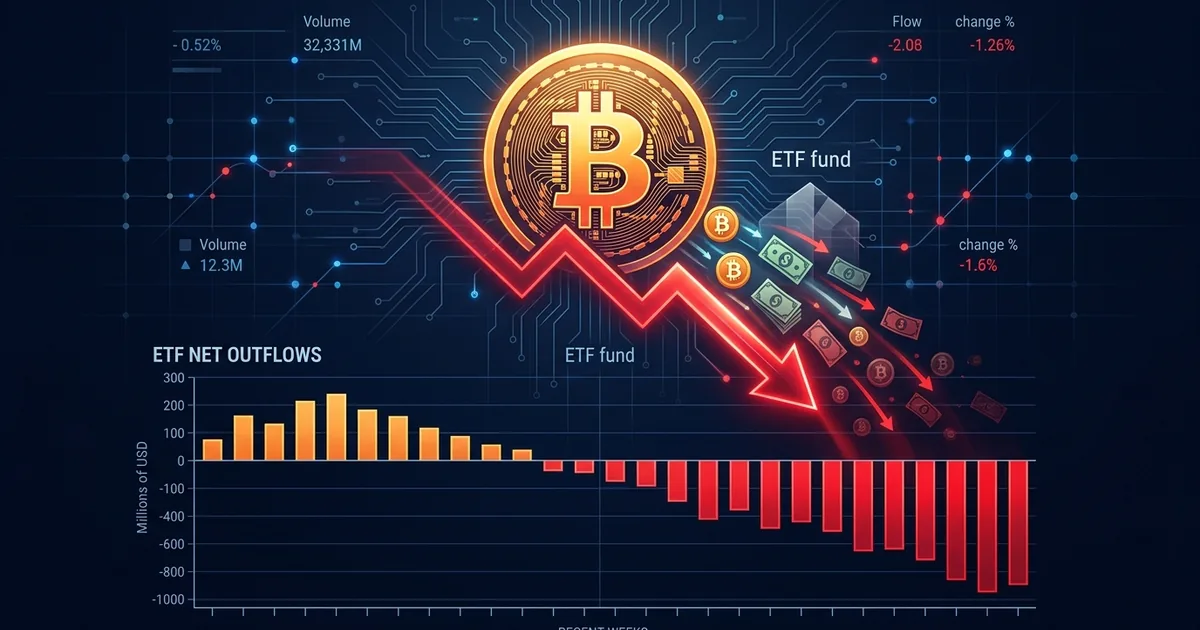
U.S. spot Bitcoin ETFs shed $4.5 billion in net outflows during June 2026, their worst month since the products launched in January 2024. The exodus broke the previous monthly record of $3.56 billion set in February 2025 and coincided with a 20.48% decline in Bitcoin’s price, the steepest monthly drop of the year. The institutional enthusiasm that powered the ETF approval rally has given way to something closer to a controlled retreat.
BlackRock’s IBIT Took the Biggest Hit
BlackRock’s iShares Bitcoin Trust (IBIT), the undisputed market leader among spot Bitcoin ETFs, accounted for $3.55 billion of the total outflows, roughly 79% of the category’s redemptions. That concentration matters. IBIT’s dominance meant its outflows dictated the category’s narrative: when the largest, most liquid Bitcoin ETF sees that kind of selling pressure, it signals a shift in institutional positioning, not just retail panic.
The timing was brutal. From May 15 through June 3, Bitcoin ETFs posted 13 consecutive days of net outflows, the longest such streak on record. Crypto Briefing reported that investors pulled roughly $4.4 billion from the funds during that stretch alone, with the remainder trickling out through the rest of the month.
The Price Action Tells the Story
Bitcoin closed four of 2026’s first six months in negative territory. The June decline took BTC from above $75,000 to the upper $50,000s, wiping out most of the gains from the post-ETF-approval rally that peaked above $100,000 in late 2025. The unwinding has been orderly rather than catastrophic, which is itself significant: this is not a liquidity crisis or a contagion event. It is a repricing of risk appetite.
The broader crypto market followed. Ethereum ETFs posted $529 million in June outflows, while the few existing XRP and Hyperliquid ETFs were the only products to attract net inflows, a sign that some institutional capital is rotating within crypto rather than exiting entirely. As CoinDesk reported on Tuesday, the record outflows stand in contrast to the broader equity market’s best quarter since 2020.
Why Institutions Are Pulling Back
Three forces converged. First, the equity rally created opportunity cost pressure: with the S&P 500 up 14.8% and the Nasdaq surging 21.4% in Q2, the case for holding a declining, uncorrelated asset weakened. Why ride a 20% drawdown in Bitcoin when AI chip stocks are delivering triple-digit quarterly returns?
Second, the macro backdrop that initially supported Bitcoin’s case as an inflation hedge has shifted. Cooling inflation data and rising expectations for Fed rate cuts removed the urgency behind the “hard money” thesis that drove much of the ETF inflow in 2024 and early 2025.
Third, and perhaps most importantly, the corporate buyer base that replaced retail ETF investors is buying at lower prices. Strategy and other Bitcoin treasury companies continued accumulating through the decline, suggesting that the institutional bifurcation between ETF holders (who are selling) and balance-sheet holders (who are buying) is widening. The question is whether the balance-sheet buyers can absorb enough supply to establish a floor.
What Comes Next
July opens with Bitcoin trading near $60,000 and the ETF category facing its first real credibility test. The products were sold to institutional allocators on the promise of regulated, liquid access to Bitcoin exposure. That pitch works when the asset is appreciating. When it falls 20% in a month while the equity market hits records, the conversation shifts from “allocation” to “redemption.”
The ETFs are not going away. AUM remains substantial, and the infrastructure is permanent. But the narrative has shifted from “institutional adoption is inevitable” to “institutional capital is cyclical.” The next catalyst will likely come from outside the crypto market itself: a Fed rate cut, a geopolitical shock that revives the safe-haven thesis, or a stabilization in price that convinces momentum-driven allocators to re-enter. Until then, the ETF outflow data will remain the most reliable real-time indicator of where institutional sentiment actually stands.