Apple Inc. has confirmed that its Worldwide Developers Conference keynote will take place on June 8, and the company’s quiet pre-show signaling points at one headline above all others: the long-delayed overhaul of Siri is finally the centerpiece. Two weeks out, this is no longer a gadget preview. It is the moment Apple either justifies its place in the artificial-intelligence trade or hands more of the iPhone’s future to its rivals.
What Apple Is Promising on June 8
The keynote anchors a week of releases built around iOS 27 and macOS 27, but Siri is the story. Reporting ahead of the show describes a Siri rebuilt as a genuine chatbot: on-screen awareness so it can act on what you are looking at, personal-context understanding drawn from your own data, multi-step actions that reach across apps, a new activation gesture through the Dynamic Island, and a standalone Siri app that keeps conversation history the way ChatGPT does. MacRumors has cataloged the expected Apple Intelligence and Siri upgrades, and TechRepublic’s WWDC 2026 preview frames the Siri overhaul as the keynote’s centerpiece.
If that feature list sounds familiar, it should. It is roughly what Apple promised at WWDC two years ago and never fully shipped. The credibility question is not whether the demo looks good in June. It is whether the features reach phones before the next WWDC.
The Tell Is Who’s Powering It
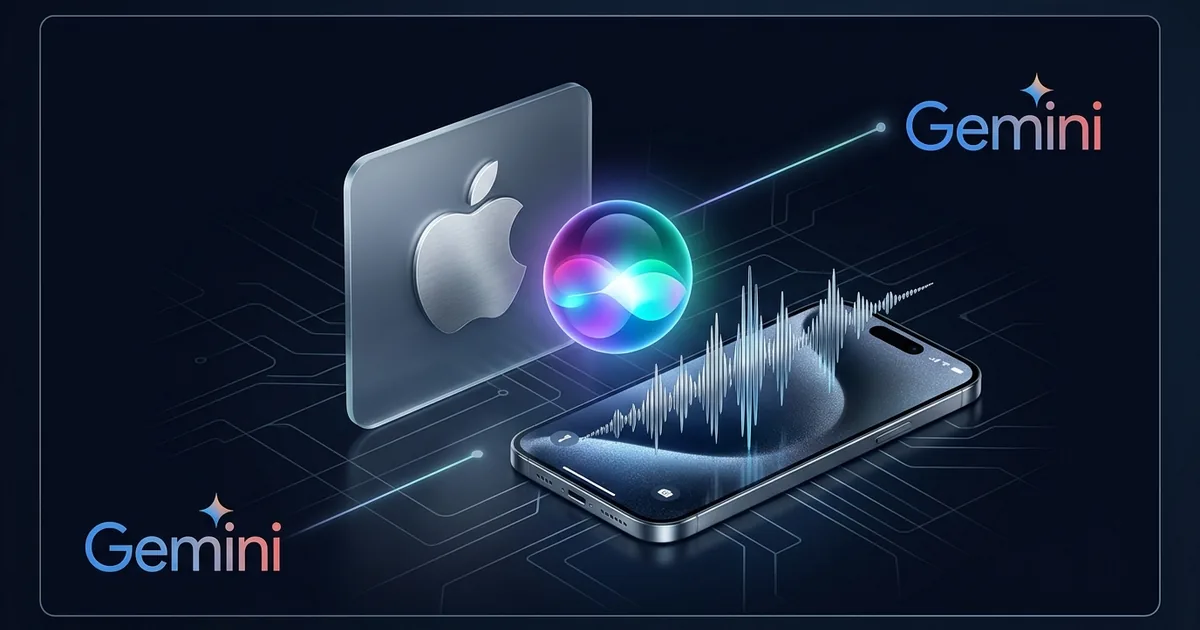
Here is the detail that should reframe the whole conversation. The rebuilt Siri is reported to run on a custom model based on Google’s Gemini, processed through Apple’s own Private Cloud Compute servers. Read that slowly. The company that markets itself as the master of the full stack is, for its most important AI product, renting the brain from Google.
That is a remarkable admission of where Apple sits in the AI race, and it carries real business weight. Apple already collects something on the order of $20 billion a year from Google to remain the default search engine on the iPhone. Now the relationship deepens in the other direction, with Apple leaning on Google’s models to make its flagship assistant work. A dependency that runs both ways is one that regulators, and rivals, will study closely. It also raises the question every Apple shareholder should be asking: if the intelligence inside Siri is Google’s, what exactly is Apple’s durable advantage in AI beyond the hardware it wraps around someone else’s model?
Why This Is a Valuation Question, Not a Gadget Question
Apple is a roughly $3 trillion company carrying a premium that assumes it will not be left behind by the platform shift of the decade. The first Apple Intelligence rollout landed with a thud, features slipped, and the gap between Cupertino’s marketing and its shipping calendar became a running story. Every quarter that Siri stays dull while ChatGPT and Gemini get sharper is a quarter that the most valuable real estate in technology, the iPhone home screen, leaks relevance to someone else’s assistant.
That is the accountability test in plain terms. WWDC 2026 is where Apple has to show it can convert its unmatched distribution, more than two billion active devices, into an AI product people actually reach for. Distribution has always been Apple’s trump card. It only pays off if the product on the other end is good enough to keep users from typing their real questions into a competitor’s app instead.
The competitive clock makes the math worse. Google is shipping Gemini across Android and its own apps, OpenAI is putting ChatGPT in front of hundreds of millions of users a week, and both are content to be the assistant iPhone owners actually open. Every month Apple’s built-in option stays a punchline, it trains its most loyal customers to reach for a rival first, and habits formed on a phone are sticky. Apple is not just late. It is late in a category where being late compounds, because the assistant people use becomes the assistant people trust, and trust is the one moat a software company cannot quietly buy back later.
A Keynote With More Than iOS on the Line
There is a leadership subplot too. This is widely reported to be among the last keynotes Tim Cook delivers as chief executive, with hardware chief John Ternus seen as the likely successor, a transition we examined when Apple’s AI strategy and its succession question collided earlier this spring. That lifts the stakes on June 8 from product to legacy. A Siri that finally works lets Cook hand over a company that has caught up. A Siri that disappoints hands his successor the same unanswered question, now two years older and far more expensive to solve.
The bar, then, is not a polished demo. Apple has cleared that bar before and still failed to ship. The bar is a date, a real one, when the new Siri reaches the hundreds of millions of phones already in pockets. Get there, and the AI premium baked into the stock looks earned. Miss again, and June 8 becomes one more keynote where Apple told us what it would do, while Google quietly powered the part that actually mattered.