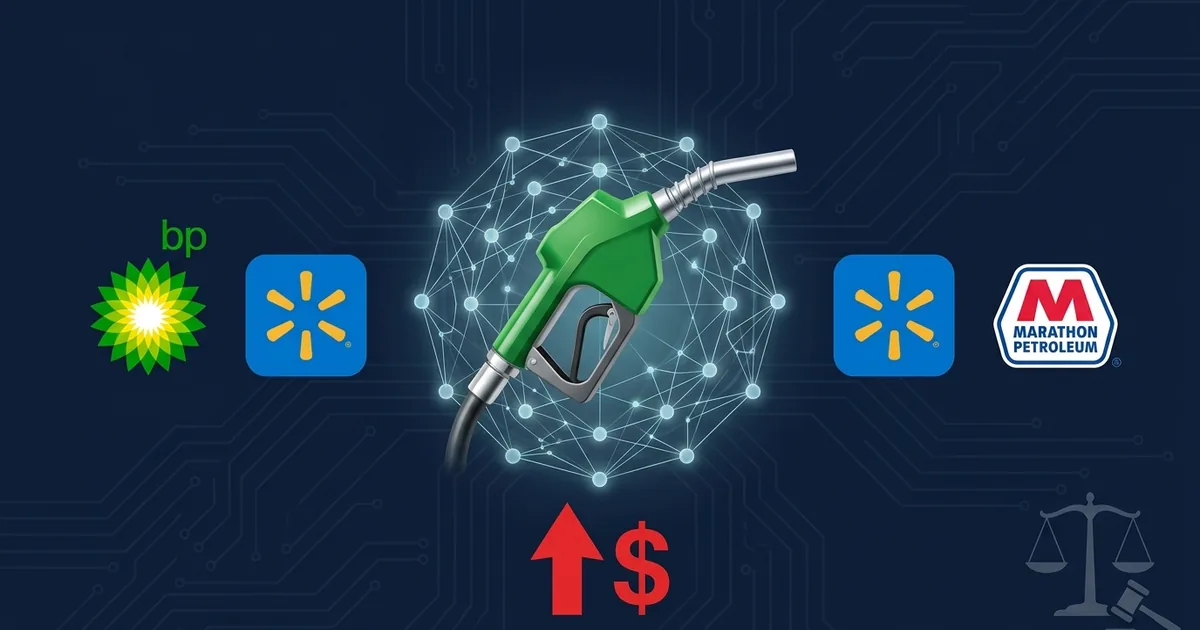
California drivers have filed a federal lawsuit accusing some of the largest gas station operators in the state of using artificial intelligence to illegally inflate pump prices, a case that could become the first major legal test of algorithmic pricing collusion in the United States. The complaint, filed June 22 in federal court in Sacramento, names Walmart, Marathon Petroleum, BP, and 7-Eleven among the defendants.
The Algorithmic Pricing Accusation
At the center of the case is Kalibrate Fuel Systems Ltd., a pricing software company whose AI tool is used by gas station operators across California. The plaintiffs allege that the tool automatically adjusts prices based on confidential competitive data shared among rival operators, effectively creating a price-fixing cartel without the operators ever sitting in the same room.
PYMNTS reported the suit alleges the tool inflated gasoline prices by as much as 22 cents per gallon and diesel by 33 cents per gallon. In areas where a significant share of stations use the Kalibrate system, prices rose by approximately 30 cents per gallon above what competitive market dynamics would produce.
The defendants collectively operate more than 1,700 filling stations across California, a state where gasoline has already topped $7 per gallon in some areas. Even modest per-gallon overcharges at that scale translate into significant consumer harm.
Why This Case Matters Beyond Gas Stations
The lawsuit is not just about fuel prices. It is about whether AI-mediated pricing constitutes antitrust collusion under existing law.
Traditional price-fixing requires competitors to communicate and agree on prices. The Kalibrate system allegedly achieves the same economic outcome without direct human communication: the algorithm ingests each competitor’s pricing data and recommends prices that maximize collective revenue across the network. The question for the court is whether feeding competitive data into a shared algorithm constitutes the kind of “meeting of the minds” that antitrust law prohibits.
This is a question regulators have been circling for years. The Federal Trade Commission has warned repeatedly that algorithmic pricing tools can facilitate tacit collusion, but enforcement has lagged behind the technology. California’s case may force the first significant judicial answer.
California’s New Anti-Algorithm Pricing Law
The complaint gains additional force from Assembly Bill 325, a California law that took effect earlier this year specifically targeting algorithmic pricing collusion. The law makes it illegal for competitors to use shared algorithms to coordinate pricing, even if no direct communication occurs between the companies. The plaintiffs cite AB 325 alongside the Cartwright Act, California’s primary antitrust statute.
If the court finds that Kalibrate’s tool violates AB 325, the precedent would extend well beyond gas stations. Hotels, airlines, ride-share platforms, and any industry that uses algorithmic pricing optimization could face similar legal exposure. The real estate sector has already seen related litigation: a landmark case against RealPage’s rent-pricing algorithm settled for nearly $1 billion earlier this year.
The Business Implications
For the named defendants, the financial exposure is meaningful but manageable. Marathon Petroleum, BP, Walmart, and 7-Eleven are all large enough to absorb litigation costs. The bigger risk is regulatory: a ruling that algorithmic pricing tools can constitute collusion would force every company using similar software to audit and potentially rebuild its pricing infrastructure.
For Kalibrate, a conviction or significant settlement could be existential. The company’s business model depends on aggregating competitor data to optimize prices. If courts rule that aggregation is collusion, the product itself becomes illegal.
The broader AI industry should be paying attention. California has been increasingly aggressive in regulating AI applications that affect consumers, from healthcare recording consent to algorithmic hiring. The gas pricing case adds a new dimension: AI as an instrument of market manipulation. How the court draws the line between optimization and collusion will shape AI deployment in regulated industries for years.