Kevin Warsh sat down at the head of the Federal Open Market Committee table on Monday for the first time as Federal Reserve chair, and every trading desk on the planet is watching what he does with a single phrase buried in the post-meeting statement.
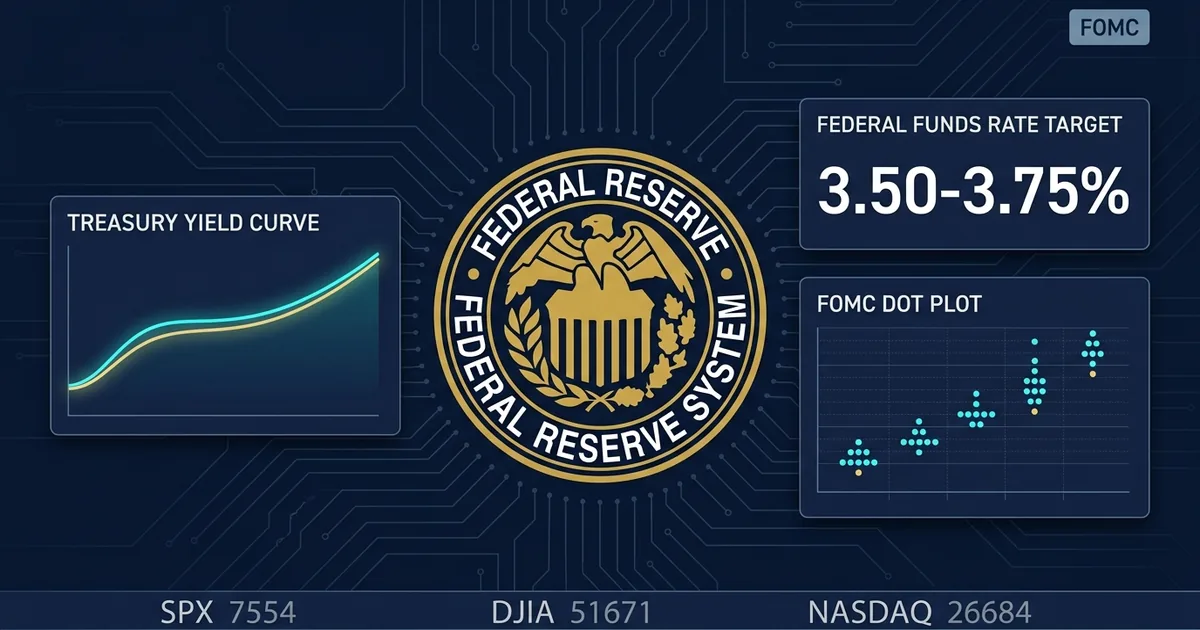
The rate decision itself is a foregone conclusion. CME FedWatch data shows 97.4% of traders expect the Fed to hold the federal funds rate steady at 3.50% to 3.75% when the two-day meeting wraps Wednesday. The real action is in the language, the dot plot, and the first press conference of the Warsh era.
The Easing Bias Is the Story
The FOMC’s current statement still carries what traders call an “easing bias,” a phrase embedded in the policy language that signals the committee is inclined toward further rate cuts. Warsh inherited that language from Jerome Powell’s final meetings, where the Fed was still in cutting mode. The question now: does Warsh keep it, soften it, or rip it out entirely?
Economists broadly expect a shift from an easing stance to a neutral one. That sounds technical, but the market translation is blunt: the era of rate cuts is over, and rate hikes are back on the table if inflation keeps running hot. May CPI came in at 4.2%, a three-year high driven by energy costs from the Iran conflict, and energy prices remain elevated despite last week’s peace deal. The case for further cuts has evaporated.
Warsh’s First Press Conference Will Set the Tone
Warsh was confirmed by the Senate in a 54-45 vote and sworn in on May 22. He is a known hawk, a former Morgan Stanley executive and George W. Bush-era Fed governor who has spent years publicly criticizing the central bank’s post-2008 monetary policy as too loose for too long.
His Wednesday press conference is where the real market-moving signals will land. Powell was measured and deliberate, choosing his words to minimize volatility. Chase’s preview of the meeting flagged three things investors should watch: the dot plot trajectory, any shift in the statement’s forward guidance, and Warsh’s communication style. A more direct, less consensus-driven delivery could itself become a source of market volatility.
The Dot Plot Will Reveal the Rate Path
The Summary of Economic Projections, released alongside Wednesday’s decision, will show where individual Fed officials see rates heading into year-end and beyond. The last dot plot, from March, still showed a majority of officials expecting at least one more cut in 2026. With inflation at 4.2% and the labor market holding firm, those dots are almost certainly moving higher.
IndexBox’s analysis noted that bond market participants are already pricing in a shift, with the yield curve reflecting expectations of rates staying elevated through the end of the year. The 10-year Treasury yield has been climbing since April, and a hawkish dot plot could push it further.
Markets Arrived in Good Spirits, but the Week Is the Test
Wall Street walked into Monday riding a strong session. The S&P 500 gained 1.65% on Friday to close at 7,554, the Nasdaq popped 3.07% to 26,684, and the Dow added 469 points for a record close of 51,671. The catalyst was geopolitical relief: the U.S. and Iran announced a ceasefire extension that cratered oil prices, with WTI crude falling 5.5% to $80.20 per barrel.
That peace-deal euphoria is real, but it is also fragile. Oil markets remain volatile with an estimated 100 million barrels of crude sitting in stranded tankers off Venezuela and Iran, and any disruption to the ceasefire would reverse the decline overnight. The Kiplinger live blog covering the meeting noted that May industrial production data, due before Monday’s open, will be a key recession-risk gauge alongside the main event.
What This Means for the Rest of 2026
The Warsh Fed is going to look different from the Powell Fed. Where Powell governed by consensus and prized predictability, Warsh has signaled he favors “sound money” principles and is less likely to tolerate inflation running above target while waiting for perfect data. His track record suggests he will err on the side of tightening too early rather than too late.
For markets, that means the put everyone assumed the Fed had in place, the implicit promise to cut rates at the first sign of economic trouble, may be weakening. The S&P 500 has surged 78% over three calendar years on the back of AI enthusiasm and rate-cut expectations. If Warsh signals that rates could go up before they go down again, the math changes for every asset class, from equities to real estate to crypto.
Wednesday’s press conference will be the most watched Fed event since Powell’s Jackson Hole pivot in 2022. The rate decision is already priced in. Everything else is wide open.