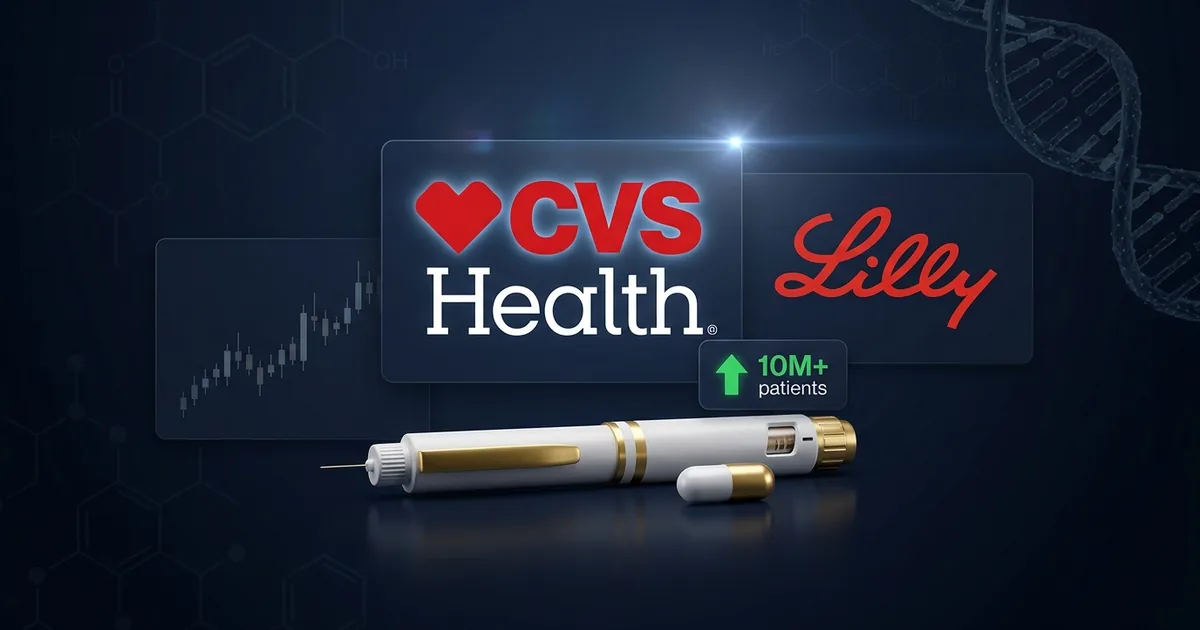
The GLP-1 drug wars just entered a new chapter. CVS Health announced it will restore coverage of Eli Lilly’s weight-loss injection Zepbound across its commercial formularies and add Foundayo, Lilly’s newly approved oral obesity pill, as a preferred option starting October 1. The decision reverses a controversial move from last year and gives more than 10 million U.S. patients easier access to Lilly’s obesity treatments through insurance.
The reversal did not happen because CVS had a change of heart. It happened because Eli Lilly cut the price it charges health plans for Zepbound, breaking a pricing standoff that had locked Lilly out of the largest pharmacy benefit manager in the country for nearly a year.
How the CVS-Lilly Standoff Unfolded
In July 2025, CVS Caremark, the company’s pharmacy benefit unit, restricted access to Zepbound in favor of Novo Nordisk’s competing weight-loss shot Wegovy. The move came after Novo offered CVS a better deal on pricing. The practical effect was stark: millions of patients on CVS-managed plans who wanted Zepbound had to switch drugs, pay out of pocket, or go without.
The backlash from patients was significant. CVS faced sustained criticism from patient advocacy groups and physicians who argued that restricting access to a clinically effective obesity treatment based on rebate negotiations, not medical evidence, undermined patient care. Lilly responded by cutting its wholesale acquisition cost for Zepbound and offering eligible patients with commercial coverage co-pays as low as $25 per month.
Why Foundayo Changes the Equation
The addition of Foundayo is arguably the bigger story for the GLP-1 market. Foundayo is an oral tirzepatide pill, the same active ingredient as Zepbound but in a form factor that eliminates the need for weekly injections. For the substantial population of patients who are reluctant to self-inject, an oral option removes one of the most significant barriers to treatment adoption.
CVS adding Foundayo to its preferred drug list at launch is a signal that Lilly has priced the oral version competitively enough to win formulary placement without the kind of standoff that delayed Zepbound coverage for nearly a year. For Lilly, getting Foundayo onto CVS’s formulary from day one is a distribution win that its injectable products never had.
The Business Implications for Lilly and Novo
This is a market share story at its core. Novo Nordisk has dominated the GLP-1 weight-loss category through its Wegovy franchise and its advantageous PBM contracts. Lilly’s exclusion from CVS Caremark was Novo’s most visible competitive moat. That moat just got breached.
Lilly’s Q1 2026 earnings already showed the company generating $3.8 billion in combined Mounjaro and Zepbound revenue. Adding CVS Caremark’s 10 million-plus covered lives to the addressable market, with both an injectable and an oral option, could meaningfully accelerate Lilly’s trajectory in the second half of the year. Novo will need to respond, likely with pricing concessions of its own or with an oral semaglutide push to match Foundayo’s convenience advantage.
The PBM dynamic here is worth watching. CVS Caremark now offers both Wegovy and Zepbound as preferred options, which means it is extracting competitive pricing from both manufacturers. That is exactly the leverage PBMs are designed to create, and it is exactly the outcome that benefits patients on these plans through lower co-pays.
The Affordability Question Is Not Solved
Eligible patients with commercial coverage can now get Zepbound and Foundayo for as low as $25 per month, roughly comparable to what Novo charges for Wegovy. But “eligible patients with commercial coverage” is a narrow slice of the population that needs obesity treatment. Medicare still does not cover GLP-1 drugs for weight loss. Uninsured patients face list prices north of $1,000 per month.
The CVS reversal is a win for the commercially insured segment of the market, but it does not address the structural affordability gap that keeps these drugs out of reach for the patients who arguably need them most. Until Congress acts on Medicare coverage or manufacturers pursue dramatically lower price points for the uninsured, GLP-1 drugs will remain a two-tier market: transformative for those with the right insurance, inaccessible for everyone else.
What to Watch Next
The GLP-1 market is entering its most competitive phase yet. Novo Nordisk is expected to push its own oral semaglutide product more aggressively in response to Foundayo’s launch and CVS formulary inclusion. Amgen’s experimental obesity drug MariTide is working through late-stage trials with a differentiated dosing schedule. And the PBMs, including CVS Caremark, UnitedHealth’s Optum Rx, and Cigna’s Express Scripts, will continue to play manufacturers against each other for better pricing.
For Eli Lilly’s stock, the CVS restoration removes a significant distribution headwind heading into the second half of fiscal 2026. Analysts will be watching the October 1 launch closely for early adoption signals, particularly on Foundayo, where the oral form factor could unlock an entirely new patient cohort that has avoided injectable treatments.
For the 10 million patients who lost access to Zepbound last year, October cannot come soon enough.