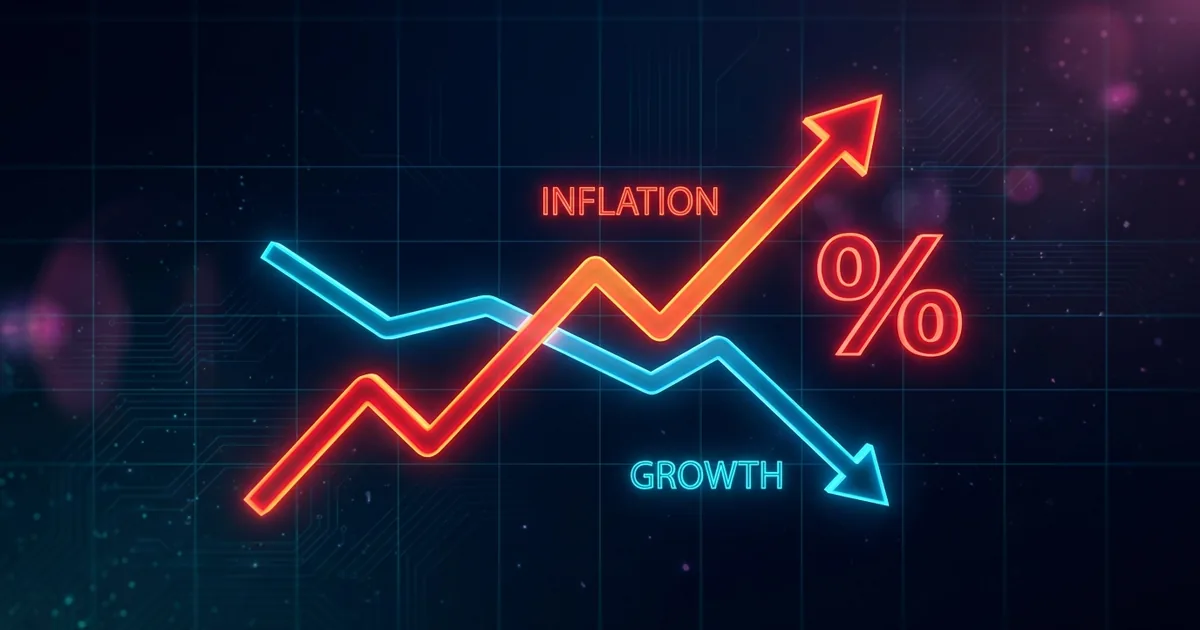
The Fed got the second slap inside 36 hours.
On Tuesday it was CPI. On Wednesday it was PPI. And the producer price report was the worse of the two. The Bureau of Labor Statistics said wholesale prices jumped 1.4 percent in April, the biggest single-month gain since March 2022 and nearly three times the 0.5 percent Wall Street consensus. On a 12-month basis, the headline rate came in at 6.0 percent year over year, the hottest annual print since December 2022.
That is not a hot read. That is a regime-shifting read.
The market response was instant. Two-year Treasury yields jumped 14 basis points before noon. Fed funds futures repriced from a 35 percent implied probability of one cut in 2026 to roughly zero. The CME FedWatch tool, in a development that would have been unthinkable six weeks ago, now shows a 39 percent implied probability of an interest rate hike before year-end.
Powell does not get to cut. The question is whether he gets to hold.
What Drove The Number
The headline gain was broad-based, which is the part that should keep traders up at night. Goods prices climbed 2.0 percent on the month. Services prices rose 1.2 percent. Within the services category, trade services margins jumped 2.7 percent, which is the wholesalers passing through cost. That single line item contributed roughly two-thirds of the services component of the headline.
Energy did its part. Gasoline prices surged 15.6 percent on the month as Brent crude held above $107 a barrel. The energy complex contributed roughly 40 percent of the total PPI gain by some sell-side decompositions, with services driving the other 60. The full release is available on the Bureau of Labor Statistics PPI page and the line-item detail tells the same story we flagged on Tuesday: this is supply-driven inflation feeding through every layer of the production chain.
The Iran war and the closure of the Strait of Hormuz are not abstract geopolitical risk anymore. They are showing up in producer margins for the fourth consecutive month.
Why This One Hits Harder Than Tuesday’s CPI
CPI tells you what consumers paid. PPI tells you what producers paid, which is what consumers are going to pay in 30 to 90 days. Tuesday’s 3.8 percent CPI was the warning shot. Wednesday’s PPI is the confirmation that the next CPI print is going to be uglier.
Walmart already telegraphed the punch. On the company’s most recent earnings call, CFO John David Rainey said customers should start seeing higher prices as soon as later this month. That was before the PPI print. After Wednesday, the question for every consumer-facing CEO is no longer “do we pass through” but “how much, and how fast.” Target reports next week. Home Depot is on deck. The tariff and energy cost stack is showing up at the same time as the wage cost stack.
And the Fed cannot fix any of it with rates. This is supply-driven inflation. Cutting rates makes it worse. Hiking rates does not fix the supply problem and risks tipping a labor market that has cooled in seven of the last eight reports.
Powell’s last FOMC meeting, the one we covered as “the most dissents since 1992,” suddenly looks less like a one-off and more like the Fed staff watching the data turn in real time. Four dissents was the loudest signal we had. Tuesday and Wednesday were the second and third.
The Stagflation Word
For two years, the official line out of Fed staff and most sell-side strategy desks was that “stagflation” was a 1970s slur, not a 2020s scenario. The word is back, and it is back with a vocabulary.
The textbook definition is rising inflation alongside slowing growth. We are not quite there. Q1 GDP printed at 1.8 percent, which is slow but not recessionary. Real consumer spending is still positive. The labor market is cooling but unemployment remains under 4.5 percent.
But the trajectory is the issue. The Atlanta Fed GDPNow tracker for Q2 has drifted from 2.3 percent in early April to 1.1 percent after Wednesday’s data. The wholesale margin pass-through that PPI just confirmed is a direct hit to consumer purchasing power. And the energy shock has now exceeded the duration that most macro models assume can be transitory.
JPMorgan strategists called Wednesday’s number “the cleanest stagflation print of the cycle.” Citi went further, telling clients that the bank now models a 35 percent probability of a Fed hike in Q3 and a 22 percent probability of a recession in the first half of 2027.
Those numbers will get debated. The pattern is harder to argue with.
Where The Money Goes
For the trade, the rules of the higher-for-longer playbook are back in force. Long duration in fixed income hurts. Long energy and commodities helps. Long defensives with pricing power helps. Long high-multiple tech with no near-term cash flow gets punished.
The PPI tape on Wednesday was unkind to exactly the cohort you would expect. The Russell 2000 dropped 1.7 percent. Regional banks fell 2.2 percent. The PHLX Semiconductor Index gave back some of the AMD-Cisco rally and closed down 1.1 percent. Energy stocks ripped, with the XLE up 2.4 percent and Chevron leading the Dow.
The currency move is the cleanest signal. The DXY climbed 0.6 percent intraday. The euro and yen both got hit. That is what happens when the market repositions for a Fed that cannot cut while its peers, particularly the ECB, look increasingly likely to.
According to CNBC’s coverage of the report, Fed staff at the May 13 closed session reportedly began modeling the policy implications of a sustained 6 percent annual PPI run rate. That is not a forecast. That is a contingency plan.
What To Watch Next
The next data point is retail sales on Thursday morning. If consumers held up despite the price pressure, the soft-landing case gets a heartbeat. If they cracked, the conversation moves from stagflation to something harder to name.
Beyond that, the Q2 corporate margin data will tell us who has pricing power and who does not. Procter & Gamble, Coca-Cola, and Costco will be the most-watched names on the consumer staples side. On the industrial side, Caterpillar and Deere will tell us whether the input cost wave has hit capital goods.
And the Fed minutes from the late April meeting drop next Wednesday. After Tuesday’s CPI and Wednesday’s PPI, those minutes are going to read very differently than the market was prepared for two weeks ago.
The May 13 PPI print did not just kill the rate cut bet. It moved the conversation from “when does the Fed ease” to “when does the Fed have to defend.” That is a much harder market to trade. It is also the one we are now in.