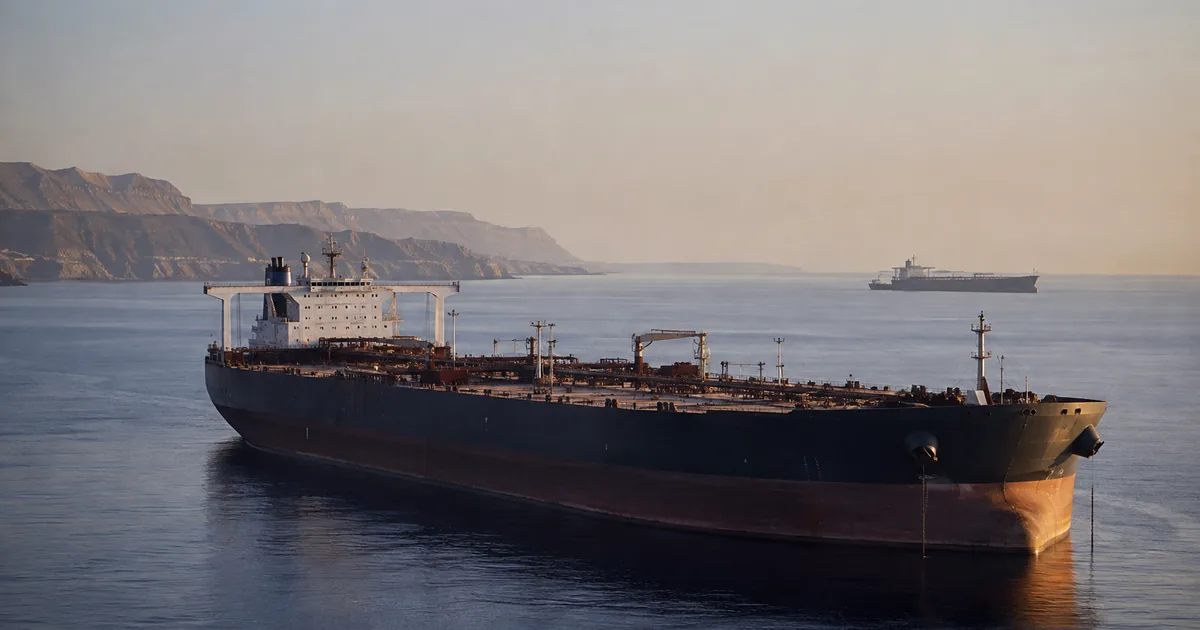
The 60-day US-Iran ceasefire expired on Monday with nothing to replace it, and the crude market finished the arithmetic before most desks had finished their coffee. Brent climbed back above $90 a barrel, the Strait of Hormuz stayed effectively closed, and by Tuesday morning a cargo vessel transiting the waterway had taken a projectile to its engine room. The war premium that traders spent most of the summer discounting is back, and this time it is arriving without a diplomatic off-ramp attached.
What Expired, and What Never Existed
The thing that lapsed was narrower than the word “ceasefire” suggests. It was a 60-day pause with two unresolved files sitting underneath it: who controls transit through Hormuz, and what happens to frozen Iranian funds. Neither moved. CNBC reported on Monday that Brent rose above $90 as Tehran ruled out extending the interim arrangement and threatened to escalate, while President Donald Trump declined to extend it on the terms available, telling Fox News he was in “no hurry” to settle.
That phrase is the tell. A president in no hurry is a president who believes time is a cheap input. For the oil market, time is the single most expensive variable in the model, because every week Hormuz stays constrained is a week of drawdown against inventories that are no longer deep.
The market’s read was unsentimental. US equity futures sagged on Tuesday morning, with S&P 500 contracts off 0.41% and Nasdaq 100 contracts down 0.76%, while Brent futures traded around $91.27 and West Texas Intermediate near $84.20. That is not a panic. It is a repricing, which is worse, because repricings persist.
The Hormuz Number That Matters Is Three
Forget the barrel counts for a second and look at the shipping data. Three vessels crossed the Strait of Hormuz on Sunday. The five-day average sits at twelve. Before the war began on February 28, roughly 130 vessels made that transit every day.
A 97% collapse in transit volume through the world’s most important oil chokepoint is not a supply disruption. It is a structural rerouting of global energy trade, and it has now been running for close to six months. Al Jazeera documented how each round of attacks on shipping has knocked back the reopening timeline, and CNBC reported Tuesday that a transiting cargo ship was struck by a projectile, with the UK Maritime Trade Operations agency confirming damage to the engine room and a crew casualty. That tells underwriters everything they need to know about the next quarter’s war-risk premiums.
The insurance math deserves more attention than it gets. When a chokepoint goes from routine to actuarially hostile, the marginal cargo does not simply cost more to move. At a certain premium, it stops moving at all, because the charterer cannot price the voyage profitably at any freight rate a buyer will accept. Three ships a day is what that looks like in practice.
Washington’s Cushion Is Thinner Than the Rhetoric
Here is the part that should worry anyone modelling a long standoff. US strategic petroleum reserves have fallen below 300 million barrels for the first time since the early 1980s. The Strategic Petroleum Reserve is the instrument that lets an administration absorb a supply shock without capitulating at the negotiating table. Drain it, and the negotiating posture becomes a function of the spot market rather than the other way around.
The administration is playing a hand it has been steadily discarding from. Trump has publicly threatened Oman, which has served as the venue and the back channel for most of the substantive contact with Tehran. Pressuring your own intermediary is a strategy that works only if you are certain you will not need them again.
What has kept this from being far worse is a piece of demand destruction nobody in Washington engineered. China has cut its crude imports by roughly 4 million barrels a day, down to about 5 million, absorbing the shock through its own stockpiles and industrial slowdown. That is the single largest reason Brent is trading in the low nineties rather than well past $100. It is also, from a US policy standpoint, an uncomfortable dependency: the ceiling on American gasoline prices is currently being set in Beijing, and it lifts the moment Chinese buyers return to the market. Several analysts now put Brent back toward $100 on exactly that restocking impulse.
The Trade Underneath the Headline
We covered the reopening optimism when Brent was sitting near $80 on hopes of a Hormuz deal earlier this month. That premise is now dead, and it is worth being precise about why it died, because the market got the shape of this wrong twice.
The consensus view treated Hormuz as a negotiation with a price. Find the number, unlock the strait, normalize the tape. What the last six months demonstrated is that Tehran is not trading transit rights for money. It is holding the chokepoint precisely because the chokepoint is the leverage, and leverage that gets sold once cannot be sold again. Every model that assumed a clearing price was modelling the wrong asset.
For equity investors the read-through is uneven and mostly unpleasant. Energy producers with unhedged exposure to Brent capture the move. Refiners face a crack-spread squeeze if crude runs faster than product demand. Airlines, chemicals, and freight absorb the input cost directly into next quarter’s margins. And the Federal Reserve, which spent a year getting inflation expectations anchored, now has an energy shock running through the goods complex at exactly the wrong moment in the cutting cycle.
The uncomfortable conclusion is that a ceasefire nobody replaced is not a return to the status quo before it. It is a signal that both capitals have concluded the cost of waiting is lower than the cost of conceding. Markets price wars. They are far worse at pricing patience, and patience is what both sides just told us they have.