Flock Safety announced on Thursday that it will shorten default storage of license plate data from 30 days to seven, force every police customer onto an automated misuse-detection tool, and require a case number for searches. The company framed it as a continuation of its commitment to safety and privacy. Read the contract ledger instead of the press release and a simpler explanation appears: councils in 23 states have been cancelling, and renewals are the entire business.
What Actually Changed
The package Flock rolled out Thursday has four moving parts. Default retention drops to seven days, with exceptions available for long-running investigations. Agency customers must adopt Flock’s Audit Assistance feature, which uses machine learning to flag search patterns that look like abuse. Users the system suspects of misuse get locked out automatically until an administrator reviews the activity. And searches now require a case number or code, which turns an anonymous query into an auditable one.
Most of these existed already. They were optional. As MIT Technology Review noted, the substance of the announcement is that guardrails Flock had offered as settings become mandatory, with a compliance deadline of January 1.
The Reporting That Forced the Timing
The Washington Post published an investigation on August 2 documenting roughly 50 cases in which officers were charged with or accused of misusing automated license plate readers to track women. Flock’s system was involved in 46 of them. In 26 cases, investigators concluded the officers were surveilling wives, girlfriends, ex-partners, or women they wanted to approach. The Post’s central case involved a Georgia police chief who ran a former partner’s plate and her daughter’s roughly 600 times over about a year before being arrested on stalking charges.
CNN had been building the same picture for weeks, reporting in late July on a string of officer arrests and resignations tied to the system, including a detective found to have used Flock to locate his romantic partner 124 times and her ex 55 times.
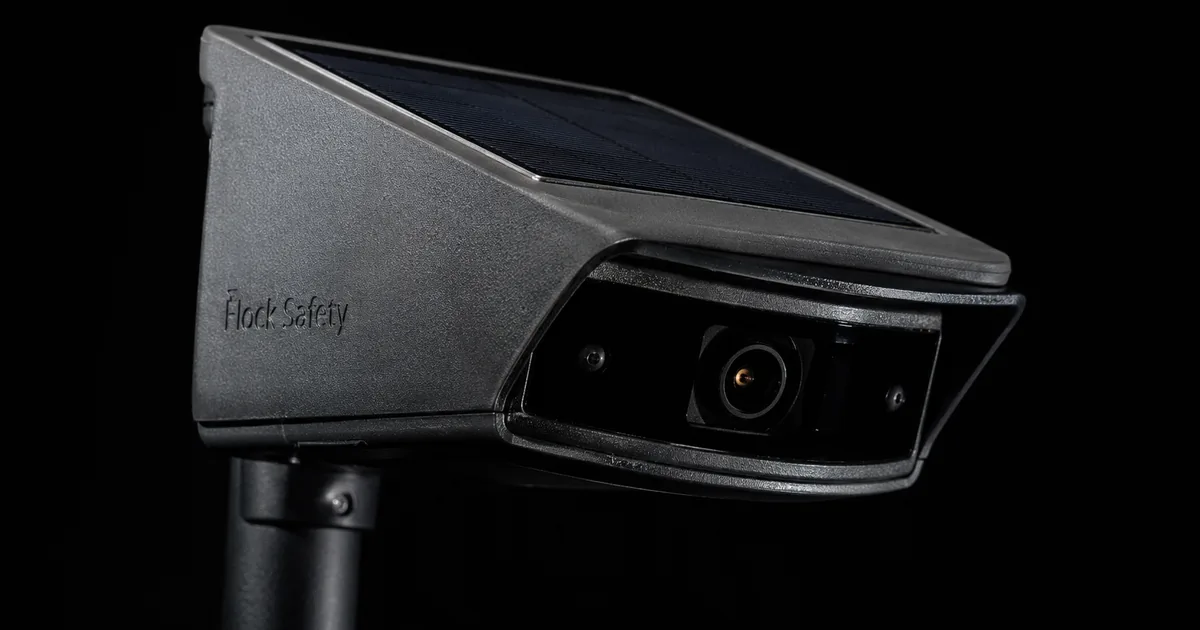
None of that is a technology failure. Flock’s network works exactly as designed: roughly 120,000 cameras photographing every passing vehicle in more than 5,000 American cities, feeding a searchable database. The abuse cases are what happens when a tool that logs everyone is handed to thousands of individual users with weak query-level oversight.
The Number Flock Is Defending
Here is the part that explains the timing better than any privacy argument. Flock does not sell hardware once and walk away. It sells subscriptions that a city council renews, in public, on a recorded vote, in front of residents who now show up.
Those votes have been going badly. Communities across 23 states cancelled, rejected, or deactivated Flock cameras in 2026 alone, with California and Wisconsin leading at seven apiece. The Los Angeles Police Department let a three-year contract lapse in July. Chandler, Arizona voted this month to stop using the cameras and skip renewal. Activists have built public trackers mapping every cancellation, and a site called Have I Been Flocked now lets residents pull audit logs and check whether their own plate was searched, which is how several of the misuse cases surfaced in the first place.
A Venture Valuation Priced on Renewals
Flock raised $275 million at a $7.5 billion valuation in a round led by Andreessen Horowitz, and Axios reported it moved to roughly $8.4 billion in April 2026. At that last round, the company put annual recurring revenue above $300 million, growing about 70% year over year.
A multiple in that range prices in years of compounding subscription growth. It survives a bad news cycle without much trouble. What it cannot survive is a change in the base rate of contract renewals, because every cancelled city is recurring revenue that does not come back and a reference customer that becomes a case study for the next council debating the same vote.
The Audit Tool Is the Tell
Look at what the seven-day retention cut actually costs Flock. Almost nothing. Police queries that matter overwhelmingly happen within days of an incident, and long-term investigations get an exception. Flock gave up storage it was not monetizing and bought a talking point that a council member can repeat when a resident asks what changed.
Audit Assistance is more interesting, because it is an admission. Flock built a machine learning system to catch its own customers misusing the product, and has now made it compulsory. That is a company conceding that the humans holding its credentials cannot be trusted at scale, which is precisely what critics have argued since the first stalking case. The concession is real. It is also the cheapest possible version of the fix, because it leaves the underlying collection completely intact.
What Did Not Change
Every camera stays up. Every plate still gets photographed. The vandalism campaign against the hardware continues, and the ACLU is still running a national campaign to get the cameras removed rather than better audited. On federal access, Flock’s position is that it does not override local choices in either direction, which leaves untouched the finding that its lookup tool aided thousands of immigration-related searches, including in states that barred cooperation with Immigration and Customs Enforcement.
That gap is the whole story. Flock has moved on oversight, which addresses the officers who abused the system, and has not moved at all on collection, which is what the councils are actually voting against. Whether that distinction holds will show up in the renewal line long before it shows up in a privacy report.