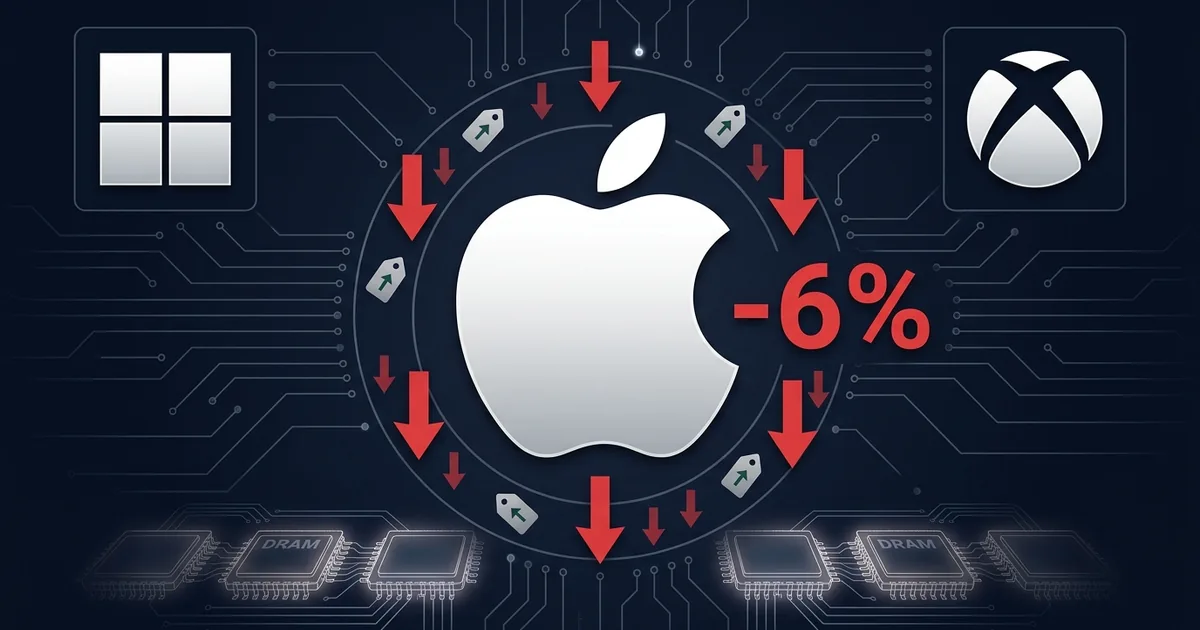
Apple dropped the prices nobody wanted to see on Wednesday, hiking MacBook and iPad costs by $100 to $300 across the board and confirming what the semiconductor industry has been warning about for months: the AI boom is now a consumer electronics tax.
AAPL fell 6% on the news, its sharpest single-day decline since February, wiping roughly $180 billion in market cap in a session where the Nasdaq was already under pressure.
What Changed and What It Costs
The damage is broad. MacBook Neo jumps from $599 to $699. MacBook Air rises from $1,099 to $1,299. The 14-inch MacBook Pro climbs from $1,699 to $1,999, a $300 increase that puts the entry-level Pro above two grand for the first time. On the tablet side, iPad Air goes from $599 to $749 and iPad Pro from $999 to $1,199. Vision Pro ticks up from $3,499 to $3,699.
iPhone, Apple Watch, and AirPods pricing stays flat for now, though Tim Cook’s careful hedging on the earnings call suggested that reprieve may not last. “Price increases had simply become unavoidable,” Cook told analysts, citing skyrocketing component costs that Apple had been absorbing for the better part of two years.
The Real Story Is Underneath the Price Tags
This is not a tariff story, though U.S. import duties on Chinese-manufactured components added pressure. The structural driver is something bigger: AI data centers are consuming roughly 70% of the world’s DRAM supply, and the three companies that control more than 95% of global DRAM production, Samsung, SK Hynix, and Micron, have systematically reallocated manufacturing capacity toward high-bandwidth memory chips used in AI accelerators.
The numbers are brutal. DRAM contract prices climbed 80% to 90% this quarter alone, according to IEEE Spectrum’s analysis of the shortage. NAND flash prices have surged up to 200% in 2026. IDC projects supply growth at just 16% to 17% year over year, well below historical norms, and expects elevated pricing and tight allocation to persist through 2027.
Hyperscale cloud providers including Meta, Google, Microsoft, and Amazon have locked up production capacity for years through long-term supply agreements at premium prices. Consumer electronics manufacturers are left fighting over whatever is left.
Apple Is Not Alone, and That Is the Point
Microsoft announced its own price increases on the same day, raising Xbox console prices by $100 to $150 effective August 1. The Xbox Series X now starts at $749.99 for the digital edition. CBS News reported that both companies cited the same root cause: memory and storage costs that have more than doubled, driven by insatiable AI infrastructure demand.
Microsoft went a step further, noting that console memory costs have increased by more than 2.5x and projecting another doubling by fall 2027. The company introduced a “Buy Now, Pay Later” installment program alongside the price hike, a tacit admission that the new pricing puts gaming hardware out of reach for a significant chunk of its customer base.
Valve raised the price of its Steam Machine to $1,049 earlier this week, citing the same supply dynamics. The pattern is clear: every hardware maker that depends on commodity memory is passing the AI tax to consumers.
Follow the Money to the Memory Makers
The irony of Apple’s worst day in months is that it was also one of the best days for the companies causing Apple’s problem. Micron reported record fiscal Q3 earnings on Tuesday, posting $41.46 billion in revenue (up 346% year over year) with an 84.6% gross margin. The stock jumped 17%. SK Hynix surged 12% on plans for a record-breaking $29 billion Nasdaq listing, the largest ADR offering ever attempted.
The memory chip shortage is reshaping who captures value in the technology supply chain. Apple, long the most profitable hardware company on the planet, is now a price-taker in its most critical component market. The power has shifted upstream, to the fabs and foundries that feed the AI buildout.
What Comes Next
Wall Street’s immediate reaction was straightforward: higher prices mean lower unit volumes, at least in the near term. Several analysts cut demand estimates for MacBook and iPad through the end of the year, with Morgan Stanley flagging particular risk in the education market, where school districts work on fixed budgets and a $200 price increase on an iPad Air means fewer devices per classroom.
The bigger question is whether Apple can hold its premium positioning when Android OEMs face the same cost pressures but have historically competed on price. If Samsung, Lenovo, and HP raise laptop and tablet prices by similar margins, Apple’s relative value proposition stays intact. If some absorb the hit to gain share, Cook has a fight on his hands.
For consumers, the math is simple and unpleasant: the AI revolution is being subsidized, in part, by everyone who needs to buy a new laptop this year.