Table of Contents
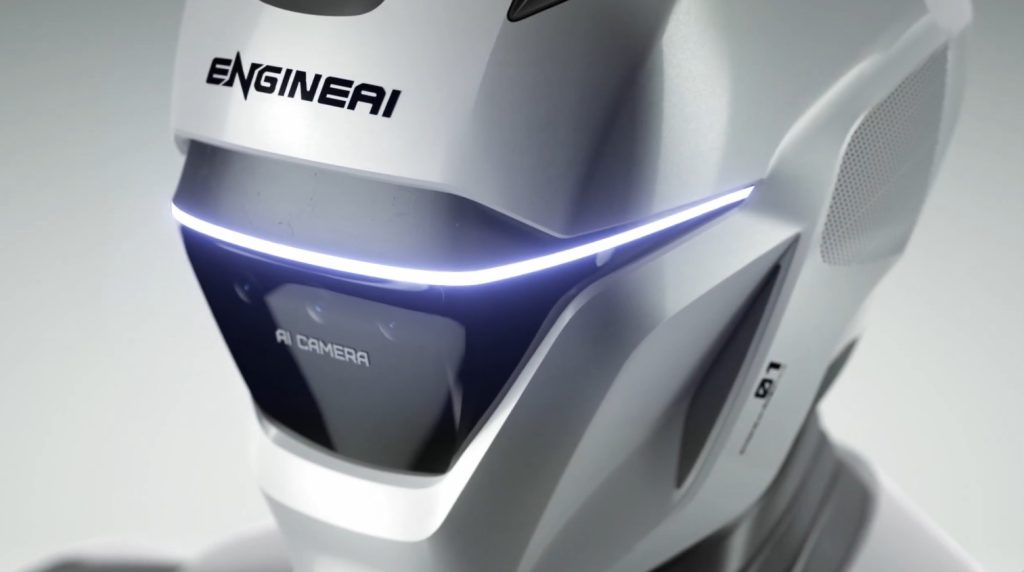
T800 combat robot development represents China’s boldest step yet into military-grade humanoid technology. When EngineAI, the Shenzhen robotics firm, unveiled its Terminator-inspired fighting machine at the 2025 World Robot Conference in Beijing, the implications stretched far beyond sci-fi spectacle. Seated in a Game of Thrones-style throne, apparently straining against chains, the 6-foot humanoid wasn’t just hardware theater. It was a declaration.
This is what happens when a government makes owning an entire technology sector a matter of national policy.
China’s T800 Combat Robot: Built for Battle, Designed for Dominance
The T800 stands 185 centimeters tall and weighs 85 kilograms, placing it squarely in boxing’s cruiserweight division. But unlike Evander Holyfield, this machine integrates vision, touch, and force sensing through what EngineAI calls a multi-sensor fusion system. It processes environmental data in real time and makes rapid decisions, a capability that blurs the line between industrial tool and autonomous combatant.
The robot packs 41 degrees of freedom, a solid-state battery, and aluminum alloy armor. These aren’t specs meant to impress investors in a pitch deck. EngineAI has scheduled the T800 to compete in its “Mecha King” tournament on December 24, 2025, a robot boxing event that founder Zhao Tongyang positions as R&D disguised as entertainment.
But calling this entertainment misses the point. The unprecedented display comes almost two years after the Chinese government made it national policy to own the emerging humanoid robotics market by 2027. What looks like a publicity stunt is actually a stress test for technology with applications that extend well beyond the ring.
Why the T800 Combat Robot Matters Beyond Robot Boxing
Combat robotics events have been gaining traction. Unitree’s Iron Fist King Awakening tournament and underground battles in San Francisco have featured remote-controlled humanoids trading blows. But EngineAI’s approach is different. The T800 isn’t just larger and heavier than competitors like Unitree’s G1 or Booster Robotics’ T1. It represents a calculated bet that full-sized, heavy-duty humanoids will define the next wave of robotics innovation.
The timing aligns with China’s aggressive industrial timeline. Beijing’s Ministry of Industry and Information Technology published guidelines in 2023 pushing for mass production of humanoid robots by 2025 and world-advanced technology levels by 2027. The ministry framed humanoid robots as a “new engine of economic growth,” positioning them alongside computers and smartphones as transformative technologies.
That framing matters. When government officials in Beijing start talking about humanoid robots the way they once talked about high-speed rail or telecommunications infrastructure, it signals coordinated investment across academia, industry, and military research. China doesn’t just want to compete in humanoid robotics. It wants to set the standards, control the supply chains, and export the finished products.
From Factory Floors to Front Lines: The Dual-Use Reality
EngineAI hasn’t been shy about its commercial ambitions. The company recently deployed its humanoids as “Cyber Staff” in a Shenzhen retail store operated with e-commerce giant JD.com. These robots greet customers, stock shelves, and handle transactions. It’s mundane work, the kind of applications that could justify the billions being poured into humanoid development as China’s population ages and its labor costs rise.
But here’s where things get complicated. China’s military-civil fusion policy systematically leverages commercial technologies for defense applications. Chinese military analysts have already begun theorizing about human-robot cooperation on future battlefields, including scenarios where humanoid robots replace front-line soldiers in high-risk operations.
The T800’s design language makes no attempt to hide these implications. Named after the iconic killer robot from The Terminator franchise, marketed with aggressive “combat-ready” messaging, and built with specifications that prioritize strength and durability over delicate manipulation, this isn’t a machine optimized for picking strawberries or assembling smartphones. It’s engineered for environments where things break, where forces collide, where resilience under stress matters more than precision.
The Broader Ecosystem Behind China’s Humanoid Robotics Push
EngineAI isn’t working in isolation. The 2025 World Robot Conference featured more than 1,500 exhibits from Chinese and international companies. Shenzhen alone is home to multiple competing firms including UBTECH, LimX Dynamics, and Lumos Robotics. UBTECH recently made headlines for its own advances in embodied AI, underscoring how competitive pressure is driving rapid iteration across the sector.
Government support extends beyond national policy. Local governments in Guangdong and Zhejiang provinces have prioritized complete embodied AI platforms, specifically multipurpose humanoid robotics. Beijing established a $1.4 billion robotics fund in August 2023. Shanghai launched China’s first heterogeneous humanoid robot training facility in January 2025, designed to train 1,000 robots simultaneously by 2027.
This isn’t venture capital gambling on moonshots. It’s industrial policy backed by patient state investment, targeted subsidies, and direct government intervention to broker partnerships between robotics firms and state-owned factories. The model has worked before for telecommunications, aerospace, and electric vehicles. There’s little reason to think it won’t work for humanoid robots.
What the T800 Combat Robot Reveals About Global Competition
The race for humanoid robotics supremacy isn’t just about commercial markets or manufacturing efficiency. It’s about which countries will define the technological standards, ethical frameworks, and regulatory structures that govern a technology still in its infancy.
The United States maintains advantages in AI software and high-level innovation. American companies like Tesla and Figure continue pushing boundaries in humanoid dexterity and autonomy. But China holds critical advantages in manufacturing scale, supply chain integration, and the willingness to deploy immature technology in real-world conditions to accelerate learning.
EngineAI’s T800 demonstrates that approach. Rather than perfecting the technology in laboratories before commercialization, Chinese firms are shipping products, staging public demonstrations, and using combat tournaments to identify failure modes. It’s messy, sometimes reckless, but it generates data at a pace that traditional development cycles can’t match.
The strategic implications are profound. Humanoid robots that can navigate complex environments, make autonomous decisions, and perform physically demanding tasks have obvious military applications. They also have implications for domestic surveillance, social control, and the balance of power between citizens and state authorities.
The December Tournament and What Comes Next
When the T800 steps into the ring for the Mecha King tournament on December 24, spectators will see robots punching robots. What they should see is a technology demonstration with implications for global security, economic competition, and the future of human labor.
EngineAI has been expanding manufacturing capacity and ramping up operations. The company is now approximately 80 percent focused on R&D, a ratio that suggests they’re past the prototype phase and moving toward scaled production. The T800 isn’t a one-off showpiece. It’s the lead product in a planned product line.
Meanwhile, EngineAI is simultaneously preparing the SA02, a smaller humanoid robot priced at $5,300, designed to undercut competitors and expand market reach. The company is also developing the JS01, a quadrupedal robot optimized for rugged terrain. This multi-product strategy indicates confidence in both technical capabilities and market demand.
The question isn’t whether humanoid robots will reshape industries, economies, and potentially military capabilities. That trajectory seems inevitable. The question is which countries, which companies, and which political systems will control that technology as it matures.
For now, that throne the T800 sat on in Beijing? It might be theater. But the robot straining against its chains is very real. And it’s not staying chained for long.
