Table of Contents
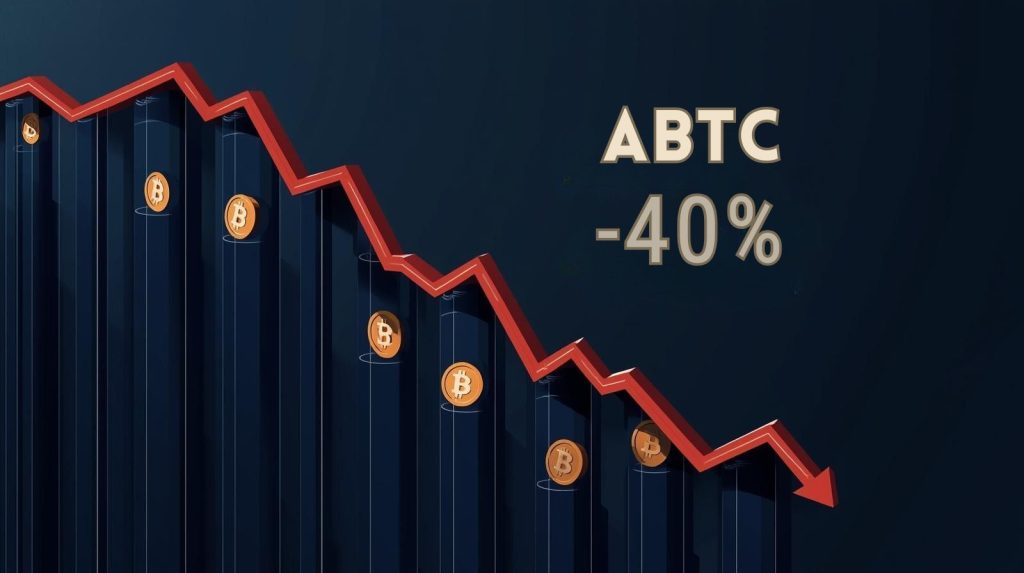
American Bitcoin lock-up expiry just delivered a brutal lesson about what happens when hype meets liquidity. The Trump-linked crypto miner watched its shares crater nearly 40% in less than 30 minutes on Tuesday, wiping out close to $1 billion in market value as early investors who had been locked in since the September merger finally got their chance to exit. By Wednesday morning, the stock steadied around $2.39 in premarket trading, but the damage was done. The question now isn’t whether this was predictable (it was), but what it tells us about the increasingly weird marriage of crypto speculation and political celebrity.
When the Lock-Up Gates Finally Opened
The American Bitcoin lock-up expiry that triggered Tuesday’s chaos wasn’t some surprise event. According to company statements on X, the unlock affected pre-merger private placement shares that had been restricted since September. These were the shares issued to early backers who got in before American Bitcoin went public through its reverse merger with Gryphon Digital Mining. The company, majority-owned by Canadian miner Hut 8 Corp, carries the Trump family’s fingerprints throughout its structure. Eric Trump serves as co-founder and chief strategy officer, while Donald Trump Jr. holds a shareholder position.
Matt Prusak, American Bitcoin’s president, tried to manage expectations, acknowledging the team expected choppy trading as those shares found new homes. That’s corporate speak for “we knew this was coming and there’s nothing we can do about it.” The unlock represented a classic Wall Street pressure point: investors who bought in early at lower prices, watched the stock run up after listing, and had been sitting on paper gains they couldn’t realize. Once the lock-up expired, the rush for the exits became inevitable.
The Mechanics of the Crash
Lock-up periods exist for a reason. They’re meant to prevent exactly what happened to American Bitcoin on Tuesday. When a company goes public or completes a merger, insiders and early investors typically agree not to sell their shares for a set period, usually 90 to 180 days. The theory is that this prevents a flood of selling that would crater the stock price before regular investors have a chance to establish a market. But lock-ups don’t eliminate selling pressure, they just delay it. And when that pressure finally releases, the results can be spectacular.
Bloomberg reported the stock lost more than half its value in less than 30 minutes, triggering multiple trading halts. The Nasdaq circuit breakers kicked in automatically as American Bitcoin tested lower and lower prices, briefly falling to around $1.90 before recovering somewhat. By the close, shares were down about 35% to $2.33. The violence of the move suggests something more than orderly profit-taking. This was a panic.
The Political Meme Stock Problem
Here’s where American Bitcoin’s story gets interesting. This isn’t just a bitcoin miner with questionable fundamentals (though it is that). It’s a political meme stock welded to a high-beta crypto business. That combination creates layers of volatility that make normal mining stocks look stable by comparison.
The Trump family’s involvement gives American Bitcoin instant name recognition and a built-in base of retail investors who might buy the stock for reasons that have nothing to do with hash rates or mining efficiency. But political celebrity is a fickle foundation for a public company. When the American Bitcoin lock-up expiry hit, the stock didn’t just face selling pressure from profit-taking insiders. It faced a broader question about whether crypto ventures bearing the Trump name represent real businesses or speculative bets on political brand value.
The broader context makes this worse. The memecoins $TRUMP and $MELANIA have plunged 92% and 99% respectively from their peaks. Trump Media & Technology Group, which has raised billions to buy bitcoin, is down 67% year-to-date. The entire constellation of Trump-adjacent crypto plays is bleeding. American Bitcoin’s crash fits this pattern perfectly.
Why Mining Stocks Keep Getting Hammered
American Bitcoin’s troubles aren’t happening in a vacuum. The broader bitcoin mining sector has been getting crushed for months, and the American Bitcoin lock-up expiry just accelerated a trend that was already well established. Public mining stocks erased nearly $30 billion of market value in November alone, sliding from a peak near $87 billion to about $55 billion before a partial rebound.
The fundamental problem is simple: mining economics have turned brutal. Bitcoin’s network hash rate keeps hitting record highs, which means more competition for the same block rewards. Meanwhile, revenue per unit of compute has collapsed to historic lows. Hash price, which measures daily income relative to hash power, has fallen to a record low of $42.40. That’s the squeeze that’s forcing small miners without access to cheap power to capitulate.
Western miners face particular pressure. They’re competing against underground operations in China that have rebuilt a substantial footprint despite the 2021 ban, operating intermittently off the radar with cheap hydro or coal power. These “zombie capacity” operations act as a permanent tax on compliant miners trying to play by the rules.
Understanding the dynamics of bitcoin trading buy and sell signals becomes crucial in this environment, as miners need to time their bitcoin sales strategically to maximize revenue during periods of price strength.
The Capital Structure Problem
American Bitcoin’s situation is complicated by its capital structure. Like most miners, it’s capital-hungry and has set up mechanisms to issue new shares to fund expansion. An at-the-market equity program gives the company flexibility to sell shares into the market through a syndicate of banks. That’s standard practice in the mining sector, but it creates a vicious cycle during downturns.
The company wants to grow its hash rate and bitcoin holdings. The easiest way to finance that growth is issuing more equity. But printing new shares dilutes existing holders, especially when done into weakness. And the American Bitcoin lock-up expiry is just the first unlock. More tranches of restricted shares from the merger and prior financings will become tradeable over time. Each unlock represents another potential wave of selling.
Eric Trump tried to stem the panic, stating on social media that he’s holding all his shares and remains 100% committed to leading the industry. According to SEC filings, he owns 68.147 million shares worth about $149 million at current prices. That’s a significant personal stake, but it doesn’t change the structural problems facing the business.
What Comes Next
American Bitcoin faces several critical tests in the coming quarters. First, bitcoin’s price trajectory matters more than anything else. The company describes itself as a bitcoin accumulation platform that both mines and buys bitcoin in the market with the goal of building a strategic reserve. If bitcoin stabilizes or resumes an uptrend from current levels around $93,000 (based on recent market data from CoinDesk), that large reserve becomes a tailwind. But if bitcoin keeps sliding, miners with ambitious expansion plans watch their margins compress or turn negative quickly.
Second, the broader crypto winter needs to ease. Global risk aversion is heavily pressuring digital assets across the board, impacting everything with crypto exposure. American Bitcoin isn’t just competing with other miners for profitability. It’s competing for investor attention in an environment where crypto-adjacent stocks are being indiscriminately sold.
Third, the company needs to demonstrate it can generate positive cash flow at scale. Institutional investors, who move markets more than retail, increasingly prefer to go long bitcoin ETFs and short mining stocks. That’s a structural headwind that won’t reverse until miners prove they can deliver returns on invested capital rather than just accumulating bitcoin at the expense of shareholders.
The Bigger Picture on Lock-Ups and Liquidity
The American Bitcoin lock-up expiry offers a case study in why lock-up periods matter and why their expiration creates predictable volatility. Markets hate uncertainty, but they also hate known-but-delayed selling pressure. Lock-ups create a countdown clock that everyone can see. Smart investors mark those expiration dates on their calendars and either exit before the unlock or position for the volatility.
For American Bitcoin, the unlock came at perhaps the worst possible time: when bitcoin mining economics are deteriorating, when Trump-linked crypto ventures are broadly struggling, and when the stock had already lost significant value from its September peak above $9. The early investors who rushed to sell on Tuesday weren’t being irrational. They were recognizing that their window to exit at reasonable prices might be closing.
The stabilization on Wednesday morning, with shares recovering about 9% to $2.39 in premarket trading, doesn’t change the fundamental picture. That’s just the stock finding a temporary equilibrium after the initial panic. More selling pressure likely remains as investors who didn’t get out on Tuesday reassess their positions.
When Politics and Crypto Collide
American Bitcoin’s trajectory reveals something uncomfortable about the intersection of political celebrity and crypto speculation. The Trump name provided rocket fuel for the initial listing and helped the stock briefly trade above $9. But celebrity is a wasting asset in public markets. Eventually, companies need to demonstrate they can generate cash, grow profitably, and reward shareholders. Political connections don’t pay the power bills at mining facilities.
The company operates in a sector undergoing what one analyst described as a slow-motion liquidation in capital markets. Mining difficulty keeps rising even as profitability collapses. The survivors will be those with the lowest power costs, the best access to capital, and the ability to pivot to adjacent opportunities like AI infrastructure. It’s unclear whether American Bitcoin fits that profile or whether the Trump connection becomes more liability than asset as the reality of mining economics grinds away at the business model.
What’s certain is that the American Bitcoin lock-up expiry won’t be the last dramatic moment for this stock. More unlocks are coming, the broader mining sector remains under pressure, and bitcoin’s price remains volatile. For investors drawn to the stock by the Trump family’s involvement, Tuesday’s crash should serve as a reminder that celebrity and hype eventually collide with fundamentals. And fundamentals, as always, have the final word.
