Table of Contents
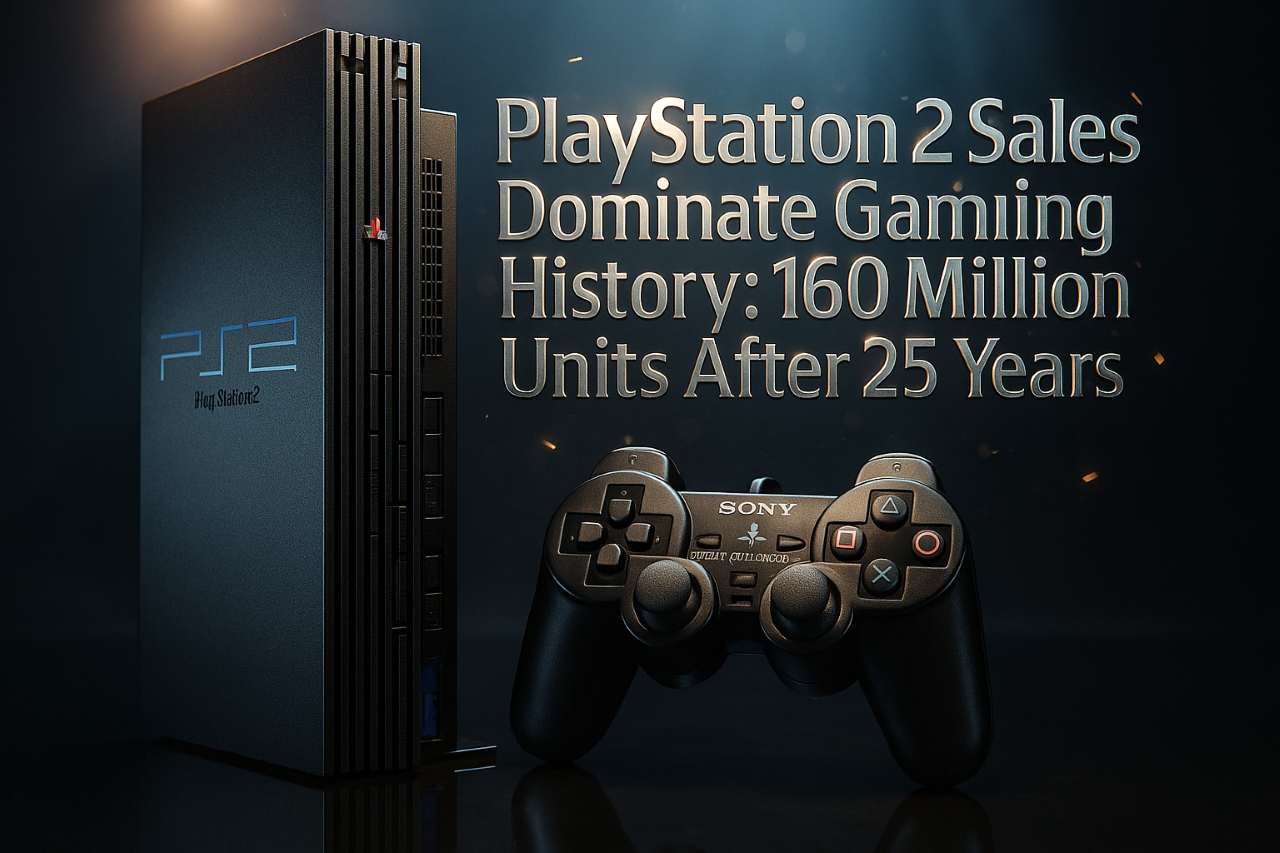
PlayStation 2 sales figures tell a story of unmatched dominance in gaming history. The console turned 25 years old in March 2025, and Sony marked the occasion by confirming what gaming historians have long suspected: the console has sold 160 million units worldwide Wikipedia, cementing its status as the most commercially successful gaming platform ever created. That figure represents more than just market dominance. It captures something harder to quantify: a complete reordering of how an entire generation thought about interactive entertainment.
Think about what 160 million units actually means. That’s triple the combined sales of its sixth-generation competitors. It’s more than the PlayStation 4 (117 million), more than the original PlayStation (102 million), and still ahead of the Nintendo Switch, which sits at 146 million despite launching 17 years later in a vastly larger gaming market. The PlayStation 2 received 10,987 game titles during its lifetime, with 1.54 billion copies sold.
Why The PlayStation 2 Console Became Gaming’s Most Dominant Force
The PS2 didn’t arrive with revolutionary graphics or unprecedented processing power. Manufacturing officially ended in early 2013 after almost thirteen years of production, giving it one of gaming’s longest commercial lifespans. But technical specifications never told the whole story.
Sony’s console succeeded because it recognized something competitors missed: people wanted more than just games. The built-in DVD player transformed the PS2 into a living room staple at a time when standalone DVD players cost nearly as much as the console itself. Backwards compatibility with original PlayStation titles meant consumers didn’t abandon their existing game libraries. And that iconic startup screen, with its floating blocks growing into towers based on your play history, turned simple hardware into something that felt personal.
The timing mattered too. Sony launched the PlayStation 2 in Japan on March 4, 2000, with reported scenes of hysteria and more than 10,000 people queuing across Tokyo on launch day. The company beat both GameCube and Xbox to market by roughly a year, establishing an install base that third-party developers couldn’t ignore. By the time Microsoft and Nintendo launched their competing systems, the PS2 already hosted Grand Theft Auto 3, Final Fantasy X, Metal Gear Solid 2, Devil May Cry, and Silent Hill 2.
PlayStation 2 Sales Numbers Show How Market Leadership Compounds
Sony cut the price from $299 to $199 in North America in 2002, undercutting both competitors and accelerating adoption. Developers followed the install base, which created more exclusive content, which attracted more buyers. The flywheel kept spinning. The console became the fastest to sell 100 million units, accomplishing the feat within 5 years and 9 months from launch.
What’s striking is how the PS2 maintained momentum long after newer hardware arrived. Games continued releasing until 2013, the same year the PlayStation 4 launched. Sales in the fourth quarter of 2012 reached 1.6 million units, totaling 5 million units sold that year. That’s not nostalgia buying. That’s an active, functioning platform serving markets where $400 next-generation consoles remained out of reach.
The gaming industry today looks nothing like the market the PS2 dominated. Development costs have exploded. AAA titles now require five to seven year production cycles. Digital distribution has replaced physical media. Yet Saudi-backed acquisition interest in companies like Electronic Arts signals that major institutional players still see gaming as a growth sector worthy of multibillion-dollar bets.
What PlayStation 2 Success Means For Modern Console Wars
The current generation tells a different story. Sony’s PlayStation 5 has moved 65.6 million units since 2020. That’s respectable, tracking slightly ahead of where the PS4 stood at the same point in its lifecycle. But it’s nowhere near PS2 territory. Microsoft’s Xbox Series X and S have combined for just 28.3 million sales, according to recent industry analysis from Circana.
The Nintendo Switch represents the only real threat to the PS2’s crown. At 146 million units and still selling, it could theoretically surpass Sony’s record. But Nintendo has already announced plans for a successor, and history suggests new hardware announcements crater sales of existing platforms. The Switch would need to maintain strong momentum for another year or two to catch the PS2, an increasingly unlikely scenario as attention shifts to next-generation hardware.
What the PS2’s sustained success reveals is how radically console economics have shifted. The gaming market is larger now, more global, more diverse in platforms and business models. Yet no single piece of hardware has replicated the cultural penetration Sony achieved between 2000 and 2013. Streaming services, mobile gaming, and PC platforms fragment the audience. Development costs make exclusive content risky. And consoles themselves have become luxury purchases rather than household staples.
PlayStation 2 Hardware Dominance Reveals Market Power At Scale
The PS2’s 160 million figure represents something software-as-a-service companies understand intuitively: compounding network effects create nearly insurmountable advantages. Once Sony established market leadership, every subsequent sale made the platform more valuable to developers, which made it more valuable to consumers, which drove more sales. Breaking that cycle requires either superior technology (which Xbox and GameCube arguably had) or perfect timing (which they missed by a year).
Modern console manufacturers learned this lesson. Microsoft positioned Xbox Game Pass as a platform strategy, betting subscription revenue can outlast hardware sales cycles. Sony responded with PlayStation Plus tiers, recognizing that services create stickiness hardware alone cannot match. Nintendo carved out its own category entirely, refusing to compete on specifications.
The 25-year milestone forces an uncomfortable question: Will any single gaming platform ever achieve 160 million unit sales again? Market fragmentation suggests not. The PS2 succeeded in a specific moment when physical media dominated, development costs remained manageable, and consumers needed dedicated gaming hardware. Those conditions no longer exist. Cloud gaming, subscription services, and cross-platform play are reshaping how people access interactive entertainment.
Yet Sony’s confirmation of the PS2’s sales figures during PlayStation’s 30th anniversary celebration carries symbolic weight. It’s not just about moving units. It’s about establishing legacy, demonstrating that physical hardware can create cultural moments software ecosystems struggle to replicate. Those floating towers on the startup screen, representing games played and time invested, captured something essential about personal connection to technology.
The PlayStation 2’s commercial success will likely stand alone. Gaming evolved past the conditions that made such dominance possible. But as current-generation consoles struggle to match last-generation install bases, the PS2’s 160 million serves as a reminder: Sometimes, timing and execution matter more than raw technological superiority. Sometimes, being first to market with good enough hardware, at the right price, with the right features, changes everything.