Table of Contents
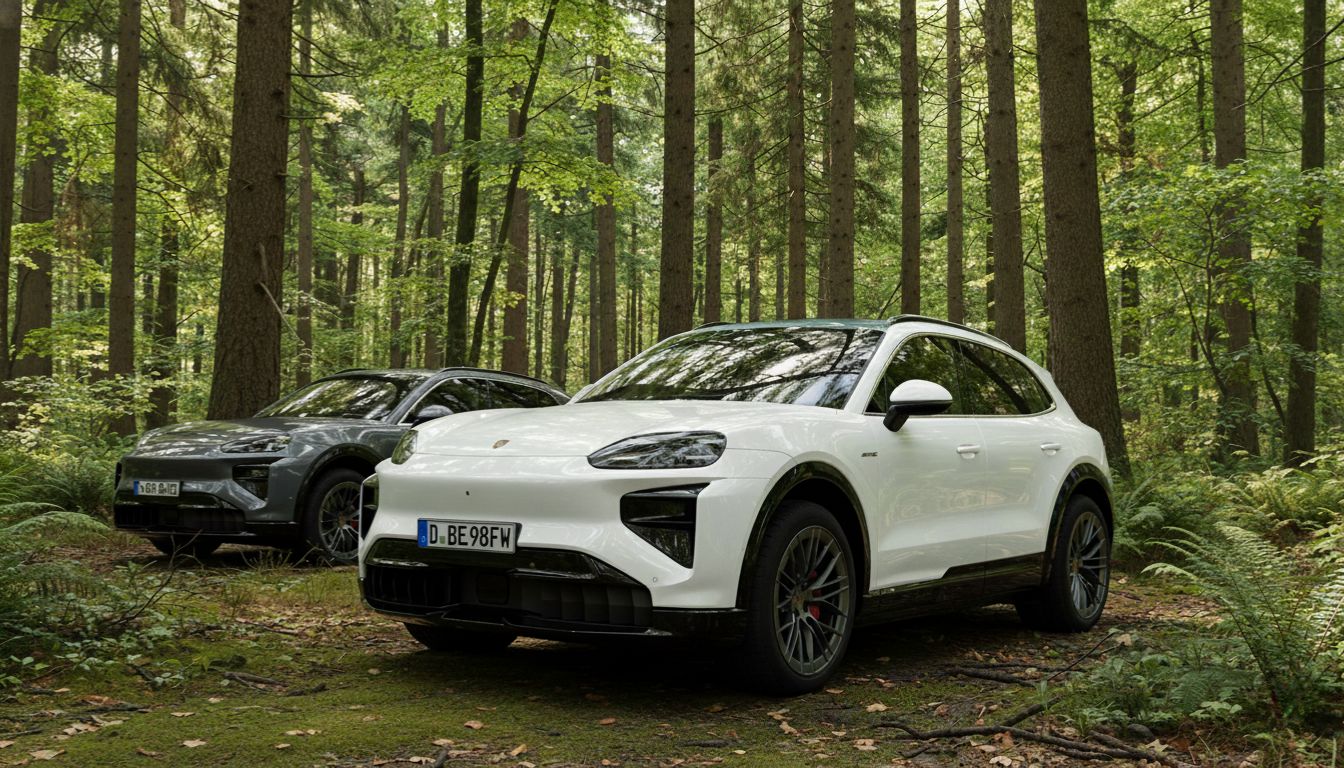
Porsche Cayenne Electric Turbo lands as a four-thousand-pound answer to a very 2025 question: what happens when the most storied performance brands go all in on batteries just as the luxury EV market starts to wobble. The specs are cartoonish. The timing is complicated. Together they say a lot about where the global auto industry, and climate politics, are headed next.
According to The Verge, Porsche calls the Cayenne Electric “the most powerful production Porsche of all time.” That is not PR fluff. In Turbo trim, the SUV delivers up to 850 kW, or 1,139 horsepower, with 0 to 60 mph in 2.4 seconds, and up to 400 kW DC fast charging that can take the 113 kWh battery from 10 to 80 percent in about 18 minutes under ideal conditions. All of that unfolds as Porsche reports a $1.1 billion operating loss driven by tariffs and a brutal price war in China, an EV market that increasingly looks like a referendum on industrial policy as much as on technology.
Porsche Cayenne Electric Turbo As A Status Symbol For The EV Plateau
Porsche Cayenne Electric Turbo is not a climate solution priced for the median voter. The base Cayenne Electric starts at $111,350 including destination charges, while the Cayenne Turbo Electric comes in at $165,350. These are cars for a global elite who are hedging their climate guilt with four-second sprints and inductive home charging pads.
The hardware is undeniably impressive:
- Up to 1,139 hp and 1,106 lb-ft of torque in Launch Control.
- 0–60 mph in 2.4 seconds, 162 mph top speed in Turbo form.
- Up to roughly 400 miles WLTP range on the base model, around 387 miles for the Turbo.
- 800-volt architecture with up to 400 kW fast charging.
- Towing capacity up to 3.5 tons, or 7,716 pounds, more than many midsize trucks.
On paper, the Porsche Cayenne Electric Turbo gives you everything: absurd speed, big battery, towing, and a tech-drunk interior anchored by a new “Flow Display,” an enormous curved central screen bookended by a 14.25-inch instrument cluster and a 14.9-inch optional passenger display. There is even an AI-powered voice assistant promising to understand “complex instructions and spontaneous follow-up questions” without constant wake words.
The question is not whether this works as a product. It almost certainly will. The question is what it represents in an EV market where growth is slowing, prices are falling, and rightwing parties across Europe and the United States are happy to frame climate rules as elite overreach.
Porsche Cayenne Electric Turbo And The Politics Of Luxury EVs
In political rhetoric, electric vehicles are still treated as a symbol of technocratic overreach or coastal consumerism. The Porsche Cayenne Electric Turbo practically begs to be used as a prop in that backlash. It is a six-figure object that tells a familiar story. We can decarbonize, as long as we can keep our 1,100-horsepower SUVs.
For democracies, this is not a trivial point. Climate policy relies on institutions and voter trust. When the visible face of decarbonization is a $165,000 hyper-SUV, it feeds the narrative that the green transition is a toy for the rich, even as mass-market EVs, transit, and bike lanes receive far less political attention.
Yet there is a second story here. Luxury products like the Porsche Cayenne Electric Turbo often finance the platforms and R&D that later show up in cheaper cars. The 800-volt architecture, 400 kW charging, and advanced traction systems that Porsche is debuting at the top of its lineup can, in theory, trickle down to more affordable EVs. That trickle down, however, is not automatic. It depends on regulation, trade policy, and a willingness to prioritize broad access rather than just shareholder returns.
In other words, the Cayenne Electric is not just a car. It is a test of whether democratic governments can steer industrial policy toward public goods, rather than letting luxury margins define the outer limits of what is technologically possible.
Porsche Cayenne Electric Turbo, AI, And The Software-Defined Car
Porsche Cayenne Electric Turbo is also a software story. The interior reads like a concept study in the “software-defined vehicle” era: giant screens, the so-called Flow Display, and a head-up display that simulates an 87-inch screen floating in front of the driver. Analog controls for climate and volume still exist, but the center of gravity has shifted to the operating system and the voice assistant.
Porsche leans into AI here. The on-board assistant promises to manage climate, seats, ambient lighting, navigation, and traffic information with conversational commands. This is not unrelated to broader AI trends, where people are starting to build persistent emotional and practical relationships with digital systems. A very different example lives in the world of intimate AI companions, like the Japanese woman who “married” an AI modeled on ChatGPT, as reported in this analysis of AI relationships.
What links these worlds is normalization. When cars start to behave like responsive, semi-personal assistants, they shift our expectation of what digital systems should be able to do. The move from buttons to AI-infused interfaces is not ideologically neutral. It privileges companies that control the OS and the data, and it raises fresh questions about surveillance, data sharing, and the line between safety features and behavioral nudging for profit.
The Porsche Cayenne Electric Turbo, packed with cameras, sensors, and connectivity, will almost certainly sit at the center of that debate. Regulators who focus only on tailpipe emissions will be missing half the story.
Can Porsche Cayenne Electric Turbo Rescue A Brand Under Pressure
Porsche Cayenne Electric Turbo is arriving at a moment of genuine strain for its parent company. Tariffs in the US and a bruising price war in China have helped produce a $1.1 billion quarterly operating loss, according to reporting from Reuters. At the same time, the easy phase of EV adoption, where early adopters were willing to pay a premium for novelty and performance, appears to be ending.
So Porsche is trying to do several things at once:
- Signal to investors that it still owns the “most powerful” narrative in high-performance cars.
- Convince regulators that high-end EVs count as progress on climate goals.
- Defend margins in a world where Chinese manufacturers are flooding markets with cheaper electric crossovers.
The Cayenne Electric and Cayenne Turbo Electric are ordered now, with deliveries planned for summer 2026. That timeline matters. It means the car will ship squarely into a political cycle in the US and Europe where EV rules, industrial strategy, and trade with China will be live campaign issues.
In a best-case world, the Porsche Cayenne Electric Turbo proves that high-performance EVs can be aspirational while supporting a broader transition to cleaner fleets. Policymakers would then leverage that halo to push for stronger charging networks, tougher emissions standards, and support for mass-market EVs, buses, and trains.
In a darker scenario, the Cayenne becomes a symbol for populist critics who argue that climate policy is a Playground for the super-rich. That would be bad for the climate, bad for liberal democratic institutions trying to manage a just transition, and eventually bad for luxury brands whose business models still depend on some baseline of social stability.
The Real Test Of Porsche Cayenne Electric Turbo
Porsche Cayenne Electric Turbo looks like a triumph of engineering. It performs like a technological answer in search of a political question: who is the EV transition really for.
If you care only about product, this SUV is a marvel. Dual motors, Active Ride hydraulic suspension, adaptive air, torque vectoring, even inductive 11 kW wireless charging at home. You get Tesla’s NACS fast-charging port on one side, CCS AC on the other. You get numbers that overpower almost anything with a license plate.
If you zoom out, the stakes are more complicated. The success of this car will not be measured only in units sold or lap times. It will be measured in whether its technologies, and the policies around them, manage to bend the broader market toward affordability, lower emissions, and fairer access to mobility.
The world does not need more 1,100-horsepower status symbols for their own sake. It needs proof that the ingenuity poured into the Porsche Cayenne Electric Turbo can help make climate action compatible with democratic legitimacy. That is a harder standard than 0 to 60 in 2.4 seconds, and it cannot be engineered in Stuttgart alone.