Table of Contents
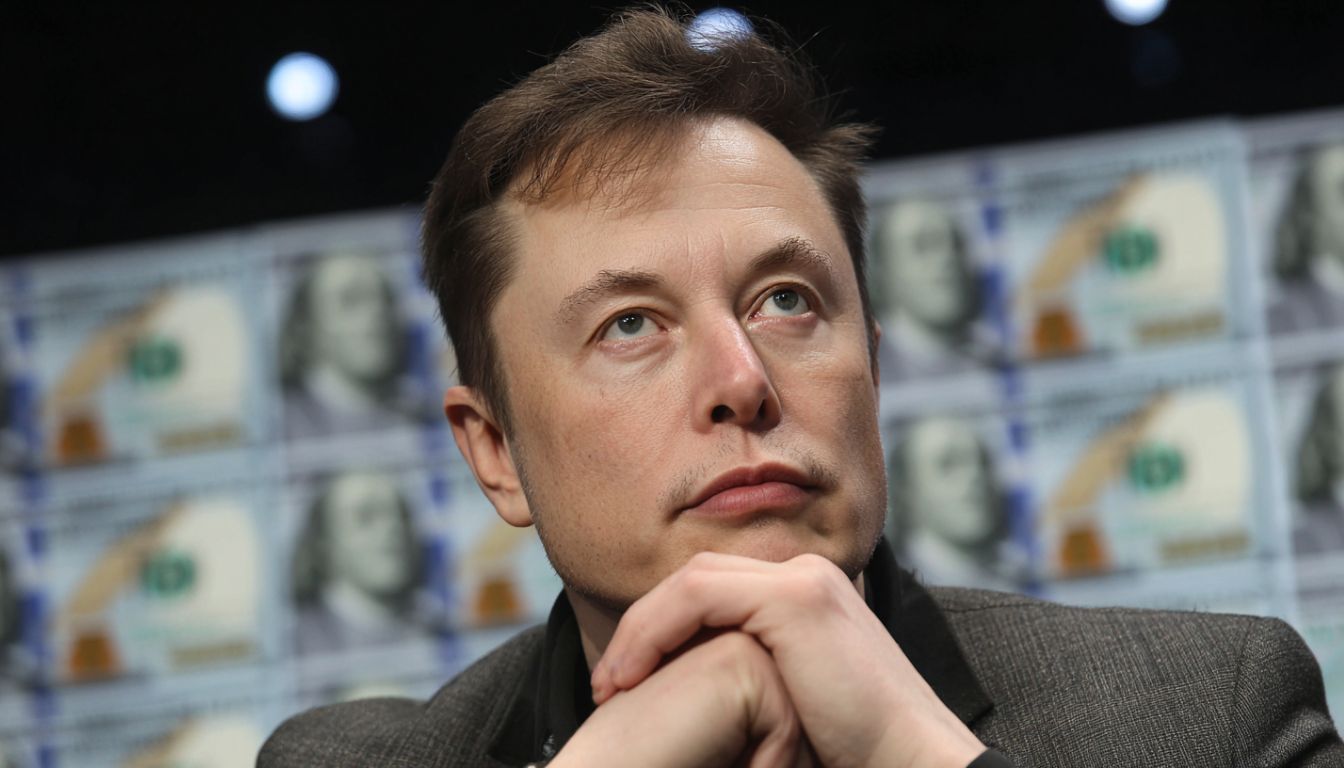
The Musk trillionaire pay package goes to a vote this Thursday in what may be the most consequential corporate governance decision in modern history. The proposal, which could grant the already-wealthiest person on Earth up to 423.7 million additional shares over the next decade, has ignited fierce debate about executive compensation, corporate accountability, and the concentration of power in American capitalism.
At stake is nothing less than the future trajectory of Tesla itself. Board Chair Robyn Denholm has made the calculation stark: approve this unprecedented compensation or risk losing Musk entirely. It’s a gambit that reveals just how thoroughly one individual’s identity has become fused with a company theoretically worth over $1.5 trillion.
The Trillion-Dollar Question: What Shareholders Are Really Voting On
The mechanics of the Musk trillionaire pay package reveal a compensation structure that makes previous CEO windfalls look quaint. The stock grant could be worth approximately $1 trillion if Tesla reaches an $8.5 trillion market capitalization CNN, a valuation that would make it worth more than Meta, Microsoft, and Alphabet combined.
To achieve the full payout, Tesla would need to grow 466% from its current stock price CNN, reaching a market cap roughly 70% higher than Nvidia’s recent record of $5 trillion. The targets aren’t just financial abstractions. Musk must also deliver 20 million vehicles over ten years (more than double Tesla’s total production over the past dozen years), secure 10 million active Full Self-Driving subscriptions, deploy 1 million humanoid robots, and operate 1 million robotaxis commercially.
Ross Gerber, CEO of Gerber Kawasaki Wealth & Investment Management and a former Tesla bull turned critic, did the math that crystallizes the scale. If the package pays off as planned, Musk would earn roughly $275 million per day CNN for a decade. “I just don’t know in the world anybody thinks of that as fair to shareholders,” Gerber said, describing the operational targets as softball requirements.
The Vote That Could Reshape Corporate Governance Forever
The vote has drawn commentary from Pope Leo XIV, who criticized the wealth gap and blasted the trillion-dollar offer specifically PBS, calling it symptomatic of what happens when monetary value becomes society’s sole measure of worth. That a papal intervention occurred at all speaks to how this Musk trillionaire pay package transcends normal business news.
Major institutional investors have lined up on opposite sides. Norway’s sovereign wealth fund, holding 1.16% of Tesla and ranked as the sixth-largest institutional shareholder, announced it would vote against the package CBS News, citing concerns about total award size, shareholder dilution, and the failure to mitigate “key person risk.” California’s CalPERS pension fund joined in opposition, as did influential proxy advisory firms Glass Lewis and ISS.
Glass Lewis specifically criticized the performance targets as “in many cases vague, undemanding, and subject to significant discretion by the board” CNN, the kind of corporate governance red flag that typically tanks executive compensation proposals. Musk’s response during a recent investor call was characteristically combative: he called the advisory firms “corporate terrorists.”
Yet Baron Capital Management, with Ron Baron praising Musk for building “one of the most important companies in the world,” pledged support CBS News, arguing the CEO’s interests remain aligned with shareholders as he redefines transportation, energy, and robotics.
Why The Musk Trillionaire Pay Package Will Likely Pass Despite The Outcry
For all the institutional resistance, the Musk trillionaire pay package appears headed for approval. In the most recent compensation vote, 84% of shares supported Musk’s package CNN. The math this time looks similar.
Musk controls roughly 15% of voting shares himself. Retail investors, who comprise 30-40% of Tesla’s shareholder base and have proven fiercely loyal to Musk in past proxy battles, are expected to vote overwhelmingly in favor. Prediction markets put the odds of passage at 91-94%. Even critics like Gerber concede: “I think it passes no matter what.”
Dan Ives, Wedbush Securities analyst and prominent Tesla bull, framed the vote as existential. “Shareholders are going to support this overwhelmingly, because Musk is the key asset for Tesla,” Ives said. “Tesla needs Musk to take it into the autonomous driving, robotic future.”
That framing itself is revealing. It accepts as given that a single individual is irreplaceable to a company that employs over 140,000 people, has established manufacturing footprints across three continents, and pioneered mass-market electric vehicles. It suggests Tesla isn’t really a normal corporation but rather a vehicle (pun intended) for Musk’s vision, with shareholders along for the ride wherever that vision leads.
The Political Blowback That Tanked Sales But Boosted Stock
Here’s where the Musk trillionaire pay package gets truly strange. A National Bureau of Economic Research study estimated that Musk’s political activity damaged the brand so severely that Tesla sales from October 2022 through April 2025 would have been 67% to 83% higher Al Jazeera, equivalent to 1 million to 1.26 million additional vehicles, if he had simply stayed out of politics.
By August 2025, Gallup polling found Musk had become the most unpopular influential figure among Americans Al Jazeera, with only a 33% favorable rating against 61% unfavorable, trailing just Donald Trump and Benjamin Netanyahu. His companies are facing protests, boycotts, and coordinated campaigns to avoid Tesla products.
Yet Tesla’s stock rallied anyway. The contradiction captures something fundamental about how modern markets price companies like Tesla. Musk’s net worth recently crossed $493 billion, driven not by current fundamentals but by investor belief in future breakthroughs in autonomous vehicles, AI, and robotics that remain entirely speculative. The stock trades on faith, not financials.
Tesla’s sales and profits plunged in the first half of 2025, with strong headwinds from the loss of U.S. government support for EV sales CNN. Recent reports show a 50% sales collapse in Germany alone. Third-quarter earnings missed expectations. None of this has stopped the stock from recovering most of its losses.
The Legal Context: Delaware Court Rulings and Corporate Power
This isn’t the first time Tesla shareholders have voted on massive compensation for Musk. His 2018 pay package was similarly controversial, similarly approved by shareholders, and then twice struck down by Delaware courts as improperly granted by a board insufficiently independent from the CEO. An appeal now sits before Delaware’s Supreme Court.
The 2025 package is structured partly to circumvent those legal challenges. It bifurcates voting rights from economic value, ensuring Musk gains control earlier while delaying actual share delivery. It’s a complicated work-around to give a CEO who already controls 15% of the company enough voting power to entrench his position permanently while dangling the possibility of a trillion-dollar windfall for achieving targets the board describes as “extraordinarily difficult” but critics dismiss as inevitable or gamed.
New York State Comptroller Thomas DiNapoli, overseeing 3.3 million Tesla shares through the state pension fund, put it bluntly: “Let’s be candid: Elon Musk is already one of the richest people in the world. His existing stake in Tesla, worth tens of billions of dollars, should normally be incentive enough to drive performance. The idea that another massive equity award will somehow refocus a man who is hopelessly distracted is both illogical and contrary to the evidence.”
What Happens After Thursday’s Vote
When results are tallied Thursday, the Musk trillionaire pay package will almost certainly pass. What follows matters more than the vote itself.
If approved, Musk’s ownership stake climbs toward 25%. Combined with his control over xAI, SpaceX, Neuralink, and X (formerly Twitter), he’ll command an unprecedented concentration of technological and economic power. The shareholder proposal for Tesla to invest in xAI, also up for a vote, could further blur lines between Musk’s overlapping empires.
Critics warn this creates precisely the “key person risk” that institutional investors are supposed to guard against. Musk runs multiple companies simultaneously, each theoretically demanding full-time attention. Tesla employees have reportedly complained about his distracted leadership. The robotaxis he’s promised for years remain in development with human safety monitors still required. Full Self-Driving remains “supervised,” a euphemism for not-actually-self-driving. The humanoid robots haven’t shipped.
Yet Musk has pulled off the seemingly impossible before. Six years ago Tesla was widely feared near bankruptcy because production couldn’t keep pace, but then Musk succeeded and the stock soared ABC News. That history buys him credibility that persists despite broken promises and erratic behavior.
The Larger Stakes: Democracy, Accountability, and Concentrated Power
The Musk trillionaire pay package isn’t just about one company’s compensation structure. It’s a referendum on how we organize economic power in democratic societies.
When a single individual can accumulate wealth approaching a trillion dollars, when corporate boards function more as enablers than overseers, when retail investors treat proxy votes like fan clubs rather than governance mechanisms, something has shifted in the relationship between capitalism and accountability.
Musk himself frames the vote as about control rather than compensation. He says he needs voting influence to prevent “bad things” from happening with Tesla’s AI development. It’s a paternalistic argument: trust me with unprecedented power because I alone can be trusted with this technology.
That argument might work for SpaceX, a privately held company where Musk can do as he pleases. But Tesla is publicly traded, with fiduciary responsibilities to all shareholders, not just the ones who worship its founder. The board’s willingness to threaten Musk’s departure rather than negotiate reasonable compensation reveals their capture by the very CEO they’re supposed to oversee.
The outcome Thursday will send a signal about whether corporate governance still functions in America’s largest companies or has devolved into personality cults trading on speculative promises. It will show whether institutional investors with responsibilities to pensioners and savers can resist the gravitational pull of retail enthusiasm and founder mythology.
Most likely, it will show that in 2025, when it comes to corporate power and executive compensation, the only governing principle left is: if shareholders will vote for it, boards will propose it, and the market will accommodate it. Everything else is noise, including concerns about fairness, sustainability, or democratic accountability.
The Musk trillionaire pay package isn’t an aberration. It’s the logical conclusion of how we’ve chosen to structure corporate capitalism in the 21st century. Thursday’s vote will simply make that choice explicit, with a price tag that’s impossible to ignore.