Table of Contents
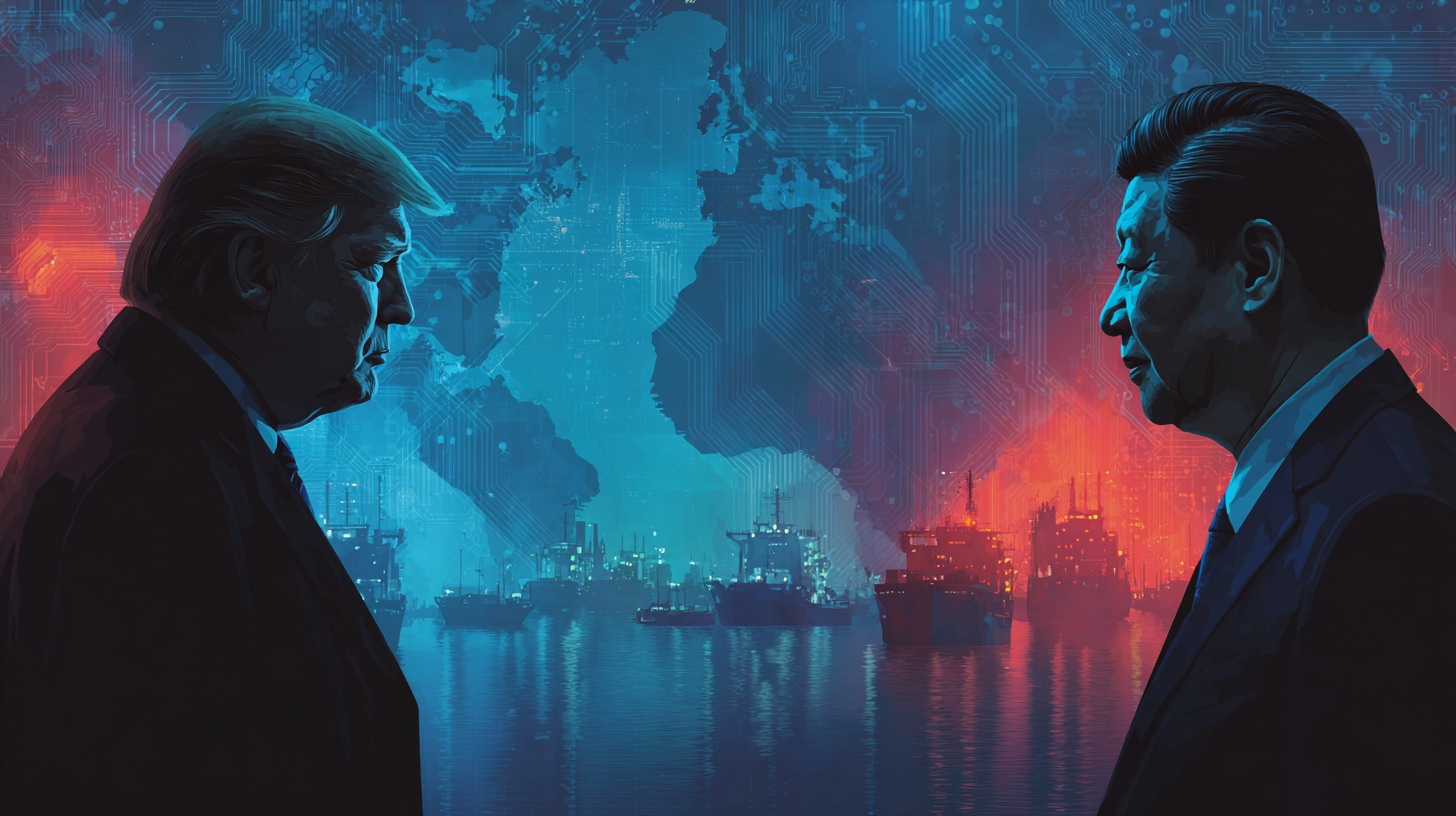
Trump and Xi Jinping are once again steering the world’s most consequential bilateral relationship into uncharted territory. As Donald Trump returned to the White House in January 2025, the dynamic between Washington and Beijing has crystallized into a high-stakes contest that will define global trade, technology leadership, and democratic norms for the next decade.
The relationship between these two leaders isn’t just diplomatic theater. It’s the hinge upon which trillions of dollars in commerce, semiconductor supply chains, and the future of international institutions depend. And right now, that hinge is creaking under pressure neither side seems willing to relieve. Here are the five critical shifts reshaping everything.
Shift 1: The Return of Aggressive Tariff Warfare
Trump and Xi have resumed their economic confrontation with renewed intensity. The former president’s 2025 agenda includes threats of new tariffs reaching 60% on Chinese imports, according to campaign statements reported by Reuters. These aren’t idle warnings. Trump views tariffs as both economic leverage and political vindication, a tool to rebalance what he considers decades of exploitative trade practices.
Xi’s response has been measured but firm. Beijing has diversified its trading partners throughout Southeast Asia, Latin America, and Africa, reducing vulnerability to American economic pressure. China’s Belt and Road Initiative continues expanding, creating alternative economic corridors that bypass Western-dominated systems entirely.
The practical impact? American consumers face higher prices on electronics, clothing, and manufactured goods. Chinese manufacturers scramble to relocate production facilities to Vietnam, Mexico, and other nations to circumvent tariffs. Meanwhile, global supply chains fragment into competing blocs, each anchored by either Washington or Beijing.
This fragmentation carries profound implications for democratic governance worldwide. When economic interdependence dissolves, the institutional frameworks that encourage diplomatic resolution over military confrontation weaken correspondingly.
Shift 2: Taiwan Tensions Reach Unprecedented Levels
Trump and Xi face their most dangerous point of potential conflict over Taiwan. Xi has made clear that reunification remains a core objective, refusing to rule out military force. Trump’s statements on Taiwan have oscillated between pledges of support and transactional questioning of whether the island “pays enough” for American defense commitments.
This ambiguity creates dangerous uncertainty. Taiwan’s semiconductor industry produces over 90% of the world’s most advanced chips, the literal infrastructure of modern computing. Any military action in the Taiwan Strait would instantly crater the global economy, making the 2008 financial crisis look manageable by comparison.
The democratic implications extend beyond economics. Taiwan represents a thriving democracy of 24 million people who have built genuinely competitive elections, a free press, and peaceful transfers of power. If Beijing absorbs Taiwan through force or coercion, it sends an unmistakable message: democratic self-determination matters less than raw power projection.
Military exercises have intensified on both sides. China conducts regular drills simulating blockades and amphibious assaults. The U.S. increases arms sales and military training partnerships with Taipei. Each escalation pushes the region closer to a point where miscalculation becomes catastrophe.
Shift 3: The Race for Technology Dominance Accelerates
The competition between Trump and Xi increasingly centers on technological supremacy. Artificial intelligence, quantum computing, and semiconductor manufacturing have become the modern equivalent of nuclear weapons development during the Cold War.
Recent breakthroughs in quantum computing, including advances that demonstrate exponential processing capabilities, underscore how quickly this landscape shifts. Google recently announced quantum computer achievements with 13,000x speedup, highlighting the pace of innovation that both nations desperately want to control.
Trump’s administration has expanded export controls on advanced chips to China, attempting to starve Beijing’s AI and military modernization efforts. The restrictions now cover not just finished semiconductors but the equipment needed to manufacture them, the lithography machines, chemical processes, and design software that enable cutting-edge production.
Xi has responded by pouring hundreds of billions into domestic semiconductor production, accepting short-term inefficiency for long-term strategic independence. Chinese tech giants face enormous pressure to develop alternatives to American components, from operating systems to cloud infrastructure.
This technological decoupling threatens the collaborative research model that has driven innovation for decades. When Chinese and American scientists stop sharing findings, when students stop crossing borders, when companies stop forming joint ventures, everyone loses access to the diverse perspectives that spark breakthroughs.
Shift 4: Military Posturing Becomes the New Normal
Trump and Xi preside over escalating military tensions throughout the Indo-Pacific that would have seemed reckless just five years ago. China has militarized artificial islands in the South China Sea, installing runways, radar systems, and missile batteries on reefs it transformed into military outposts. The U.S. Navy conducts “freedom of navigation” operations, deliberately sailing warships through waters Beijing claims as sovereign territory.
These aren’t abstract exercises. Close encounters between American and Chinese military aircraft and vessels occur weekly now. Fighter jets intercept reconnaissance planes at distances measured in feet, not miles. Naval vessels conduct aggressive maneuvers that leave little room for error.
The institutional guardrails that prevented such escalation during the original Cold War barely exist between Washington and Beijing. Trump and Xi have not established the consistent dialogue channels that might prevent crisis from becoming catastrophe. The military-to-military hotlines that do exist go unused for months at a time, victims of diplomatic freezes and political posturing.
Defense spending on both sides continues climbing. China’s military budget has grown for 29 consecutive years. Trump has called for even greater American defense expenditures focused specifically on Indo-Pacific capabilities. This arms race dynamic feeds on itself, with each side’s buildup justifying the other’s escalation.
Shift 5: Forcing the Global South to Choose Sides
Perhaps the most underappreciated dimension of the Trump and Xi dynamic is how it forces dozens of nations into uncomfortable positions. Countries throughout Africa, Latin America, and Southeast Asia find themselves pressured to choose between American and Chinese economic partnerships, often framed as mutually exclusive.
This “with us or against us” mentality corrodes the multilateral institutions that have maintained relative peace since 1945. The United Nations, World Trade Organization, and international arbitration systems all depend on shared acceptance of rules-based order. When the world’s two largest economies openly flout or bypass these institutions, they lose legitimacy and effectiveness.
For democracies trying to maintain independence while accepting Chinese investment or American security guarantees, the situation becomes untenable. They face economic coercion from Beijing if they side too openly with Washington, and political pressure from Washington if they accommodate Beijing’s interests.
Nations like Indonesia, Brazil, and Kenya find themselves navigating impossible choices. Accept Chinese infrastructure financing and risk American sanctions or diplomatic isolation. Partner with American military initiatives and watch Chinese investment dry up. The zero-sum framing leaves little room for the nuanced, multidirectional partnerships that characterized previous eras.
What This Means for Democracy Worldwide
Ultimately, the contest between Trump and Xi isn’t just about trade balances or military capabilities. It represents competing visions of how societies should organize themselves. Xi’s China offers a model of authoritarian efficiency, technological surveillance, and one-party control that delivers economic growth without the messy unpredictability of democratic politics.
Trump’s America, whatever its democratic shortcomings and institutional strains, still operates within a system of competitive elections, independent courts, and protected speech. The outcome of this competition will determine whether the 21st century trends toward greater authoritarianism or renewed democratic vitality.
Other nations watch carefully. If China’s model delivers prosperity and stability while American democracy appears chaotic and declining, authoritarians worldwide will feel emboldened. If American democracy adapts and thrives despite its challenges, reformers from Budapest to Bangkok will draw encouragement.
The relationship between Trump and Xi thus becomes a test case for governance itself. Their decisions over the next several years will shape not just bilateral relations between two great powers, but the fundamental question of how human societies organize political and economic life.
As citizens of democracies, we cannot afford to view this relationship as distant geopolitical chess. The choices Trump and Xi make about trade, technology, and territory will determine whether democratic institutions strengthen or weaken, whether international law retains meaning or becomes irrelevant, whether the next generation inherits a world of expanding freedom or deepening authoritarianism.
These five shifts represent more than policy adjustments. They signal a fundamental restructuring of the global order that will define the rest of this century. The stakes have never been higher. And the clock is ticking.