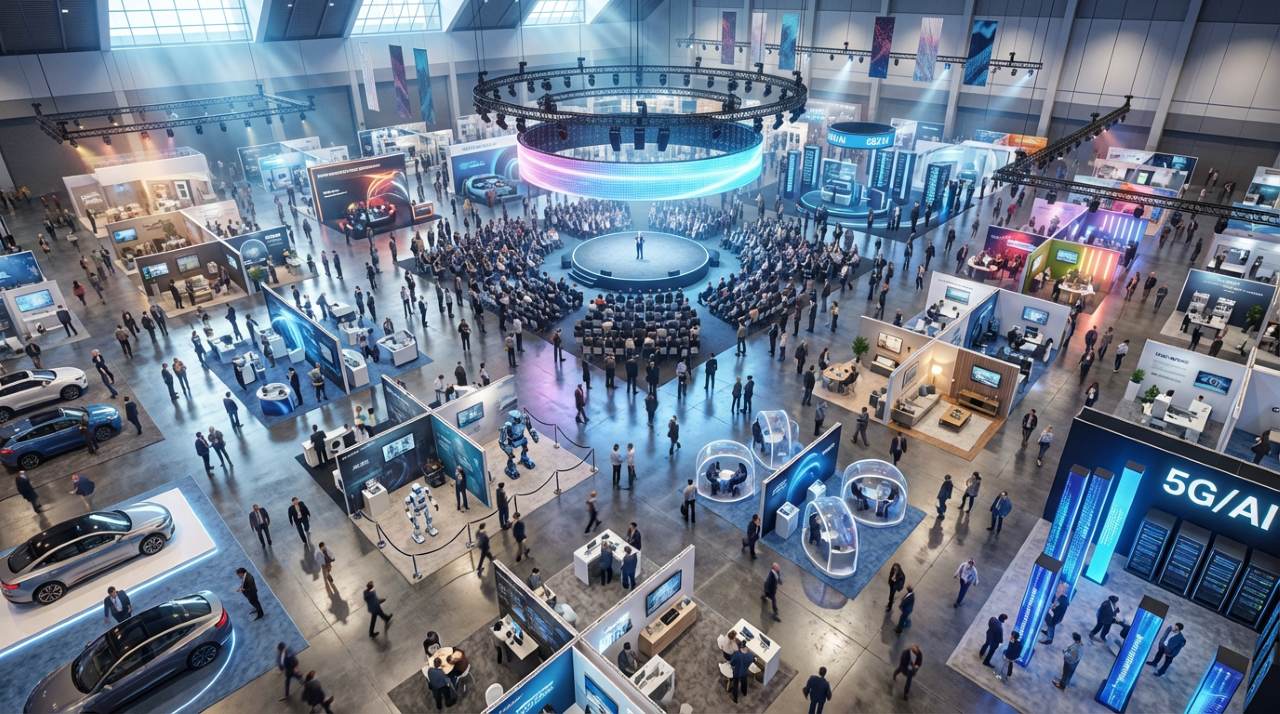
CES 2026 wrapped up in Las Vegas with a clear message: the future is autonomous, AI-powered, and weirdly obsessed with robot pets. The annual consumer electronics showcase delivered its usual mix of genuine innovation and promotional theater, but this year’s dominant themes tell a coherent story about where technology investment is heading.
Robotaxis stole the show. AI companions got strange. And the chip wars between Nvidia and AMD reached a new intensity. Here’s what actually mattered from tech’s biggest annual gathering.
Robotaxis Go From Concept to Production
The most consequential announcement came from an unlikely alliance. Lucid, Nuro, and Uber jointly unveiled what they’re calling the first production-ready robotaxi designed from the ground up for autonomous operation. This isn’t another prototype or concept. It’s a vehicle heading to San Francisco streets in 2027.
The partnership makes strategic sense. Lucid brings premium EV manufacturing expertise. Nuro has autonomous delivery experience and regulatory relationships. Uber provides the ride-hailing platform and customer base. Together, they’re attempting what Waymo, Cruise, and others have pursued with mixed results.
But the bigger story was scale. Nvidia and Uber announced plans for a 100,000-vehicle robotaxi network, a number that dwarfs existing autonomous fleets. GM partnered with Nvidia on AI for next-generation vehicles. Stellantis joined forces with Nvidia, Uber, and Foxconn to accelerate its own robotaxi strategy.
The common thread: Nvidia’s chips are becoming the standard platform for autonomous driving. Almost every major automaker announced some form of partnership with Jensen Huang’s company during CES week. That’s a moat other chipmakers will struggle to cross.
AMD Delivers Ryzen AI 400 and Strix Halo
Lisa Su returned to the CES keynote stage after a three-year absence, bringing a lineup designed to prove AMD can compete in AI beyond data centers. The Ryzen AI 400 series represents the company’s most aggressive push into AI-enabled consumer chips, featuring dedicated neural processing units alongside traditional CPU and GPU cores.
The Strix Halo platform targets high-performance laptops and small form factor workstations. AMD is positioning it as an alternative to Apple’s M-series chips for professional users who need serious computing power without the bulk of traditional gaming laptops.
Perhaps most interesting was the Ryzen 7 9850X3D announcement, which extends AMD’s 3D V-Cache technology to more product tiers. Gamers have embraced the performance gains from stacked cache, and AMD is betting that advantage can maintain its momentum against Intel’s renewed competition.
What AMD didn’t announce was as notable as what it did. No new Radeon GPU to challenge Nvidia’s gaming dominance. No timeline for catching up in AI datacenter chips. Su hinted that “bold plans” are coming, but for now, AMD’s AI story remains more promise than product in the most lucrative market segments.
The Rise of AI Companions (Yes, Really)
Every CES has its quirky category, and 2026 delivered AI pets with earnest enthusiasm. Multiple companies showcased robotic companions that use large language models to hold conversations, learn owner preferences, and provide something resembling emotional connection.
The pitch targets lonely people, elderly individuals who can’t care for real pets, and children who want something more interactive than a stuffed animal. The execution varies from adorable to uncanny valley territory. Some look like rounded geometric shapes that roll around. Others attempt realistic animal movements with varying success.
Skeptics will dismiss this as gimmicky, and they’re partially right. But the underlying technology is genuinely impressive. These devices run sophisticated AI models locally, process natural language in real time, and adapt behavior based on interactions. The AI infrastructure required to make a robot dog hold a conversation would have been impossible five years ago.
Whether the market actually wants robot pets is another question. Previous attempts have mostly failed to gain mainstream traction. But the companies at CES are betting that LLM-powered companions will succeed where earlier generations of robotic toys fell short.
Robots Learn to Climb Walls
Industrial and home robotics made a strong showing, with demonstrations that felt genuinely futuristic rather than incremental. Several companies showcased robots that can climb walls, clean windows on high-rise buildings, or navigate complex terrain that would challenge traditional wheeled designs.
The practical applications are obvious. Window washing on skyscrapers is dangerous and expensive. Inspecting infrastructure like bridges and wind turbines requires specialized equipment and trained workers. Robots that can climb and maneuver in three dimensions open new markets for automation.
Home vacuum makers took similar inspiration, showing models that can transition between floors, climb over obstacles, and map homes in three dimensions. The goal is autonomous cleaning that requires virtually no human intervention, including emptying the dustbin and returning to a charging base.
Display Technology Keeps Pushing Boundaries
Samsung, LG, and TCL competed to demonstrate the most impressive television technology, as they do every year. This time, transparent displays moved closer to consumer reality. LG showed a version that could function as a window when off and a screen when on, though pricing remains firmly in the “if you have to ask” category.
MicroLED continues its slow march toward affordability, with Samsung showing panels that promise the brightness of OLED without the burn-in risk. The technology is still expensive, but manufacturing improvements are bringing costs down faster than previous years.
More practical for most consumers were advances in Mini-LED backlighting and local dimming algorithms. The gap between LCD and OLED picture quality continues to narrow, which matters for buyers who want premium image quality without OLED prices.
Caterpillar Goes AI
One of the more surprising partnerships announced was between Nvidia and Caterpillar, the construction equipment manufacturer. The companies are bringing AI to bulldozers, excavators, and other heavy machinery, with the goal of autonomous operation on job sites.
Construction has been notoriously slow to adopt technology compared to other industries. Labor shortages and safety concerns are changing that calculus. If AI-powered equipment can operate 24 hours a day without fatigue, accidents, or overtime pay, the economics become compelling.
The partnership also signals Nvidia’s ambitions beyond traditional tech markets. Jensen Huang’s company is positioning itself as the AI provider for any industry that moves things, whether that’s people in robotaxis, packages in warehouses, or dirt on construction sites.
What Was Missing
For all the AI enthusiasm, CES 2026 was notably light on new consumer GPUs. Nvidia didn’t announce gaming cards, breaking a tradition that dates back years. AMD teased future releases without committing to dates or specifications. PC gamers hoping for next-generation graphics cards left disappointed.
The smartphone presence was minimal, reflecting the reality that CES has become less relevant for mobile technology. Apple doesn’t attend. Samsung saves major phone announcements for its own events. The mobile action happens elsewhere.
Virtual reality and augmented reality had a subdued showing despite ongoing investment from Meta, Apple, and others. The category seems stuck waiting for a breakthrough that makes headsets compelling for mainstream users rather than enthusiasts and enterprise customers.
Investment Implications
CES confirms several trends that matter for tech portfolios. Nvidia’s dominance in AI extends well beyond data centers into automotive, industrial, and consumer applications. AMD is competitive in specific segments but struggling to match Nvidia’s breadth. The autonomous vehicle race is intensifying with serious capital commitments from established players.
The AI investment thesis now extends to unexpected categories like construction equipment and robotic companions. Companies that can integrate AI into their products have an advantage over those that can’t. That’s true whether you’re making chips, cars, or robotic dogs.
For investors, CES 2026 reinforced that this technology cycle has legs. The products shown weren’t just concepts. Many have production timelines and pricing. That suggests the AI buildout will continue driving semiconductor demand and creating opportunities across multiple sectors.
The companies that figure out how to monetize these advances will define the next era of consumer technology. Based on what showed up in Las Vegas, that list includes some familiar names and some surprises.