Commodities
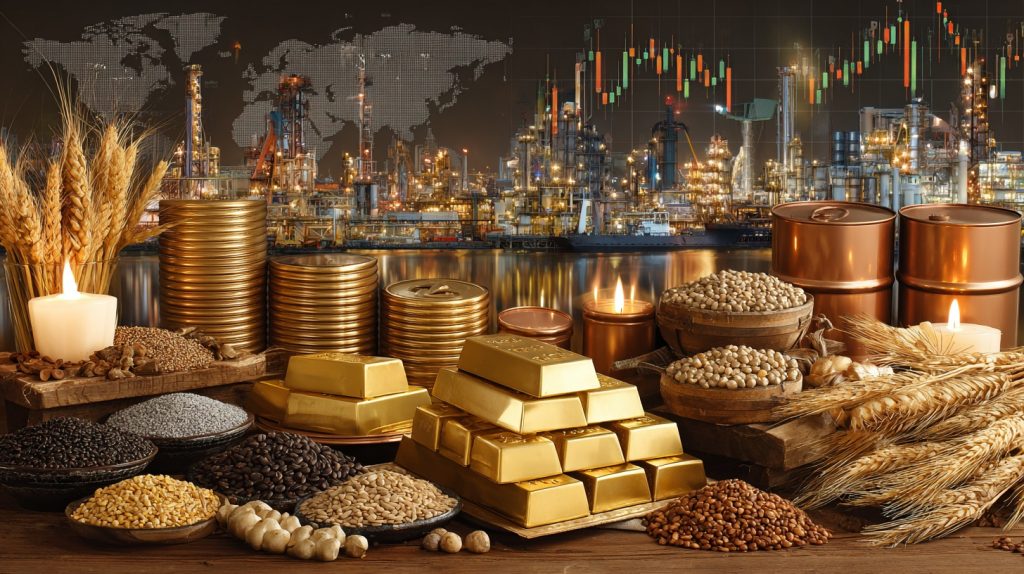
Commodities: Your Complete Guide to Physical Asset Trading
Invest in the Building Blocks of the Global Economy
Commodities are raw materials and primary agricultural products that form the foundation of modern civilization. From the oil that powers transportation to the gold that preserves wealth, from the copper wiring in electronics to the wheat that feeds billions, commodities represent tangible assets with intrinsic value. Unlike stocks or cryptocurrencies, commodities are physical goods traded on specialized exchanges worldwide. Whether you’re hedging against inflation, diversifying your portfolio, or speculating on supply-demand dynamics, understanding commodity markets is essential for sophisticated investors.
What Are Commodities?
Commodities are standardized, interchangeable goods that maintain consistent quality regardless of producer. They fall into four main categories:
Key Characteristics:
- Tangible Assets: Physical goods with real-world utility
- Standardized: Uniform quality specifications for trading
- Global Markets: Traded on exchanges worldwide 24/5
- Inflation Hedge: Often rise when currency values fall
- Supply-Demand Driven: Weather, geopolitics, economic cycles
- Futures Trading: Most trading occurs through futures contracts
Why Invest in Commodities?
- Portfolio diversification beyond stocks and bonds
- Protection against inflation and currency devaluation
- Profit from global economic growth and industrialization
- Hedge against geopolitical uncertainty
- Low correlation with traditional asset classes
- Exposure to essential resources with inelastic demand
Energy Commodities
⚡ Power the World’s Economy
Energy commodities fuel transportation, electricity generation, heating, and industrial production. As the most actively traded commodity sector, energy markets move based on geopolitics, OPEC decisions, technological innovation, and seasonal demand.
🛢️ Crude Oil
The world’s most traded commodity
Crude oil serves as the primary feedstock for gasoline, diesel, jet fuel, plastics, and thousands of petrochemical products. Two main benchmarks dominate global pricing:
Benchmark Types:
- WTI (West Texas Intermediate): U.S. benchmark, light sweet crude
- Brent Crude: International benchmark, North Sea production
Market Stats:
- Global Consumption: ~100 million barrels per day
- Major Producers: U.S., Saudi Arabia, Russia, Canada, Iraq
- Trading Volume: Billions of dollars daily
- Price Drivers: OPEC+ decisions, geopolitical tensions, economic growth, U.S. inventory data
Key Factors:
- U.S. Strategic Petroleum Reserve releases
- OPEC+ production quotas
- Shale oil production levels
- Chinese demand (world’s largest importer)
- Geopolitical events in Middle East
- Refinery capacity and maintenance schedules
Monthly Searches: 1.5 Million (crude oil price)
View Crude Oil Data & Analysis →
🔥 Natural Gas
The cleaner fossil fuel
Natural gas serves as a major fuel for electricity generation, heating, and industrial processes. It’s viewed as a “bridge fuel” in the transition to renewable energy.
Benchmark Types:
- Henry Hub: U.S. natural gas benchmark (Louisiana)
- TTF: European benchmark (Netherlands)
- JKM: Asian LNG benchmark (Japan/Korea)
Market Stats:
- Measurement: Traded in MMBtu (million British thermal units)
- Major Producers: U.S., Russia, Iran, Qatar, China
- Forms: Pipeline gas and Liquefied Natural Gas (LNG)
- Extreme Volatility: Can move 20-50% in weeks
Key Factors:
- Weather (winter heating demand, summer cooling)
- Storage inventory levels
- LNG export capacity
- Coal-to-gas switching for power generation
- European energy crisis dynamics
- Renewable energy competition
Ideal For: Seasonal traders, energy sector exposure, inflation hedge
View Natural Gas Data & Analysis →
⚫ Coal
Traditional energy source in transition
Despite environmental concerns, coal remains crucial for electricity generation and steel production in developing economies, particularly China and India.
Types:
- Thermal Coal: Power generation
- Metallurgical Coal: Steel production
Market Dynamics:
- Declining in developed nations
- Still critical in Asia
- Price volatility based on environmental policies
- Transportation costs significant (bulky commodity)
⛽ Refined Petroleum Products
Gasoline (RBOB)
- Primary motor fuel in gasoline-powered vehicles
- Seasonal demand (summer driving season)
- Reformulated Blendstock for Oxygenate Blending benchmark
Heating Oil
- Home and commercial heating fuel (Northeast U.S.)
- Winter seasonal demand
- Diesel fuel alternative
Diesel Fuel
- Commercial trucking and industrial use
- Critical for freight transportation and logistics
Precious Metals
💎 Store of Value & Safe Haven Assets
Precious metals have served as money and stores of value for millennia. Beyond their monetary role, they have industrial, technological, and jewelry applications.
🥇 Gold (XAU)
The ultimate safe haven asset
Gold has been humanity’s preferred store of value for over 5,000 years. Unlike fiat currencies, gold cannot be printed or devalued by central banks.
Why Gold Matters:
- Inflation Protection: Maintains purchasing power over centuries
- Crisis Hedge: Rises during geopolitical and economic uncertainty
- Currency Alternative: No counterparty risk
- Central Bank Reserves: Governments hold 35,000+ tonnes
- Limited Supply: Only ~3,000 tonnes mined annually
Market Stats:
- Trading Symbol: XAU/USD (spot gold)
- Measurement: Troy ounces (31.1 grams)
- Major Producers: China, Australia, Russia, U.S., Canada
- Major Consumers: Jewelry (India, China), central banks, ETFs, technology
Key Price Drivers:
- U.S. dollar strength (inverse relationship)
- Real interest rates (inflation minus yields)
- Central bank monetary policy
- Geopolitical tensions and uncertainty
- Inflation expectations
- Central bank gold purchases
Typical Portfolio Allocation: 5-10% for diversification
Monthly Searches: 2.74 Million (gold price)
🥈 Silver (XAG)
The industrial precious metal
Silver serves dual purposes as both a monetary metal and critical industrial commodity, creating unique supply-demand dynamics.
Key Characteristics:
- Industrial Demand: 50%+ of consumption (solar panels, electronics, medical)
- Monetary Asset: Poor man’s gold, inflation hedge
- Higher Volatility: More volatile than gold (smaller market)
- Gold-Silver Ratio: Historical average ~60:1
Market Stats:
- Trading Symbol: XAG/USD
- Major Producers: Mexico, Peru, China, Russia, Chile
- Applications: Solar energy, electronics, photography, jewelry, silverware
Key Price Drivers:
- Gold price movements (high correlation)
- Industrial demand from technology sector
- Green energy adoption (solar panels)
- Mining supply constraints
- Investment demand (ETFs, coins, bars)
Ideal For: Industrial exposure, precious metals diversification, higher risk tolerance
Monthly Searches: 673,000 (silver price)
View Silver Price & Analysis →
⚪ Platinum (XPT)
The rarest precious metal
Platinum is 30 times rarer than gold and has critical industrial applications, particularly in automotive catalytic converters.
Key Characteristics:
- Rarity: Scarcer than gold
- Industrial Focus: 40% used in catalytic converters
- Supply Concentration: 70%+ from South Africa
- Geopolitical Risk: Mining disruptions impact price
Applications:
- Automotive catalytic converters (gasoline vehicles)
- Jewelry (particularly in Asia)
- Chemical and petroleum refining catalysts
- Electronics and medical devices
- Investment bars and coins
Key Price Drivers:
- Automotive industry health
- Electric vehicle adoption (reduces demand)
- South African mining production
- Palladium price relationship
- Jewelry demand from China and India
View Platinum Price & Analysis →
🔘 Palladium (XPD)
The automotive metal
Palladium became the most expensive precious metal in recent years due to tight supply and strong automotive demand.
Key Characteristics:
- Auto Industry Critical: 80%+ used in catalytic converters
- Supply Deficit: Demand exceeds mine production
- Russia Dependence: 40% of global supply from Russia
- Price Volatility: Can swing dramatically
Applications:
- Catalytic converters (gasoline engines)
- Electronics (capacitors, connectors)
- Dentistry and medical instruments
- Jewelry (white gold alloys)
Key Price Drivers:
- Global auto production volumes
- Emission standards (stricter = more demand)
- Russian export policies and sanctions
- Electric vehicle transition impact
- Mine supply from Russia and South Africa
View Palladium Price & Analysis →
Industrial Metals (Base Metals)
🏭 The Building Blocks of Infrastructure & Technology
Industrial metals are essential for construction, manufacturing, electronics, and green energy infrastructure. Often called “base metals,” they’re critical indicators of global economic health.
🔶 Copper (HG)
Dr. Copper: The economic barometer
Copper is nicknamed “Dr. Copper” because its price reliably predicts economic activity. Essential for electrical wiring, construction, and green energy.
Why Copper Matters:
- Economic Indicator: Price reflects global growth expectations
- Green Energy Critical: Electric vehicles use 4x more copper than gas cars
- Infrastructure Essential: Construction, electrical grids, plumbing
- Supply Constraints: Few new major mines coming online
Market Stats:
- Trading: LME (London Metal Exchange), COMEX
- Major Producers: Chile, Peru, China, U.S., Congo
- Major Consumers: China (50% of global demand)
- Measurement: Pounds or metric tonnes
Applications:
- Electrical wiring and motors (60% of use)
- Construction and architecture
- Electric vehicles and charging infrastructure
- Renewable energy (solar, wind)
- Electronics and telecommunications
Key Price Drivers:
- Chinese economic growth and stimulus
- Infrastructure spending globally
- Electric vehicle adoption rates
- Mine supply disruptions (labor strikes, political issues)
- U.S. dollar strength
- Inventory levels (LME, COMEX, Shanghai)
Ideal For: Economic growth plays, green energy transition exposure
Monthly Searches: 450,000 (copper price)
View Copper Price & Analysis →
⚙️ Aluminum (ALI)
The lightweight metal
Aluminum is the second most-used metal globally, critical for transportation, packaging, construction, and electrical applications.
Key Characteristics:
- Lightweight: 1/3 the weight of steel
- Recyclable: 75% of all aluminum ever produced still in use
- Energy Intensive: Production requires massive electricity
- China Dominance: 60% of global production
Applications:
- Transportation (aircraft, automobiles, trains)
- Beverage cans and food packaging
- Construction (windows, doors, siding)
- Electrical transmission lines
- Consumer electronics
Key Price Drivers:
- Chinese production and power policies
- Automotive and aerospace demand
- Energy costs (electricity prices)
- Global infrastructure spending
- Bauxite and alumina supply
View Aluminum Price & Analysis →
🔩 Other Industrial Metals
Zinc (ZS)
- Galvanizing steel (corrosion protection)
- Die casting and battery production
- Major producers: China, Peru, Australia
Nickel (NI)
- Stainless steel production (70% of use)
- EV battery cathodes (growing demand)
- Indonesia largest producer
Lead (LL)
- Lead-acid batteries (automotive)
- Declining use due to health concerns
- Recycling provides 50%+ of supply
Tin (SN)
- Soldering in electronics
- Supply concentrated in China, Indonesia, Myanmar
- Critical for technology manufacturing
Agricultural Commodities
🌾 Feed the World & Fuel the Future
Agricultural commodities encompass food, feed, fiber, and biofuels. These “soft commodities” are highly sensitive to weather, seasonal patterns, and global food security dynamics.
🌽 Grains & Oilseeds
Corn (ZC)
America’s largest crop
Corn serves triple duty as food, animal feed, and ethanol production feedstock.
Market Stats:
- Major Producers: U.S. (40% globally), Brazil, Argentina, China
- Trading: CBOT (Chicago Board of Trade)
- Measurement: Bushels (56 pounds per bushel)
Uses:
- Animal feed (50% of use)
- Ethanol production (30%+)
- Food products (sweeteners, cereal, flour)
- Industrial applications
Key Price Drivers:
- U.S. Midwest weather (planting and harvest)
- USDA crop reports (acreage, yield estimates)
- Ethanol demand and energy policy
- Chinese buying and trade relations
- South American production (competing supply)
- U.S. dollar strength
Wheat (ZW)
The global food staple
Wheat is the world’s most widely cultivated crop, essential for bread, pasta, and countless food products.
Types:
- Hard Red Winter: Bread flour
- Soft Red Winter: Cakes, pastries
- Hard Red Spring: High-protein bread
- Durum: Pasta
Major Producers: Russia, China, India, U.S., France, Canada
Key Price Drivers:
- Russia-Ukraine conflict (Black Sea supply)
- Global weather patterns
- Export restrictions and policies
- Currency fluctuations
- Competing grain prices
Soybeans (ZS)
The versatile oilseed
Soybeans produce both protein-rich meal (animal feed) and vegetable oil (cooking, biofuel).
Market Dynamics:
- Major Producers: U.S., Brazil, Argentina
- Major Consumer: China (60% of global imports)
- Products: Soybean meal (animal feed), soybean oil (cooking, biodiesel)
Key Price Drivers:
- U.S.-China trade relations
- Brazilian and Argentine production
- Chinese hog herd size (feed demand)
- Weather in Americas
- Competing oilseed prices (palm oil, canola)
Related Markets: Soybean meal (ZM), soybean oil (ZL)
View Soybean Price & Analysis →
Other Grains & Oilseeds
Oats (ZO)
- Breakfast cereals, livestock feed
- Smaller market, less liquid
Rice (ZR)
- Global food staple (Asia, Africa)
- Price sensitive to Asian monsoons
Canola/Rapeseed
- Cooking oil and biodiesel
- Major production in Canada, Europe, China
🐄 Livestock & Meat
Live Cattle (LE)
Beef on the hoof
Live cattle futures allow producers and consumers to hedge beef prices before animals reach market weight.
Market Dynamics:
- Major Producers: U.S., Brazil, India, China
- Trading: CME (Chicago Mercantile Exchange)
- Weight: Typically 1,200+ pounds at market
Key Price Drivers:
- Corn and feed costs (input prices)
- Consumer demand for beef
- Drought and grazing conditions
- Export demand
- Competing meat prices
Feeder Cattle (GF)
Younger cattle for feeding operations
Feeder cattle (700-900 pounds) are purchased by feedlots to be fattened to market weight.
Relationship: Spread between feeder cattle and live cattle reflects feed costs and feeding margins.
Lean Hogs (HE)
Pork futures
Lean hog futures track the price of market-ready hogs destined for pork production.
Market Dynamics:
- Major Producers: China (50% global), U.S., Germany, Spain
- Volatile: Disease outbreaks can devastate prices
Key Price Drivers:
- African Swine Fever outbreaks
- Chinese hog herd rebuilding
- Corn and soybean meal costs
- Consumer demand for pork
- Export markets
☕ Soft Commodities
Tropical and subtropical agricultural products, typically grown in developing nations.
Coffee (KC)
The world’s morning fuel
Types:
- Arabica (KC): Premium coffee, smooth flavor (Colombia, Brazil, Ethiopia)
- Robusta: Stronger, higher caffeine (Vietnam, Brazil, Indonesia)
Key Price Drivers:
- Brazilian production (largest producer)
- Weather and frost events
- Fungal diseases (coffee rust)
- Global consumer demand trends
Monthly Searches: 550,000 (coffee prices)
Sugar (SB)
The global sweetener
Sugar comes from sugarcane (tropical) and sugar beets (temperate climates).
Major Producers: Brazil (largest), India, EU, Thailand
Key Price Drivers:
- Brazilian production and ethanol policy (flex-fuel)
- Indian monsoons and production
- Oil prices (ethanol alternative use)
- Global demand growth
Cotton (CT)
The fabric of civilization
Natural fiber for textiles and clothing.
Major Producers: India, China, U.S., Brazil, Pakistan
Key Price Drivers:
- Global textile demand (economic indicator)
- Chinese consumption
- Weather in cotton belt regions
- Synthetic fiber competition
- Currency movements
Cocoa (CC)
Chocolate’s foundation
Major Producers: West Africa (Ivory Coast, Ghana ~60% of global supply)
Key Price Drivers:
- West African weather and harvest
- Disease and pest issues
- Political stability in producing nations
- Global chocolate demand
Orange Juice (OJ)
Frozen concentrated orange juice
Major Producers: Brazil (largest), U.S. (Florida)
Key Price Drivers:
- Florida hurricane threats
- Brazilian production
- Disease (citrus greening)
- Consumer demand shifts
📚 Commodity Trading Education
Getting Started with Commodities
For Beginners:
- Understanding commodity futures vs. spot prices
- How commodity ETFs and ETNs work
- Contango and backwardation explained
- Reading commodity charts and reports
- Physical delivery vs. cash settlement
- Commodity-related stocks (miners, producers)
For Intermediate Traders:
- Seasonal patterns and cycles
- Spread trading strategies
- Fundamental analysis (supply/demand)
- Weather patterns and commodity prices
- USDA reports and inventory data
- Technical analysis for commodities
For Advanced Traders:
- Futures trading and leverage
- Options on commodity futures
- Inter-commodity spread strategies
- Hedging with commodities
- Roll yield and term structure
- Global macro commodity strategies
Access Commodity Education Center →
📊 Commodity Analysis Tools
Fundamental Analysis
- Supply/Demand Balance: Production vs. consumption data
- Inventory Levels: Stockpiles and storage (crude, grains)
- Weather Forecasts: Critical for agriculture and energy
- Economic Indicators: Manufacturing, construction activity
- Currency Analysis: Dollar strength impacts commodity prices
- Geopolitical Events: Wars, sanctions, export restrictions
Key Reports & Data
- USDA Reports: Crop production, inventory, exports
- EIA Data: Energy inventory, production, consumption
- OPEC Announcements: Production quotas and policy
- CFTC COT Report: Speculator and commercial positioning
- Chinese PMI: Manufacturing activity (demand indicator)
- Central Bank Policies: Interest rates affect commodity prices
Technical Analysis
- Seasonal Charts: Historical seasonal patterns
- COT Analysis: Commitment of Traders positioning
- Spread Analysis: Calendar spreads, inter-commodity
- Volume and Open Interest: Market participation levels
Access Commodity Analysis Tools →
🔔 Real-Time Commodity Data
What We Provide:
- Live Prices: Real-time futures and spot prices
- Interactive Charts: Multi-timeframe analysis with indicators
- Contract Specifications: Expiry dates, tick sizes, margins
- Economic Calendar: USDA reports, EIA inventory, Fed meetings
- News Feed: Breaking commodity news and analysis
- Heat Maps: Sector performance visualization
- Correlation Matrix: Relationships between commodities
- Historical Data: Years of price history for analysis
💡 Investment Strategies
Direct Commodity Exposure
Futures Contracts: Most direct exposure but requires margin and rolling positions
ETFs and ETNs:
- Commodity-tracking funds (GLD, SLV, USO, DBA)
- Easier access, no futures account needed
- Beware of contango drag
Commodity Stocks:
- Gold miners (Newmont, Barrick Gold)
- Oil companies (ExxonMobil, Chevron)
- Agricultural producers
- Leverage to commodity prices with added company risk
Physical Ownership:
- Gold/silver bars and coins
- Storage and security considerations
- Premium over spot price
Portfolio Strategies
Inflation Hedge: Commodities historically rise with inflation (especially gold, oil, agriculture)
Diversification: Low correlation with stocks and bonds
Tactical Allocation: 5-15% portfolio allocation common
Seasonal Trading: Buy when seasonal demand expected to increase
Trend Following: Commodities exhibit strong momentum trends
⚠️ Risk Considerations
Commodity-Specific Risks:
- Price Volatility: Can move 20-50% rapidly
- Leverage Risk: Futures use significant leverage
- Contango/Backwardation: Roll costs can erode ETF returns
- Storage Costs: Physical commodities require storage
- No Cash Flows: Unlike stocks, no dividends or interest
- Geopolitical: Wars, sanctions, export bans
- Weather: Droughts, floods, freezes impact agriculture
- Currency: Dollar strength inversely affects commodity prices
Risk Management:
- Start with commodity ETFs before futures
- Understand contract specifications and roll dates
- Never risk more than 5-10% of portfolio
- Use stop-losses in volatile markets
- Diversify across commodity sectors
- Monitor global economic indicators
- Stay informed on weather and geopolitical events
🕐 Commodity Market Hours
Major Trading Hours (EST):
Metals:
- COMEX Metals: 6:00 PM – 5:00 PM (nearly 24 hours)
- LME: 2:00 AM – 1:00 PM
Energy:
- NYMEX Energy: 6:00 PM – 5:00 PM (nearly 24 hours)
- ICE Brent: 2:00 AM – 5:00 PM
Agriculture:
- CBOT Grains: 8:00 PM – 2:20 PM & 2:30 PM – 1:20 PM
- CME Livestock: 9:30 AM – 1:05 PM
Note: Most commodities trade electronically nearly 24/5 with brief maintenance windows.
🌟 Most Tracked Commodities
Energy:
Crude Oil (WTI, Brent) • Natural Gas (Henry Hub) • Gasoline (RBOB) • Heating Oil
Precious Metals:
Gold (XAU) • Silver (XAG) • Platinum (XPT) • Palladium (XPD)
Industrial Metals:
Copper (HG) • Aluminum (ALI) • Zinc • Nickel
Agriculture:
Corn (ZC) • Soybeans (ZS) • Wheat (ZW) • Cotton (CT) • Coffee (KC) • Sugar (SB)
Livestock:
Live Cattle (LE) • Lean Hogs (HE) • Feeder Cattle (GF)
📱 Stay Connected
- Price Alerts: Custom notifications for your watchlist
- Report Calendar: USDA, EIA, inventory reports
- Weather Alerts: Critical agricultural regions
- Breaking News: Geopolitical events affecting commodities
- Newsletter: Weekly commodity market analysis
Disclaimer
Commodity trading involves substantial risk of loss and is not suitable for all investors. Futures and options trading are highly leveraged and can result in losses exceeding your initial investment. Past performance is not indicative of future results. Commodity prices are subject to volatile swings based on weather, geopolitics, economic conditions, and speculation. This information is for educational purposes only and should not be considered investment advice. Always conduct thorough research and consult with a qualified financial advisor before making commodity investment decisions.
Ready to explore commodity markets? Choose a category above to discover detailed analysis, real-time prices, and historical data for essential raw materials and agricultural products.